

Let’s have an honest chat, because purple plumeria is the one color where you need a little myth busting before you go shopping.
You’ve probably seen the photos. Deep violet plumeria. Even bright blue ones. Bags of “blue plumeria seeds” or “rainbow black rose plumeria” all over the internet for suspiciously cheap.
I’ve got to be the friend who tells you the truth here.
True purple and blue plumeria don’t really exist. Not the way those photos make you think. But before you close the tab all sad, there’s still good news, because the deep magenta and wine colored plumeria that people call “purple” are genuinely stunning. Let me explain the whole thing.
Purple Plumeria at a Glance
The quick version:
| Thing | The short answer |
|---|---|
| “Purple” reality | Deep magenta, wine, and dusky mauve. Not true violet |
| Blue plumeria | Not real. Avoid “blue seed” listings |
| Fragrance | Present, often lighter on the darker blooms |
| Bloom size | Roughly 2 to 4 inches, in clusters |
| Mature size | Small tree, or much smaller in a pot |
| Hardiness | Warm climates (zones 9 to 11), or grown in pots elsewhere |
Are Purple Plumeria Actually Real?
Short answer: sort of, but not the way you’re picturing.
There is no plumeria with true grape purple or sky blue petals. The pigments that make those colors just aren’t in the plumeria toolkit. So any photo showing a vivid violet or electric blue plumeria has almost certainly been edited.
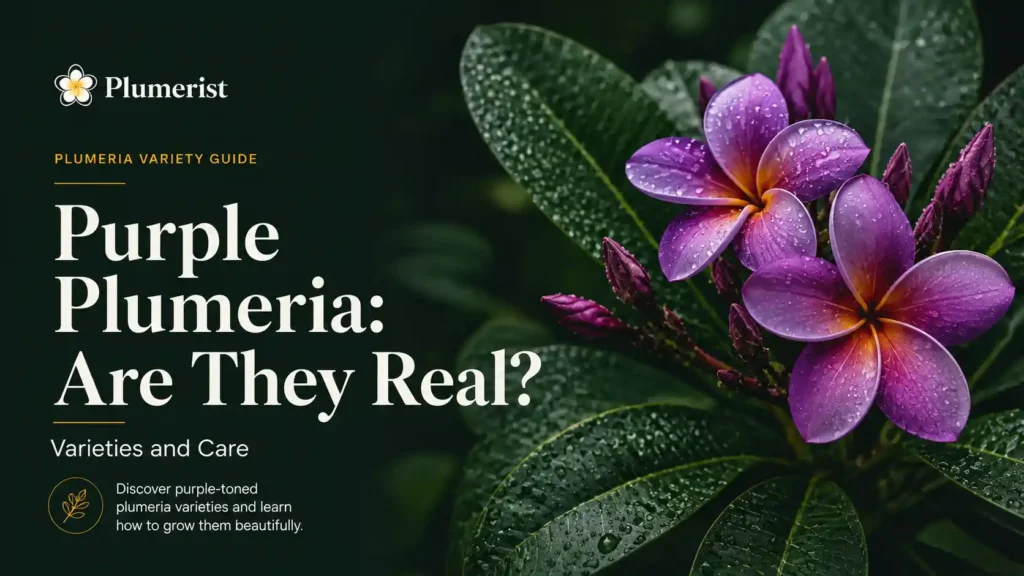
What IS real is a range of very deep, moody colors that lean purple to the eye. Think rich magenta, wine, plum, and dusky mauve, often deepening toward an almost black center. In the right light, especially in cooler weather, some of these genuinely read as purple. They’re gorgeous, and they scratch that “I want something dark and dramatic” itch.
So when a seller says “purple plumeria,” what they really mean is one of these deep magenta or wine shades. Go in with that expectation and you won’t be disappointed. Expect actual violet and you will be.
The “Blue Plumeria” and Seed Scam Warning
This is the part I really want you to read, because it saves people money and heartbreak all the time.
If you see any of these, keep your wallet in your pocket:
“Blue plumeria seeds.” Not a thing. The photos are edited, and the seeds (if you even get any) will grow into a random plumeria that looks nothing like the picture.
“Rainbow” or “black rose” plumeria seeds for a couple of dollars. Also fake listings, usually from mass marketplaces, often selling seeds of unknown mystery plants.
Remember, plumeria don’t grow true from seed anyway. Even legit seeds are a genetic gamble and won’t match the parent flower. So a listing promising a specific wild color from seeds is a double red flag.
If you want a specific deep “purple” magenta plumeria, buy a named cutting from a reputable grower, not seeds from a random photo. A cutting is a clone, so you actually get the color you’re paying for. Here’s how to grow plumeria from cuttings once you’ve got one.
How to Spot a Fake Purple or Blue Plumeria Photo
Once you know the tells, you’ll never get fooled again.
The color is too saturated. Real deep plumeria are moody and muted, more wine than neon. If it looks like a glowing violet or an electric blue highlighter, it’s edited.
Anything blue. There’s no blue plumeria, period. Blue equals fake, every single time.
The price is silly cheap. A legit named cutting from a real grower is not a dollar. If a “rare purple” is priced like a pack of gum, that’s your answer right there.
The same photo shows up everywhere. Do a quick reverse image search. If that exact bloom appears on fifty different listings, it’s a stock image, not the plant you’ll actually receive.
No grower name or real reviews. Reputable plumeria sellers have a name, a reputation, and photos of their own plants. Anonymous marketplace listings with only stock images are a hard pass for me.
When in doubt, buy a named cutting from a grower who can tell you the actual cultivar. Less exciting than a mystery “rainbow” bag? Sure. But you’ll get what you paid for.
Varieties That Come Closest to Purple
A handful of real cultivars get sold as “purple,” and they’re the ones to look for:
Deep magenta and wine cultivars. These are your best bet for that purple vibe. Names like “Black Purple” and other dark, dusky types push as close to purple as plumeria gets.
Near black reds. Dark red cultivars often photograph as purple and look purplish in low light, so there’s a lot of crossover with the deep reds. If you love this look, my red plumeria guide covers those dramatic dark ones too.
Rich magentas that blend from pink. Some of the boldest pinks tip into a purple magenta, so it’s worth peeking at pink plumeria as well.
Like every plumeria, these are all Plumeria rubra, so they’re deciduous and rest in winter. The full species rundown is in the plumeria varieties guide.
How to Care for Purple (Magenta) Plumeria
Whatever you want to call the color, the care is identical to every other plumeria.
Give it full sun, six hours minimum and more is better. Use a mix that drains fast so the roots never sit wet. My best soil for plumeria guide has the recipe.
Water deep, then let it dry before the next round. Overwatering is the top plumeria killer, every time. The seasonal breakdown lives in plumeria water requirements.
Feed it in the growing season with a fertilizer that’s high in phosphorus to fuel the blooms. Here’s my feeding plumeria schedule.
One nice bonus with the deep colors: they often look their richest and most purple in the cooler temps of spring and fall, so you don’t need to do anything special, just enjoy the seasonal shift. And if you get frost, pot it up and follow a simple winter care routine when it goes dormant.
What Does a Purple Plumeria Mean?
Purple, even the magenta kind, carries the richest symbolism of the bunch.
Deep purple tones are tied to royalty, mystery, dignity, and spirituality. There’s something regal and a little mystical about a dark, moody plumeria, so it tends to represent depth and a sense of the sacred rather than simple sweetness.
There’s a whole cultural backstory to plumeria across Hawaii and Asia, and I dug into all of it in the guide to plumeria meaning and symbolism.
Frequently Asked Questions
Are purple plumeria real? Sort of. There’s no true violet plumeria, but deep magenta, wine, and plum colored ones exist and get sold as “purple.” They lean purple to the eye without being grape colored.
Is blue plumeria real? No. Blue plumeria doesn’t exist, and any blue photo or “blue seed” listing is edited or fake. Steer clear.
Are those cheap purple or rainbow plumeria seeds legit? Almost never. They’re usually fake listings, and even real seeds don’t grow true to the parent color. Buy a named cutting instead.
What is the darkest, most purple looking plumeria? Deep, near black cultivars like “Black Purple” come closest, along with some very dark reds that read purple in low light.
Is purple plumeria the same as purple frangipani? Yes. “Plumeria” and “frangipani” are two names for the same plant. More on that in plumeria vs frangipani.
Bottom line, don’t chase a violet unicorn or fall for the blue seed scam. But absolutely go after a deep magenta or wine plumeria if that moody, dramatic look is your thing, because those are real, gorgeous, and grow just like any other plumeria. Buy a cutting, give it sun and sharp drainage, and enjoy. Ready to round out your color knowledge? Head back to the full plumeria varieties guide, or explore white, pink, red, and yellow plumeria.