Plumeria Interveinal Chlorosis: Nutrient Deficiencies by Leaf Pattern
You pick up a pot and notice the lower leaves have gone pale. The veins stay a stubborn green, like lines drawn with a marker.


You pick up a pot and notice the lower leaves have gone pale. The veins stay a stubborn green, like lines drawn with a marker.
A single plumeria flower can open at dawn and be on the ground within a few days, yet a full cluster keeps producing new blooms
It is the second week of April, and the plumeria that sat in the garage all winter still looks like a handful of gray sticks.
Assess plumeria stem problems by location and progression. Separate wrinkles, pests, cold injury and decay before watering or cutting.
A new leaf unfurls at the tip of a branch. Instead of laying flat, it comes in puckered, twisted along one edge, or oddly narrow.
Four different problems cause plumeria leaves turning black, and mixing them up leads to the wrong fix. Sooty mold, black tip fungus, frost damage, and
Plumeria leaf problems is the umbrella term for any symptom a leaf can show. Yellowing, curling, drooping, spotting, and outright deformity all fall under it.
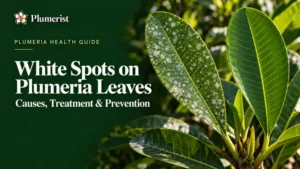
Identify white spots on plumeria leaves by texture, location and changes. Compare pests, mildew, deposits and damaged leaf tissue.
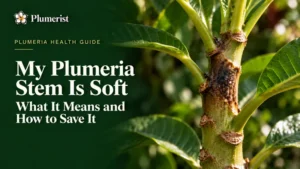
My plumeria stem is soft, and that is worth taking seriously right away. Treat softness as rot until you prove otherwise. Plumeria wood is naturally
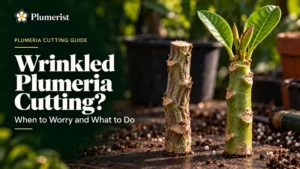
Assess a wrinkled plumeria cutting using root status, moisture and tissue changes, then choose when to water, inspect or keep waiting.