

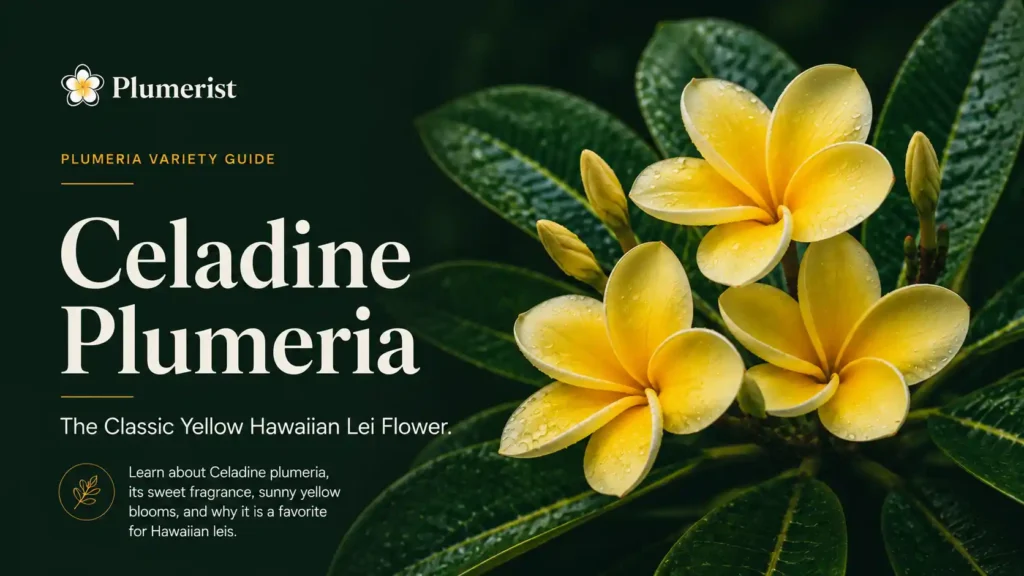
Close your eyes and picture a Hawaiian lei. That sunny yellow and white flower you’re seeing? There’s a very good chance it’s Celadine. This is the classic yellow plumeria, the one on the postcards and around the necks of every luau guest, and it’s earned that fame honestly.
If you want the quintessential plumeria, the sweet smelling, sunshine colored bloom that basically defines the whole genus, Celadine is it. Here’s everything worth knowing about this timeless variety.
Celadine at a Glance
| Thing | The short answer |
|---|---|
| Color | Bright, brilliant yellow with broad white edges |
| Flower size | Around 3 inches across |
| Fragrance | Sweet with a lovely citrus note |
| Blooming | Heavy and prolific, late spring through fall |
| Species | A cultivar of Plumeria rubra, so it’s deciduous |
| Mature size | Small tree, roughly 12 to 15 ft, smaller in a pot |
| Also known as | Common Yellow, thanks to how widespread it is |
What Celadine Looks Like
Celadine is the definition of a classic plumeria. The flowers are a bright, cheerful yellow in the center that fans out to clean, broad white edges, giving you that iconic yellow and white pinwheel look. It’s not a deep gold or a pastel, just a happy, sunshine yellow that reads instantly as tropical.
The blooms are a nice medium size, around 3 inches across, with rounded overlapping petals, and they cluster generously at the branch tips. A mature, happy Celadine practically glows, covered in bunch after bunch of those yellow and white flowers. It’s exactly the plumeria most people picture in their heads.
The Citrus Fragrance
Celadine doesn’t just look the part, it smells incredible, and that’s a big part of why it became the lei flower of choice. The scent is sweet with a bright, uplifting citrus note, clean and fresh rather than heavy. Like all plumeria, it gets noticeably stronger in the evening, so an after dinner walk past the plant is pure tropical bliss.
That combination of beauty and knockout fragrance is exactly why the flowers are prized for stringing into leis. They also hold their shape and scent nicely after picking, which I covered in how long plumeria flowers last.
Why Celadine Is So Popular
Beyond the looks and scent, Celadine is beloved for a very practical reason: it’s tough, easy, and it blooms like a champion.
It’s a famously prolific bloomer, flowering heavily from late spring right through fall. It’s also vigorous and easy to grow, one of the hardier, more forgiving plumeria out there, which is why it’s so widespread that it picked up the nickname Common Yellow. That reliability makes Celadine one of the best plumeria for beginners. If you’ve never grown one before, this is a fantastic place to start.
For the full spread of yellow options, my yellow plumeria guide has the rest of the family.
Celadine vs Aztec Gold
These are the two classic yellows you’ll bump into most, so here’s the quick difference. Celadine is a brighter, lighter yellow and white, the traditional Hawaiian lei look, with a fresh citrus scent. Aztec Gold is a deeper, richer gold with a fruity peach fragrance, and it tends to bloom even a touch more heavily.
Neither is better, it just comes down to the look and scent you want. Craving that postcard perfect Hawaiian yellow with a citrus lift? Celadine. Want a moodier, golden bloom that smells of peaches? Aztec Gold. Plenty of collectors happily grow both.
How to Care for Celadine
Good news: Celadine wants the standard plumeria care, and it’s about as forgiving as they come.
Give it full sun, six hours minimum and more is better, since sun powers all those blooms. Plant it in a fast draining mix so the roots never sit wet, which my best soil for plumeria guide breaks down.
Water deeply, then let it dry out before watering again, because overwatering is the number one plumeria killer. The seasonal schedule lives in plumeria water requirements. Through the growing season, feed it a high phosphorus bloom fertilizer to fuel that heavy flowering, per my feeding plumeria notes.
Since Celadine is a deciduous Plumeria rubra, it’ll drop its leaves and go dormant in winter, which is completely normal. It’s cold sensitive, so if you get frost, grow it in a pot and follow a simple winter care routine while it rests. Want even more flowers? My guide on getting plumeria to bloom has the playbook.
Growing Celadine From Cuttings
Like all named plumeria, Celadine is grown from cuttings rather than seeds. A cutting is a clone, so it grows up as a true Celadine with the same bright yellow lei flowers, while seeds would be a genetic gamble that rarely matches the parent. Take a cutting, let the end callus for a couple of weeks, and pot it in fast draining mix. Full steps are in my plumeria cuttings guide.
Frequently Asked Questions
What color is Celadine plumeria? A bright, cheerful yellow in the center with broad, clean white edges, the classic yellow and white Hawaiian lei look.
Is Celadine plumeria fragrant? Very. It has a sweet, fresh citrus scent that gets stronger in the evening, which is part of why it’s the traditional lei flower.
Why is Celadine called Common Yellow? Because it’s so widespread and widely grown. Its toughness and heavy blooming made it one of the most common yellow plumeria around.
Is Celadine a good beginner plumeria? One of the best. It’s vigorous, forgiving, and a prolific bloomer, so it rewards new growers without much fuss.
How big does Celadine plumeria get? In the ground it can reach about 12 to 15 feet over time, but it stays much smaller in a pot or with pruning.
Bottom line, Celadine is the plumeria that started a lot of people’s love affair with the genus, and it’s easy to see why. It’s the classic sunny lei flower, it smells of citrus, and it blooms its head off with very little effort. If you want the quintessential yellow, this is the one. Give it sun and sharp drainage and it’ll shine. Ready to compare? Head to the yellow plumeria guide or the full plumeria varieties rundown.