

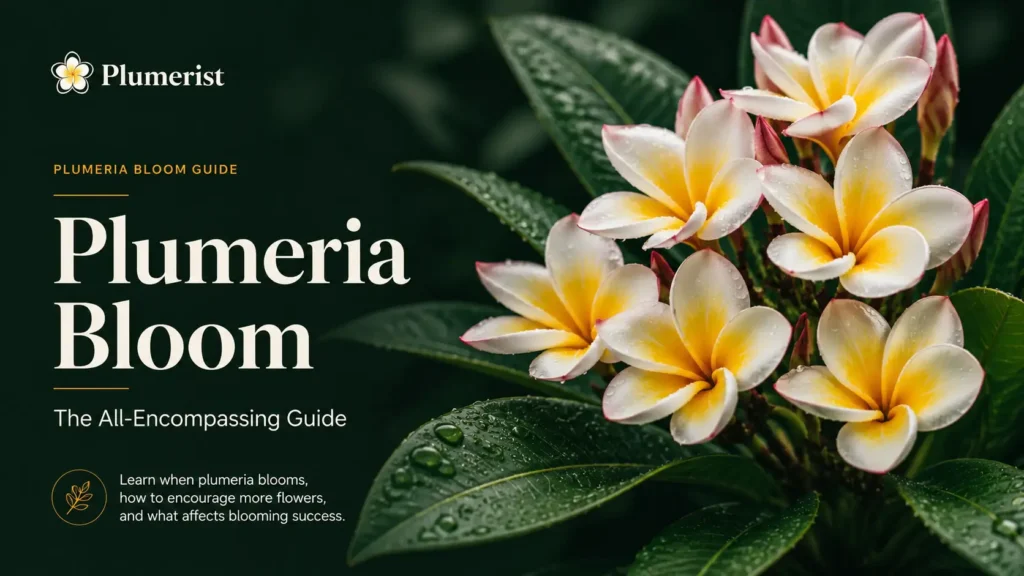
A plumeria bloom is part of a developing flower cluster at a branch tip. Buds in that cluster open over time, so one aging flower does not mean the whole display is finished. Plant maturity, cultivar and growing conditions influence the wider season.
Supporting flowers means providing suitable sun, warmth, roots, moisture and nutrients. It does not mean repeatedly adding phosphorus, cutting every tip or exposing the plant to a cold snap. Those shortcuts can create problems instead of flowers.
The three timelines behind a plumeria bloom
| Timeline | What it describes | Where to look next |
|---|---|---|
| First flowering | When a seedling, cutting or purchased plant becomes ready to flower. | The plant’s origin and maturity, not purchase date alone. |
| An active flower cluster | Buds develop and open sequentially on an inflorescence. | Whether unopened buds are still developing normally. |
| The flowering season | The period when the plant produces one or more flowering displays. | Climate, cultivar, light and the length of active growth. |
These clocks are easy to confuse. A short lived individual flower and a long seasonal display can occur on the same tree. Our flower lifespan guide separates the observations.
When to expect a plumeria bloom
In many temperate container settings, flowering is associated with the warmer growing season. Timing varies with climate and the particular plant. A calendar for Hawaii, Britain or a desert patio should not become a worldwide guarantee.
The University of Hawaii’s plumeria reference documents variation in cultivar flowering habits and flower quality. Some plants flower more heavily or for a different span than others. Buying a named cultivar does not remove the effect of local conditions.
Check the plant’s activity rather than expecting every branch to bloom together. One tip may be flowering while another produces leaves. No rule requires all tips to carry flowers simultaneously.
Maturity comes before a flowering deadline
Seed grown plants normally need a juvenile growing period. A cutting taken from mature wood starts from a different developmental position. It still needs successful rooting and suitable conditions.
Extension guidance gives roughly one to three years for cuttings and three years or more for seedlings. Those are broad expectations, not deadlines for every plant. Some cuttings can flower sooner, and seedlings can take longer.
Read the first flowering timeline before treating age as a nutrient problem. The date a plant was purchased does not tell you when it germinated or whether it flowered before sale.
Give useful light without a sudden sun shock
Established plumerias generally grow and flower best in a sunny position. The old advice to avoid direct sunlight while flowering was too broad. A permanent dim spot is not equivalent to protecting a plant during extreme heat.
Acclimate a plant arriving from shade or indoor storage. Check reflected heat and moisture alongside light exposure. Use the sunlight and grow light guide for placement decisions.
Water active roots, then allow drainage
A leafy established plant needs sufficient moisture during growth. Water when the root zone has dried sufficiently, wet it evenly and let excess drain. Avoid both persistent saturation and repeated severe drought.
Wilting or yellowing does not identify one cause. Check moisture and root condition before adding more water. A pot that stays wet while the plant declines needs investigation.
The claim that overwatered buds become too heavy and drop is not a useful diagnosis. Bud loss can involve several stresses and needs its own assessment. Our watering guide provides the root zone check.
Feed for a demonstrated need
Phosphorus is essential, but missing flowers do not prove a phosphorus shortage. Some traditional plumeria references recommend high phosphorus products. That recommendation does not show that adding more improves an adequately supplied container plant.
Review nutrients already in the media before choosing a feed. Follow the exact product’s rate and interval. Do not add concentrated phosphate as an emergency experiment whenever buds are absent.
Our fertilizer comparison distinguishes base feed candidates from supplements and amendments. It replaces a universal best bloom booster list with product roles and label limitations. There is no single ratio that guarantees the same result everywhere.
The five previously linked bloom products
These existing affiliate destinations remain available for readers who need to examine a particular product. They are not a shopping list to combine. Plumerist may earn a commission from qualifying purchases.
| Existing product | Relevant distinction | Before adding it |
|---|---|---|
| Down to Earth bone meal | A targeted phosphorus and calcium amendment. | Establish a need; it is not an overall feeding program. |
| Down to Earth rock phosphate | A mineral phosphorus amendment. | Do not treat it as a rapid response to absent buds. |
| Miracle-Gro Bloom Booster | A soluble feed with different packages and formulations in circulation. | Match the actual label, analysis and directions. |
| RAW Phosphorus | A concentrated supplement rather than a complete program. | Count phosphorus already supplied; avoid blind stacking. |
| Nelson plumeria food | A granular product marketed for plumeria with high phosphate content. | Check the current label and existing nutrient supply. |
No personal trial or guaranteed flowering improvement is claimed for those products. Organic ingredients also need appropriate handling and dosing. Keep fertilizers and animal derived amendments away from children and pets.
Do not prune automatically to make flowers
Flowers develop at branch tips. Removing tips can remove flowering potential and postpone the display. More branches later do not guarantee more flowers in the immediate season.
Prune for a defined structural or health reason. Do not pinch every spring tip or cut two nodes below every branch as a routine bloom treatment. Necessary removal of damaged tissue is different from automatic shaping.
Likewise, repot when the root zone needs attention. A full root disturbance every other year is not a universal flowering requirement. Use an appropriate container and media without unnecessary disruption.
No buds, lost buds and finished flowers are different problems
| What is happening | Useful interpretation | Next check |
|---|---|---|
| Healthy leaves but no flower cluster | Maturity, light, season or previous growth history may be relevant. | Review origin, actual exposure, pruning and care records. |
| Buds form but fail before opening | Development began, then something interrupted it. | Review recent weather, root stress, pests and physical injury. |
| Open flowers fade while other buds continue | Normal turnover may explain it. | Observe whether the rest of the cluster remains healthy. |
| A tip darkens or softens | Damage needs diagnosis; appearance alone does not identify a pathogen. | Inspect progression and growing conditions before cutting or spraying. |
Do not diagnose hidden bees or a named fungus solely because a flower fell. Identify visible damage or pests before selecting a treatment. The no flower troubleshooting guide starts with this distinction.
Pollination and fragrance are separate from opening a flower
Pollination is involved in seed production, not a requirement for a flower bud to open. An indoor plant does not need hand pollination to begin its normal display. Avoid presenting nectar production as the cause of plumeria fragrance or watering needs.
Fragrance varies among plants and conditions. It should not be described as one universal peaches and cream perfume. Nor should ornamental flowering advice become an unsupported treatment recommendation for headaches or inflammation.
Plumeria bloom questions
Must I remove every faded flower to get more?
Removing fallen or spoiled flowers can keep the area tidy. It is not established here as a way to force a new inflorescence. Avoid damaging healthy buds or cutting off an active cluster unnecessarily.
Does a plumeria bloom better after a cold shock?
Do not expose the plant to cold injury to chase flowers. Seasonal growth changes are different from a required damaging cold treatment. The winter protection guide explains that separation.
Can a healthy plant skip a flowering season?
Flowering can vary between years and among plants. Review conditions and recent changes rather than assuming a failure or guaranteed deficiency. Keep a record before making several treatments at once.
The Plumerist toolkit
The gear we would buy if we were starting over.
As an Amazon Associate, Plumerist earns from qualifying purchases.