

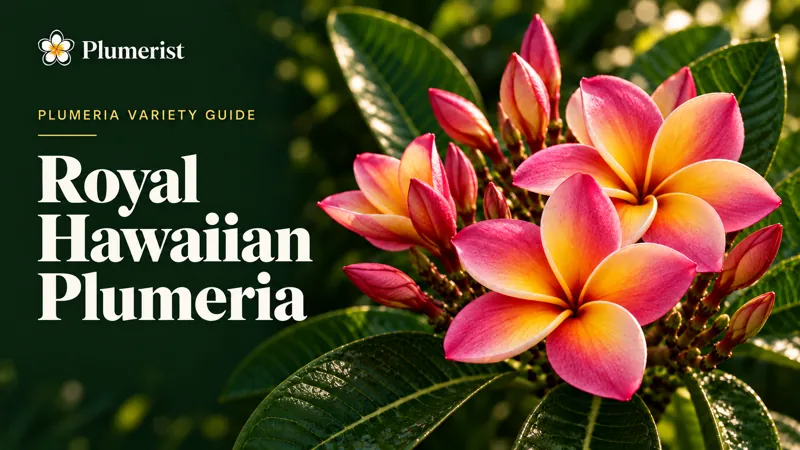
Number 264 is the Plumeria Society of America registration behind Royal Hawaiian plumeria. It is a cultivar bred in Thailand, despite the Hawaii inspired name. That detail matters, because this cultivar gets confused with at least one similarly named plant.
The name itself refers to color inspiration rather than geographic origin. Once the naming is sorted out, this cultivar is straightforward to describe. It is a hot pink, sweetly scented plant rated by growers as a strong, reliable bloomer.
What Royal Hawaiian Plumeria Looks Like
Blooms measure about 3.5 inches. They show deep pink petals, a small bright yellow center, and a strong red band on the reverse side. As flowers mature, the pink deepens and salmon colored veining becomes more visible.
Wide, slightly overlapping petals give each flower a full, rounded shape rather than a narrow one. The fragrance is a sweet, cinnamon leaning scent that growers frequently mention by name.
It stands apart from the plainer sweet or citrus notes common in other cultivars.
The tree itself is a medium grower with thick branching. Leaves are gray green, elliptical, and taper to a point.
Royal Hawaiian vs Plastic Pink: Untangling the Names
Royal Hawaiian is frequently sold under the additional name Plastic Pink. Nursery records treat the two as close enough to be listed together.
At the same time, records for this cultivar note something else. It is not the same plant as a separate one loosely called Hawaiian Royal Color.
That second name is close enough to cause real mixups when buying by name alone. Checking the registration number is the safer approach. Trusting only the label on a cutting is not enough.
A seller offering a plant simply as Royal Hawaiian may or may not have the registered cultivar. That is especially true if no other detail is given. Asking a follow up question before buying is worth the small effort.
Where Royal Hawaiian Comes From
Royal Hawaiian originates from Thailand. It was named by Marilyn Cohen of Marilyn’s Gardens, according to its registration history. The Hawaiian reference points to color, specifically the deep pink associated with the Royal Hawaiian Hotel in Waikiki.
It has nothing to do with a Hawaiian breeding origin. That distinction is worth remembering.
Plumeria names borrow place references loosely, often for marketing appeal. The actual breeding history rarely matches the name on the tag. Buyers who want an accurate origin story should look past the name and check the registration record directly.
Strengths and Weaknesses Growers Report
Royal Hawaiian earns consistent praise for prolific, long lasting blooms. Its branching is thick enough to support full flower clusters without looking sparse. It also sets seed readily, which growers experimenting with their own crosses tend to appreciate.
The tradeoffs are mostly about naming confusion rather than plant performance. Buyers need to watch for the Plastic Pink alias and the separate Hawaiian Royal Color plant.
Bark on mature specimens is also described as somewhat nubby rather than smooth. That is a minor cosmetic note more than a real flaw.
Royal Hawaiian for Lei Making
Its strong keeping quality and sweet cinnamon scent make this cultivar a popular choice for leis and cut arrangements. Blooms hold their shape and color for several days once cut. That durability matters as much as the color itself for event use.
The full, rounded petal shape also strings neatly compared to narrower flowered cultivars. Growers making leis in bulk often favor cultivars like this one. The flowers simply hold up better under handling.
Growing Royal Hawaiian
As a medium grower, this cultivar suits a wide range of garden sizes. It also adapts well to large containers. It follows the full care routine shared by most rubra cultivars.
Full sun, well draining soil, and a consistent warm season feeding schedule support its thick branching habit. It also sets seed easily and blooms heavily. A steady fertilizing program through spring and summer keeps flower production and branch growth on pace with each other.
Royal Hawaiian vs Other Pink Plumeria
Within the broader pink plumeria category, Royal Hawaiian stands out mainly for its cinnamon scent. The reverse side red banding is another distinguishing trait. Several other pink cultivars share a similar hot pink base without that particular fragrance profile.
Growers choosing between pink cultivars for lei making often weigh scent as heavily as color. Royal Hawaiian’s fragrance is one of its more distinctive traits compared to plainer sweet scented pink types. Flower size and petal shape are the other two factors most growers compare before settling on a final cultivar list.
Buying Royal Hawaiian
Royal Hawaiian plumeria is available as a rooted plant, an unrooted cutting, or a grafted plant. Specialty plumeria growers are the usual source. Given the naming overlap with Plastic Pink and Hawaiian Royal Color, checking the registration number is worth the extra step.
A clear photo showing the yellow center and reverse red band also helps confirm identity. Seed grown plumeria will not reliably reproduce this exact color combination, since each seedling carries its own genetic mix. A cutting or graft from a confirmed plant is the only way to guarantee the registered look.
Because it is a medium grower rather than a compact one, gardeners with tight spaces should plan its placement carefully. Reviewing how large a plumeria typically grows helps set realistic expectations before choosing a permanent spot.
The Plumerist toolkit
The gear we would buy if we were starting over.
As an Amazon Associate, Plumerist earns from qualifying purchases.
Frequently Asked Questions
Is Royal Hawaiian plumeria actually from Hawaii?
No. Royal Hawaiian plumeria was bred in Thailand. The name references the deep pink color of the Royal Hawaiian Hotel in Waikiki rather than a Hawaiian breeding origin.
Is Royal Hawaiian the same as Plastic Pink?
Nursery records list Plastic Pink as a close alias for this cultivar. Buyers should still confirm with a seller when the name alone is the only detail given.
Is Royal Hawaiian the same as Hawaiian Royal Color?
No. Records for this cultivar specifically note it is a different plant from one separately known as Hawaiian Royal Color, despite the similar sounding names.
What does Royal Hawaiian smell like?
Growers describe a sweet, cinnamon leaning fragrance. It is more distinctive than the plainer sweet scent found in many other pink cultivars.
How big does Royal Hawaiian grow?
It is classed as a medium grower with thick branching. That habit makes it suitable for both garden beds and large containers.