

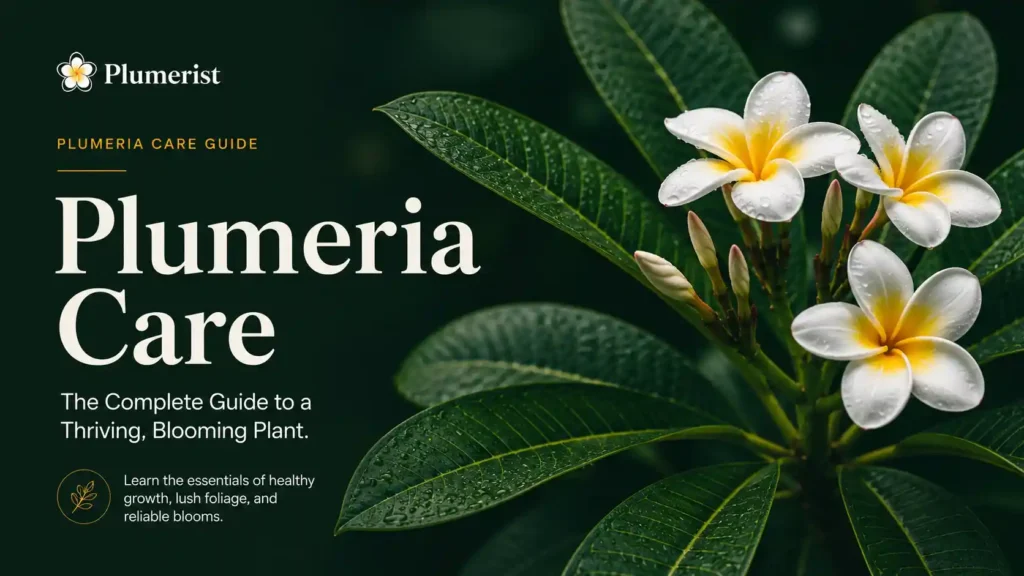
So you’ve got a plumeria, or you’re about to, and you want to keep it happy. Good news: plumeria are honestly way easier to care for than their exotic, tropical looks suggest. Nail a few basics and this plant will reward you with those famous fragrant, pinwheel blooms for years.
I’ve killed a couple over the years figuring this out, so let me save you the trouble. This is my complete plumeria care guide, covering everything from sun and soil to watering, feeding, pruning, and getting through winter. Think of it as home base. Wherever you need to go deeper on something, I’ll point you to a full guide on it.
Let’s get into it.
Plumeria Care Quick Start
| What it needs | The short version |
|---|---|
| Sunlight | Full sun, 6 or more hours a day, and more is better |
| Soil | Fast draining and gritty, never soggy |
| Water | Deep soak, then let it dry out. Overwatering is the top killer |
| Fertilizer | High phosphorus bloom food during the growing season |
| Temperature | Warm. Most types go dormant and drop leaves below about 50F |
| Hardiness | USDA zones 9 to 11, or grown in pots and overwintered elsewhere |
| Bloom season | Late spring through fall for most types |
Sunlight: The Number One Rule
If you remember one thing about plumeria, make it this: they are sun worshippers, full stop. Six hours of direct sun a day is the bare minimum, and honestly the more you can give them, the better they bloom. Eight hours is even better.
A plumeria that isn’t getting enough light will tell you. It gets leggy and stretched out, the leaves look pale, and worst of all, it barely flowers. If yours isn’t blooming, the very first thing I’d check is whether it’s parked somewhere bright enough. Nine times out of ten, that’s the fix.
So give it the sunniest spot you’ve got, whether that’s a south facing patch of yard or the brightest window or balcony you own.
Soil: Drainage Is Everything
Plumeria are picky about exactly one thing about soil, but they are really picky about it: drainage. Their roots need to dry out between waterings, and they will rot fast if they sit in wet, heavy soil.
So skip regular potting mix, which holds way too much water. What you want is a gritty, fast draining blend, the kind of stuff cactus and succulents love, usually with added perlite or pumice for extra drainage. I break down the exact recipe I use in my guide to the best soil for plumeria.
Whatever you plant it in, the golden rule is the same: water should run straight through, never linger.
Watering: Where Most People Go Wrong
This is the big one, the thing that kills more plumeria than anything else combined. So read this part twice.
The rule is simple: water deeply, then let the soil dry out before you water again. When you do water, soak it thoroughly so the whole root zone gets a drink. Then leave it alone until the top couple of inches of soil are dry. Only then do you water again.
Here’s the mistake almost everyone makes: they overwater. Plumeria would much rather be too dry than too wet. A slightly thirsty plumeria bounces right back, but an overwatered one gets root rot and soft, mushy stems, and that is often a death sentence. When in doubt, water less.
Your watering also changes with the seasons, heavier in the hot growing months and almost nothing in winter when the plant is dormant. I laid out the full seasonal schedule in plumeria water requirements.
Fertilizing for Big Blooms
Want loads of flowers? Feeding is your secret weapon.
The key is picking the right fertilizer. You want one that’s high in phosphorus, which is the middle number on the bag, because phosphorus fuels flowers. A common pick is something like a 10-30-10 blend, or any dedicated bloom fertilizer. What you want to avoid is a high nitrogen feed, like generic lawn fertilizer, because too much nitrogen gives you tons of leafy green growth and hardly any blooms.
Feed regularly through the growing season, from spring into early fall, then stop completely once the plant goes dormant for winter. My full feeding plumeria guide has the schedule and the products I reach for.
Pruning and Shaping
Here’s some relief: plumeria don’t actually need much pruning to stay healthy. But a little strategic trimming lets you control the size and shape, and it can even encourage more branching, which means more spots for flowers.
The best time to prune is late winter or early spring, before the plant wakes up and pushes new growth. You can cut it back to shape it, remove any dead or damaged branches, and open up the middle for airflow. Just know that each cut tip usually splits into a couple of new branches, so pruning is also how you build a fuller, bushier plant over time. I walk through exactly how and where to cut in my guide on how to prune plumeria.
Pots and Repotting
For a huge number of us, especially anyone outside the warmest climates, plumeria are container plants, and that’s totally fine. Growing in a pot actually hands you a superpower: you can move the plant to chase the sun in summer and haul it somewhere warm before winter.
The main things are excellent drainage holes and the right pot size. Plumeria don’t mind being a little snug in their pots, and too big a pot just holds extra wet soil around the roots. My guide to the best pots for plumeria covers what to look for.
Every couple of years, or when it gets root bound, you’ll want to bump it up a size. Here’s my full walkthrough on repotting plumeria without stressing the plant out.
Winter Care and Dormancy
This is the part that freaks out new plumeria owners, so let me reassure you right upfront: it is completely normal.
Most plumeria, the deciduous kinds, which is the vast majority, go dormant in winter. As it cools down, the plant drops all of its leaves and just stands there as a cluster of bare, chunky stems. It looks dead. It is not dead. It’s sleeping, and it’ll leaf right back out come spring.
If you’re in a warm, frost free climate (roughly USDA zones 10 to 11), you can leave it outside. If you get frost, that’s your cue to move potted plants somewhere warm and sheltered, like a garage or a bright indoor spot. During dormancy, cut way back on water, almost to nothing, and stop fertilizing entirely. My complete winter care routine has the full rundown.
One exception: the evergreen types like the Singapore White don’t fully go dormant, so they need to stay warmer and a little more watered through winter. More on the different types in a bit.
How to Get More Flowers
Everyone wants more blooms, so here’s the short version of what actually drives flowering.
It comes down to three things: sun, the right fertilizer, and patience. Maximize the sunlight, feed with that high phosphorus bloom food, and give a young or newly moved plant a season to settle in, because plumeria often skip flowering while they’re stressed or getting established. Get those right and the blooms will come. I put together a whole deep dive on this in how to get plumeria to bloom, and once you’ve got flowers, here’s how long the blooms actually last.
Propagating Your Plumeria
Once you’ve got one plumeria thriving, you’ll probably want more, and the great news is they clone super easily from cuttings. A cutting is a copy of the parent, so you get the exact same flower, unlike seeds which are a total genetic gamble. Take a cutting, let the cut end callus over for a couple of weeks, then pot it up in that same fast draining mix. Full steps in my plumeria cuttings guide.
Common Plumeria Problems
Even easy plants hit the occasional snag. Here are the ones you’re most likely to run into.
- Yellow leaves or mushy stems. Almost always overwatering. Back off the water and check your drainage.
- Rust on the leaves. Little orange, powdery spots on the undersides of the leaves are plumeria rust, a common fungus, especially in humid weather. It’s ugly but rarely fatal. Here’s how I deal with it in my plumeria rust guide.
- No flowers. Usually not enough sun, or too much nitrogen fertilizer. See the sunlight and feeding sections above.
- Pests. Keep an eye out for spider mites, mealybugs, scale, and the plumeria stem borer. Most are easy to handle if you catch them early.
- Bare in winter. Not a problem at all, just normal dormancy, as covered above.
Is Plumeria Toxic?
Quick safety note. Plumeria have a milky white sap that can irritate skin and eyes and is mildly toxic if eaten, so it’s worth keeping curious pets and small kids from chewing on the plant, and washing your hands after you prune. I go into detail on the pet side in whether plumeria is toxic to dogs.
Care Can Vary by Type
One last thing worth knowing: care shifts a little depending on which plumeria you have. The deciduous types, which include most colorful plumeria and the classic Plumeria rubra, go fully dormant in winter, while the evergreen ones like the Singapore White stay leafy and want more warmth year round. If you’re not totally sure what you’ve got, my plumeria varieties guide breaks down all the types and colors.
Frequently Asked Questions
How often should I water a plumeria? Deeply, then only again once the top couple of inches of soil are dry. That might be every few days in peak summer heat and almost never during winter dormancy. Overwatering is the number one killer, so always err on the dry side.
Why isn’t my plumeria blooming? Most often not enough sun, or too much nitrogen fertilizer. Give it six or more hours of direct sun, switch to a high phosphorus bloom food, and be patient with young plants.
Why is my plumeria dropping all its leaves? If it’s fall or winter, that’s normal dormancy, not a problem. Deciduous plumeria go bare every year and leaf back out in spring.
What’s the best fertilizer for plumeria? One high in phosphorus (the middle number), like a 10-30-10 or a dedicated bloom formula. Avoid high nitrogen lawn feed, which grows leaves instead of flowers.
Can I grow plumeria in a pot? Absolutely, and most people outside the tropics do. A pot lets you move it into the sun in summer and somewhere warm for winter. Just use fast draining soil and a pot with good drainage.
What temperature is too cold for plumeria? Most types get unhappy and start going dormant below about 50F, and frost can damage or kill them. Bring potted plants somewhere warm before the first freeze.
And that’s the whole game. Plumeria really do boil down to a handful of simple rules: lots of sun, fast draining soil, water deeply but not too often, feed for blooms in the growing season, and let it rest in winter. Get those right and you’ll have a thriving, fragrant plant that asks for surprisingly little in return. From here, dig into whatever you need next, whether that’s soil, watering, feeding, pruning, or figuring out which variety you’ve got. Happy growing.