

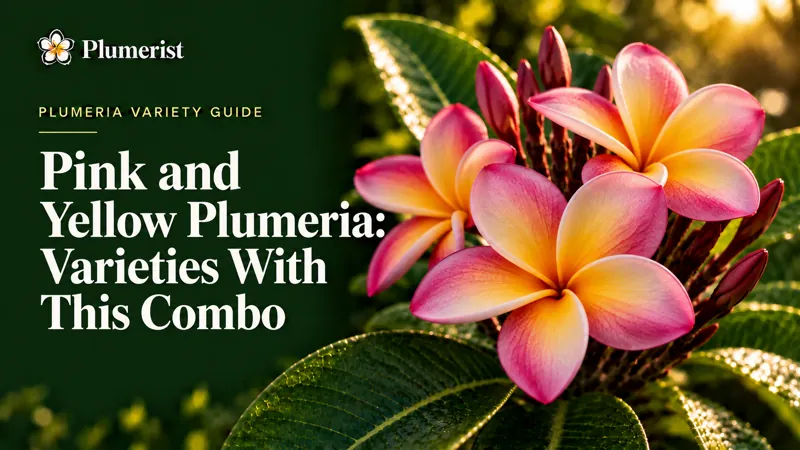
A pink and yellow plumeria is any bloom with pink or rose petals fading into a warm tangerine throat. It is one of the most photographed color patterns in the genus. It is also one of the most variable, since the exact balance shifts from plant to plant and season to season.
What Counts as Pink and Yellow Plumeria
The classic version comes from the wild type form of Plumeria rubra, the ancestor behind most modern pink cultivars. Its flowers show pink of varying intensity fading into a tangerine yellow center. This pattern shows up across dozens of named cultivars, not just one specific variety.
Because so many cultivars share this look, exact identification usually needs more than a photo. Petal shape, fragrance, and how sharply the colors transition all help narrow things down.
The Pigments Behind the Two Colors
The yellow throat comes from carotenoid pigments, the same family of compounds responsible for carrot and marigold color. The pink or rose tone comes from a separate group called anthocyanins. Because the two pigment systems respond to light and temperature differently, they rarely shift in perfect lockstep.
That is part of why the pink to yellow ratio on a single flower can look different from one week to the next. One pigment system can react to a heat wave while the other barely moves.
Well Known Pink and Yellow Cultivars
The Mardi Gras cultivar guide adds a named comparison to this color group. A similar color combination alone does not establish a plant’s identity.
Kaneohe Sunburst is one of the more recognizable named examples. It has large flowers combining bright pink with a glowing golden center.
Vera Cruz Rose takes a softer approach. It blends yellow, peach, and pale pink in an ombre pattern along the petal edge, rather than a sharp two tone split.
Many unnamed seedlings share this same general coloring. If your plant does not match a specific named variety exactly, it may simply be one of these seedlings.
How Heat and Sun Shift the Balance
Growers are genuinely split on this point, and it is worth stating honestly. Some report that hot, intense sun deepens both the pink and yellow tones into richer salmon and gold shades. Others report the opposite, saying their pinks and reds intensify more in cooler weather.
One thing is not in dispute. The balance does shift with conditions.
A flower that leans mostly yellow in spring can show more pink once summer heat sets in. The reverse also happens, depending on the cultivar and local climate.
Flower age matters too. A newly opened bloom often shows the sharpest contrast. An older flower fades toward a softer, blended look within a few days.
Telling Similar Cultivars Apart
Start with the transition style. Some pink and yellow plumeria varieties have a hard line between the two colors. Others blend gradually in an ombre pattern with no clear edge, and that alone separates several look alike cultivars.
Fragrance is the next clue. Pink toned cultivars often carry a rose or fruity scent, distinct from the citrus notes common in yellow dominant varieties. Petal count and overall flower size can also vary between cultivars that look similar in photos.
How This Combo Compares to White and Yellow
Pink and yellow plumeria and its white and yellow sibling combo share the same basic structure. Both fade from a colored petal edge into a yellow throat. The difference comes down to which base color, pink or white, dominates the petal.
If your bloom leans toward true rose or salmon rather than pale blush, pink and yellow is almost certainly the better description. Our broader pink plumeria overview covers the full range of pink toned varieties beyond this specific two tone look.
When the Combo Includes a Third Color
Some plumeria show pink, yellow, and a third color like white or orange on the same flower. These multicolor blooms are usually marketed as rainbow types rather than simple pink and yellow. Our rainbow plumeria guide covers that broader category in more detail.
The line between a pink and yellow bloom and a true rainbow one can blur late in a flower’s life. Fading petals sometimes pick up a faint third hue that was not visible on the first day it opened.
Growing Notes
Pink and yellow cultivars grow the same way as any other plumeria rubra type. Full sun, fast draining soil, and a dry rest period in winter suit them all equally well.
Color intensity responds to growing conditions, but overall plant health depends on the same basics. Our guide to every color and type covers those fundamentals alongside dozens of other color patterns worth exploring.
When Yellow or Pink Nearly Takes Over
Some flowers sold as pink and yellow lean so heavily toward one color that the label feels like a stretch. If yours is almost entirely yellow with just a faint pink blush at the tip, it may fit better in our yellow plumeria guide instead. If pink dominates completely and the yellow throat is barely visible, check our pink varieties for a closer match.
There is no strict cutoff between categories. Sellers and growers use these labels loosely, so trust your own eyes over any single listing description.
Popular in Leis and Landscapes
Pink and yellow blooms are a favorite for fresh flower leis and bouquets because the two tone look photographs well and holds up during stringing. Our guide to plumeria flower bouquets covers handling tips if you plan to cut and arrange blooms yourself.
In the landscape, these cultivars work well as a single specimen tree where the color contrast can be appreciated up close.
Buying and Naming Caution
Named cultivars in this color range often get relabeled by resellers using generic terms like pink sunset or tropical blush. Those are not always the true registered cultivar name. If a specific variety matters to you, ask the seller for its documented origin rather than trusting a catalog photo alone.
The Plumerist toolkit
The gear we would buy if we were starting over.
As an Amazon Associate, Plumerist earns from qualifying purchases.
Frequently Asked Questions
What plumeria variety is pink with a yellow center?
Many cultivars share this look, since it traces back to the common wild type form of Plumeria rubra. Kaneohe Sunburst and Vera Cruz Rose are two well known named examples.
Does heat make pink and yellow plumeria more colorful?
Growers report mixed results. Some see deeper color in hot sun, while others notice more intense pink tones during cooler weather instead.
How is pink and yellow plumeria different from rainbow plumeria?
Pink and yellow plumeria typically shows just two colors. Rainbow types add a third color, often white or orange, to the same flower.
Why do two pink and yellow plumeria flowers look different from each other?
Flower age, sun exposure, and even time of day all affect how the colors appear. The same plant can produce slightly different blooms across one season.
Is a pink and yellow plumeria hard to grow?
No. These cultivars need the same full sun, fast draining soil, and dry winter rest as any other plumeria rubra variety.