

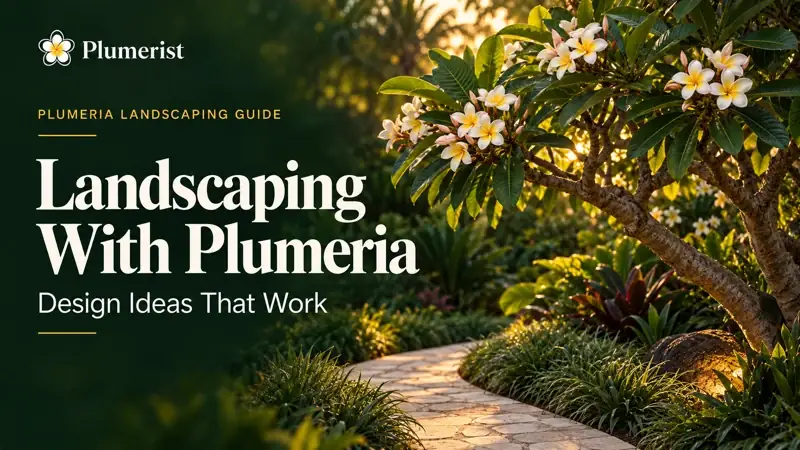
Picture a single plumeria in full bloom at the corner of a patio, with nothing crowding its canopy. The flowers are visible from every angle. The scent carries across the yard, and the bare branches even look sculptural in winter.
That is the payoff of landscaping with plumeria on purpose, instead of just planting one wherever there is space. The tree wants full sun, it drops some litter, and it grows into a real specimen shape over years. Good landscaping with plumeria plans around those habits from the start.
Placing Plumeria as a Specimen Tree
Plumeria earns specimen placement more than most tropical shrubs. A mature plant develops a thick, candelabra like branching pattern. That shape looks striking even with no flowers at all.
Give it open space where the shape stays visible from a patio, a window, or the street. Spacing matters more than most new growers expect. A single plumeria can reach six to twenty feet depending on the type.
Plant it at least six to eight feet from structures and walkways. Details on how big plumeria actually get help set realistic spacing before the first shovel goes in the ground.
Underplanting and Companion Choices
Choosing another flowering plant for the same space? Compare plumeria with hibiscus before deciding which role each plant should fill in the bed.
The area beneath a plumeria should stay open for air and light. Low, drought tolerant plants that share the same watering needs work best here. Bromeliads, agapanthus, and dwarf bougainvillea will not compete for water the way thirsty groundcovers do.
Avoid anything that needs frequent watering right at the base. Consistently damp soil around the trunk invites rot. Ornamental grasses and succulents pair well too, adding texture without crowding the root zone.
Keep companion plants low enough that they do not shade the plumeria’s own lower branches. This kind of landscaping with plumeria keeps the whole bed healthy, not just the tree.
Poolside Plumeria: The Honest Tradeoffs
Plumeria looks stunning near a pool, and many resorts use it exactly that way. It also drops flowers, seed pods, and sticky sap. That litter can stain light colored coping and decking over time.
Setting the tree back from the immediate pool deck keeps most of the mess on soil or mulch instead of hardscape. A plumeria planted a little further out still reads as a poolside feature. If low mess matters more than close proximity, treat that as a design tradeoff rather than a reason to skip plumeria.
Courtyard and Container Compositions
A courtyard is one of the best settings for plumeria. Walls hold warmth and block wind that can snap the tree’s brittle branches. Life in a pot also opens up patios and rooftop gardens where an in ground tree would not fit.
A single large glazed pot can anchor a tight courtyard on its own. Grouping two or three container plumeria in different bloom colors builds a layered display without any garden bed at all. This approach also makes it easy to move plants out of harsh sun or a cold snap.
Container growing suits anyone still deciding between in ground and potted planting while they learn the plant’s needs. Planting steps for both methods cover the setup either way.
Planning for Winter Gaps in Marginal Zones
In climates cooler than plumeria’s ideal range, the tree goes leafless for months each winter. A landscape plan built entirely around plumeria can look empty during that stretch. Evergreen structure nearby fixes this, and clumping palms or broadleaf shrubs are common choices.
Bulbs or winter blooming annuals planted around the base can also carry visual interest while the plumeria rests. This kind of planning matters most in marginal zones, where plumeria spends a longer stretch dormant than it would in the tropics. A design that only looks good in bloom is not finished yet.
Placing Plumeria for Scent
Fragrance is part of the design brief, not an afterthought. Plumeria scent carries best in still evening air, so a spot near a patio, entryway, or bedroom window puts it to use. Not every cultivar is equally fragrant, and checking what plumeria actually smells like across different types helps before choosing one for a spot people will sit near often.
Planting near a seating area also means dealing with fallen flowers underfoot, which is a minor tradeoff compared to the scent payoff. A slightly raised bed or a ring of mulch keeps fallen blooms from tracking indoors.
Soil and Drainage Across the Bed
Landscaping with plumeria only works long term if the whole bed drains the way the tree needs. Heavy clay that holds water around the roots causes problems no amount of good design can fix. Building the bed up with amended, well draining soil before planting saves years of drainage trouble later.
This matters even more when companion plants are mixed in, since some drought tolerant choices still want slightly different drainage than plumeria prefers. Testing how quickly water moves through the soil before finalizing a planting plan is worth the extra week it takes.
What Not to Plant Beneath Plumeria
Skip anything that needs consistently moist soil, since that clashes with the dry spells plumeria roots prefer. Avoid tall, dense shrubs that block airflow around the trunk and lower branches. Poor airflow raises the risk of fungal problems on the tree itself.
Vines that climb into the canopy are also a poor match. They compete for light and can damage brittle branches as they twist through them. Keep the space around the trunk open rather than layered with climbers.
Rows and Groupings for Larger Landscapes
A single specimen is not the only option in a larger yard. Planted in a loose row along a driveway or property line, plumeria can double as a seasonal screen and a bloom display at once. Space plants generously in a row, since crowding trades away the branching shape that makes plumeria worth featuring in the first place.
Mixing two or three cultivars with different bloom colors along a row reads as more intentional than a single repeated variety. Uneven spacing, with small gaps and clusters instead of a rigid grid, tends to look more natural in a home landscape than a formal avenue planting.
The Plumerist toolkit
The gear we would buy if we were starting over.
As an Amazon Associate, Plumerist earns from qualifying purchases.
Frequently Asked Questions
How far should plumeria be planted from a house or fence?
At least six to eight feet is a safe minimum for most types, allowing room for a mature canopy. Larger growing types benefit from even more space.
Is plumeria too messy to plant near a pool?
Not necessarily, but flowers, pods, and sap can stain light colored decking over time. Setting the tree back a few feet from the immediate deck reduces most of the mess.
What plants pair well with plumeria in a garden bed?
Drought tolerant, low growing plants like bromeliads, agapanthus, and ornamental grasses share plumeria’s watering needs well. Avoid moisture loving groundcovers directly at the base.
Can plumeria work in a small courtyard or patio garden?
Yes, especially in a large container where a single specimen can anchor the whole space. Walls also offer wind protection that benefits the tree’s brittle branches.
What should I plant to fill winter gaps when landscaping with plumeria in cooler zones?
Evergreen structure like clumping palms or broadleaf shrubs keeps the bed from looking bare once plumeria drops its leaves. Winter blooming bulbs or annuals around the base add seasonal color during dormancy.