

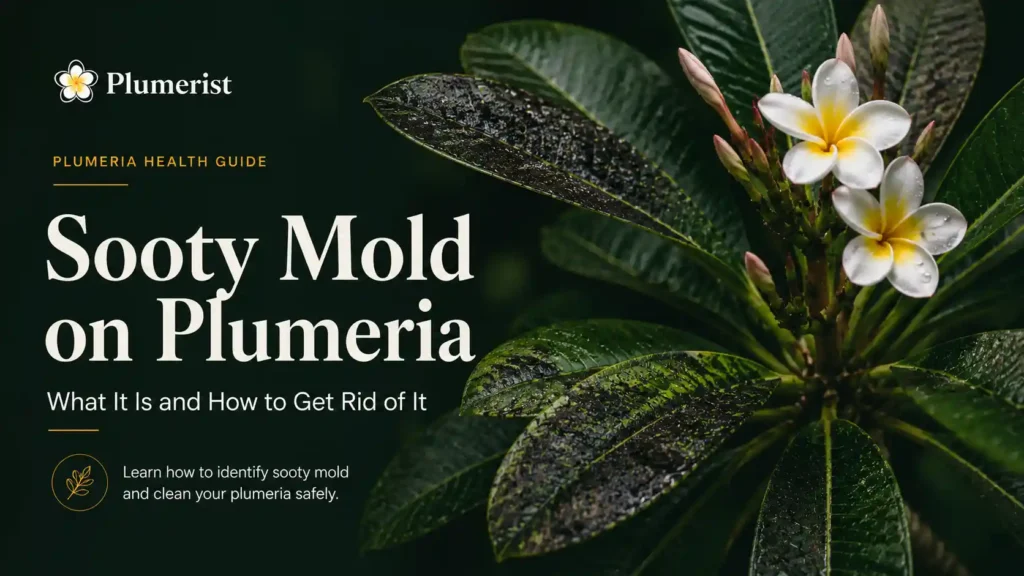
The black, dusty coating on your plumeria leaves isn’t eating your plant. In fact, it isn’t even growing on your plant. It’s growing on something a pest left behind, and once you know that, the whole thing becomes easy to fix.
That black layer is sooty mold, and it’s less a disease and more a warning light on your dashboard. Let me explain what it’s really telling you, and how to clear it up for good.
What Sooty Mold Actually Is
Sooty mold is a black, powdery coating that spreads across the leaves, and sometimes the stems, of an affected plumeria. The single most useful thing to know is this: it wipes off. Rub a leaf with a damp cloth and the black comes away, leaving green underneath. That’s how you tell it apart from a true leaf spot disease, which stains the actual tissue and won’t rub off.
Here’s the key idea. The mold is a fungus, but it doesn’t feed on your plumeria at all. It feeds on a sticky, sugary substance sitting on top of the leaves. So the mold isn’t really the problem, it’s the evidence of one.
The Real Cause: Sap Sucking Pests
That sugary substance is called honeydew, and it’s the waste left behind by sap sucking insects. Pests like aphids, scale, and mealybugs pierce the leaves, drink the sap, and excrete honeydew all over the foliage below them. The sooty mold simply moves in and grows on that sugary film.
This is why the mold is really a messenger. If you’ve got sooty mold, you’ve almost certainly got a sap sucking pest somewhere on the plant, usually hiding on the undersides of the leaves. Watch for ants too, since ants actually farm these pests for their honeydew and protect them from predators, so a trail of ants marching up your plumeria is another big clue.
Does Sooty Mold Actually Hurt Your Plumeria?
Mostly, no, at least not directly. The mold doesn’t invade or damage the plant tissue the way a real disease does. But don’t shrug it off completely, because a heavy black coating blocks sunlight from reaching the leaf, and that interferes with photosynthesis. Over time, a plant that can’t gather light properly grows weaker and puts out fewer flowers, so a thick, lingering case is worth clearing. And of course, the pests causing it are doing their own damage in the meantime, which is the bigger reason to act. Getting the plant clean and healthy again helps it get back to blooming.
How to Get Rid of Sooty Mold
Treating sooty mold is a two step job, and the order matters. Cleaning the leaves without fixing the cause just means the mold comes right back.
Step one: stop the honeydew at the source. This is the real fix. Track down and treat the sap sucking pest that’s feeding the mold, whether that’s aphids, scale, or mealybugs, using the matching guide above. Once the pests are gone, no new honeydew forms, and the mold has nothing left to grow on, so it naturally fades. If ants are involved, deal with them too, or they’ll just restock the pests.
Step two: clean off what’s there. Wipe the leaves with a damp cloth or a spray of mild dish soap and water, then rinse. For heavily coated leaves, it’s often easiest to prune them off, which also improves airflow, and my pruning guide shows how to do it cleanly. The mold won’t vanish overnight, but between wiping and the honeydew drying up, your plumeria will be green again before long.
How to Prevent It Coming Back
Since sooty mold is purely a pest side effect, prevention is really just pest prevention. Check your plumeria regularly, especially the undersides of the leaves, so you catch aphids, scale, and mealybugs while their numbers are small and before any honeydew builds up. Keep an eye out for ants and shut down their trails. And keep the plant healthy and open to good airflow, since a strong plant with room to breathe is both less attractive to pests and less hospitable to mold.
Frequently Asked Questions
What is the black stuff on my plumeria leaves? It’s sooty mold, a fungus that grows on the sticky honeydew left by sap sucking pests. It wipes off with a damp cloth, which is how you know it’s mold and not a leaf spot disease.
Is sooty mold harmful to plumeria? Not directly. It doesn’t damage the tissue, but a heavy coating blocks light and weakens the plant over time. The pests causing it are the real threat.
How do I get rid of sooty mold on plumeria? Fix the pest problem first so no new honeydew forms, then wipe or wash the black coating off the leaves. Clean without treating the pest and it just returns.
Why do I have ants on my plumeria with the sooty mold? Ants farm the sap sucking pests for their honeydew and protect them. Controlling the ants makes it much easier to get the pests, and the mold, under control.
Bottom line, sooty mold looks scary but it’s really just a symptom with a clear cause. That black coating is a fungus growing on pest honeydew, not a disease attacking your plant. Find and treat the sap sucking pest behind it, wipe the leaves clean, and it fades away for good. Start with the likely culprit in my aphids, scale, or mealybugs guide.