

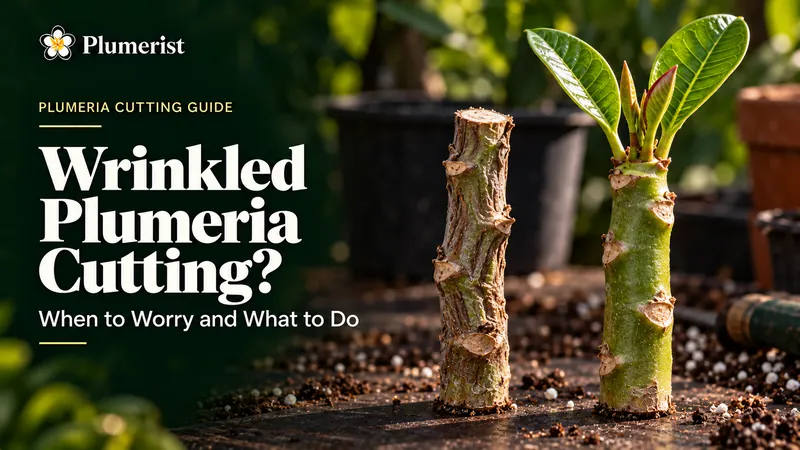
A wrinkled plumeria cutting can be losing stored moisture, struggling to establish roots, or developing damaged tissue. Wrinkles alone do not tell you which. Check the base, rooting stage and pot conditions before adding water or cutting the stem.
The same puckered surface can appear in a dry cutting and in a plant unable to take up water. That is why a quick squeeze is not a complete diagnosis. The useful question is what else has changed.
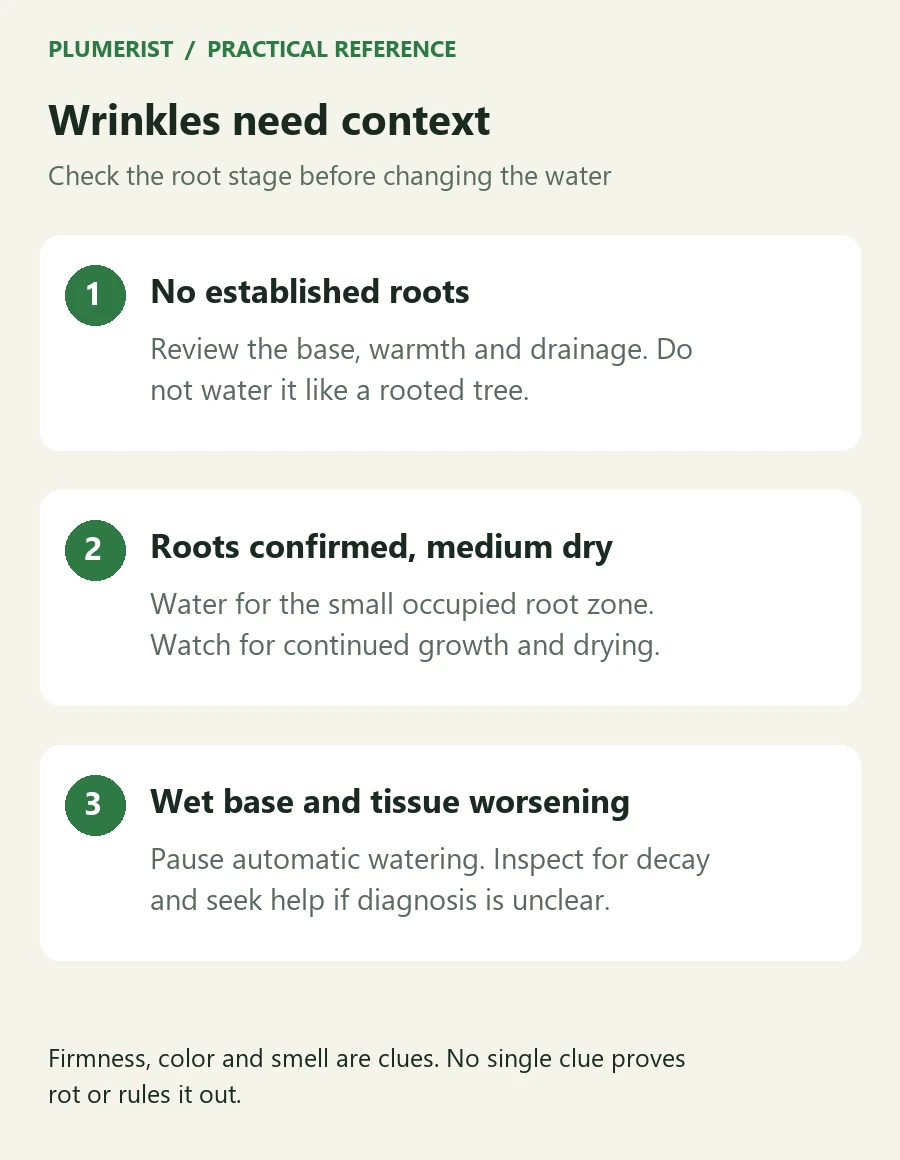
First establish whether the cutting has roots
An unrooted cutting starts with moisture stored in its stem. A recently rooted cutting has a small, vulnerable root system. An established plant has a different capacity again.
Do not place all three on the same weekly schedule. A large wet pot around an unrooted base can remain damp without supplying a functioning root system. More frequent watering can make that situation worse.
Small leaves do not prove that the cutting has developed useful roots. Look through a suitable clear container or at visible drainage openings where possible. Avoid repeatedly lifting, twisting or tugging it to check.
Inspect a wrinkled plumeria cutting without injuring it
Use a gentle touch along the stem and compare different areas. Record whether a soft patch is localized, spreading or associated with discoloration. Pressing hard enough to bruise tissue creates another problem.
A relatively firm stem is encouraging, but it does not rule out damage at the base or inside. Softness can reflect tissue water loss as well as decay. Increasing mushiness, wet collapse or a spreading dark area deserves closer inspection.
Smell is another clue, not a test with a guaranteed result. An unpleasant odor can accompany decay, but its absence does not establish health. Do not bend the cutting or puncture it with a pin to see whether sap appears.
The soft stem guide covers the broader symptom. Use the table below to decide what to investigate. It cannot identify a pathogen from appearance.
| What you observe | Possible explanation | Useful next step |
|---|---|---|
| Unrooted, mildly wrinkled, no worsening lesion | Stored moisture loss or slow establishment | Review warmth, stability and the rooting medium. Track change rather than soaking automatically. |
| Roots confirmed, occupied root zone dry | The new plant may need water | Water appropriately for the roots and conditions, then check the drying pattern. |
| Wet medium with worsening softness or darkening | Impaired roots, decay or other damage | Stop automatic watering and inspect the base or roots carefully. |
| Shrinking stem exposed to harsh heat or sun | Moisture loss or heat injury may be contributing | Provide appropriate protection without moving it into cold, stagnant storage. |
| Repeated collapse despite setup changes | The material or diagnosis may be unsuitable | Seek local diagnostic help or replace the cutting rather than repeat unverified remedies. |
If it is unrooted, improve conditions before chasing wrinkles
Check that the rooting container drains and that no outer pot traps water. Examine how wet the medium actually remains around the base. A dry surface is not proof of a dry lower pot.
Use a medium that combines drainage with an appropriate rooting environment. A bag labeled cactus mix can still behave differently after amendments, compaction and pot selection. The soil and container guidance explains those interactions.
Keep the cutting stable and appropriately warm, with protection from scorching exposure. Do not place it on an uncontrolled hot surface. If using propagation equipment, follow its instructions and measure conditions where the cutting sits.
The RHS describes drying the cut base before inserting plumeria cuttings into rooting medium. This preparation does not mean every cutting can then sit untouched in any climate indefinitely. Check the material and its environment rather than counting dry days as a success measure.
Avoid repeatedly changing from soil to water, then to a different mix, without identifying what failed. Each move disturbs the base. Record the existing conditions before choosing one coherent method.
Wrinkled cutting
A cutting that shrivels before it roots, often in cool soil.
Seedling heat mat
Bottom heat helps a cutting root faster, so it starts drawing water sooner.
Check price on AmazonAs an Amazon Associate, Plumerist earns from qualifying purchases.
If it has roots, check the occupied root zone
A rooted cutting in a dry medium may need water. Assess the small area its roots occupy and ensure water reaches it. A token surface splash can leave the actual roots dry.
Allow excess water to drain and observe how the plant responds over time. Do not keep pouring until the wrinkles disappear. Stem appearance may lag behind changes in the root zone.
If the medium is wet but the cutting keeps declining, investigate root function rather than adding more water. Maryland’s indoor plant diagnostic guidance notes that both insufficient water and overwatering with root problems can cause wilting. This is why wetness and appearance must be considered together.
Use the watering guide for different growth stages once roots are functioning. Keep newly rooted plants distinct from large dormant trees. Smaller roots do not justify copying months of dryness from someone else’s winter storage routine.
Should you soak or mist a wrinkled plumeria cutting?
A soak is not a diagnosis, and it is not a universal rescue. Growers report different soaking and water rooting experiences. Those reports do not establish a safe duration for every cutting or prove that a damaged base will recover.
Daily misting also should not become a promise of rehydration or a replacement for root development. Added moisture around suspect tissue can complicate the problem. Do not use a spray routine simply because the stem looks less plump.
For an existing rooting attempt, check warmth, drainage and tissue condition first. A severely dehydrated, valuable piece may need experienced, case specific advice. There is no verified one size soak protocol offered here.
When inspection or recutting is justified
A spreading soft area, wet collapse or persistent decline warrants a closer look. Remove the cutting carefully if you need to inspect a hidden base. Handle any new roots gently rather than pulling the stem free.
Roots that are dark and soft are concerning; color alone is less useful than texture and condition. Distinguish the root system from damage in the lower stem. The root, collar and stem comparison explains the locations and diagnostic limits.
If decay is present, saving a separate healthy section may sometimes be possible. It depends on how much sound material remains. Do not assume that trimming a fixed inch or seeing white sap proves the entire piece is safe.
Use clean sharp tools and protect your skin and eyes from sap. Do not apply baking soda, cinnamon or a fertilizer tonic as a substitute for diagnosis. Extensive internal collapse may leave no useful section to propagate.
Track change instead of setting a recovery deadline
Take a dated photograph from the same side and record the rooting start date, water and temperature observations. Note the position of any suspicious patch. This makes spreading damage easier to distinguish from unchanged wrinkles.
There is no dependable rule that wrinkles must plateau in two weeks or disappear soon after a leaf opens. Rooting and recovery vary with material and conditions. Continued deterioration needs reassessment, but a calendar alone cannot tell you whether rot has started.
Review the method and establishment checkpoints if the attempt never had a clear plan. During cool weather, the winter growth and storage distinctions help you avoid both cold wet roots and excessive drying of an active young plant.
Wrinkled plumeria cutting questions
Does a firm cutting definitely have no rot?
No. Firmness is only one observation, and a hidden base can have a different condition. Check for localized damage and changes over time.
Should I throw away every badly shriveled cutting?
Not from its surface appearance alone. Assess remaining tissue and the base, and be honest about uncertain survival. A completely collapsing or extensively decayed piece is different from a stable, mildly puckered cutting.
Will fertilizer plump it back up?
Fertilizer does not replace water uptake or make damaged tissue healthy. First establish the cause and whether roots function. Do not add extra salts to a stalled rooting attempt.
The Plumerist toolkit
The gear we would buy if we were starting over.
As an Amazon Associate, Plumerist earns from qualifying purchases.