

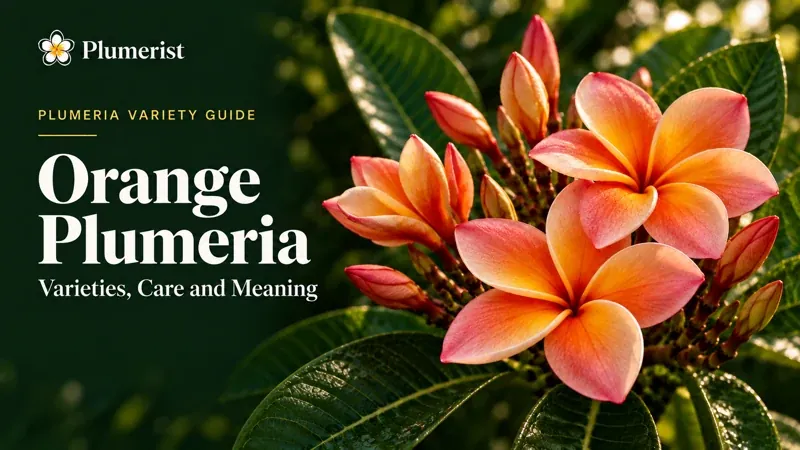
Orange plumeria is a color group built around warm, sunset toned blooms. The range runs from soft apricot to deep, almost fiery orange.
The tone usually pairs with a yellow throat or a pink petal edge. It rarely stands alone as one flat color.
It is one of the more heat responsive color groups in the genus. Orange blooms can look quite different from spring to late summer. The very same tree can carry both looks in one season.
Unlike white or plain yellow flowered types, these varieties tend to carry a blend of pigments. That blend gives the color group its range. Cultivars fairly described as orange can run anywhere from pale peach to saturated pumpkin.
What Makes Plumeria Bloom Orange
Orange flower color in plants generally comes from carotenoid pigments. These are the same yellow to orange compounds found in carrots and marigolds. Plumeria petals that lean orange typically carry a heavy carotenoid base.
A touch of anthocyanin often layers on top of that base. Anthocyanin is the reddish pigment family behind pink and red tones. When it overlays carotenoid, the result shifts toward coral or a deeper sunset orange.
This is why two orange leaning cultivars can look different side by side. One with more carotenoid and less anthocyanin reads as a clean, bright orange. One with a heavier anthocyanin overlay leans toward a warmer, rosier orange instead.
Top Orange Plumeria Varieties
For a named cultivar comparison, see Jeannie Moragne identification and growing notes. Compare several blooms and the plant’s provenance instead of relying on one warm toned photograph.
Orange Special is a Thai bred cultivar. Its blooms open a vivid orange and deepen toward golden yellow with age. Pink petal edges and visible red veining add extra contrast.
Orange KLS carries a distinctive spiral petal shape. It blends orange, pink, and yellow with a soft white edge. That layered look sets it apart from most other orange types in circulation.
Orange Punch leans toward an orange pink blend. Its fragrance is sweet and jasmine leaning, rather than a classic frangipani scent. Apricot, sometimes sold as Fruit Salad or Sunset Heaven, is valued as much for fragrance as its soft peachy color.
Avalon offers a more solid orange bloom with a noticeably darker orange center. Its color stays consistent across most of the petal rather than fading toward the edges.
How Heat and Season Deepen Orange Tones
Orange blooms tend to intensify in strong heat and full sun. Those are the same conditions that bring out the deepest color in most warm toned cultivars.
A plant grown in partial shade often blooms paler. A cooler stretch of weather has a similar washed out effect.
Growers who track a single tree through an entire bloom cycle often notice this shift firsthand. A flower that opens pale apricot in spring can deepen toward a richer orange by the height of summer. None of this signals a problem with the plant, since it is simply pigment responding to light and temperature.
Growing Orange Cultivars Successfully
Orange leaning plumeria grow the same way as any other rubra cultivar. They need full sun, well draining soil, and a warm season to set reliable blooms.
Color intensity tracks sun and light needs closely. A plant kept in too much shade will still flower, just in a muted version of its true orange.
Many orange cultivars also carry a strong scent. If fragrance matters as much as color, it is worth comparing options through a guide on the best smelling varieties. The master variety list is a useful starting point for seeing how orange fits alongside other color families.
Fragrance in the Orange Group
Scent varies noticeably across the orange color group, more than buyers often expect. Some cultivars carry the classic sweet frangipani note, while others lean fruity, spicy, or closer to jasmine. Orange Punch is a good example of a variety chosen as much for scent as for color.
Fragrance strength can also shift with temperature and time of day, similar to color intensity. Many plumeria release their strongest scent in the evening, which is worth keeping in mind when planting near a patio or entryway.
Orange Plumeria vs Yellow Plumeria
Orange and yellow plumeria overlap more than most buyers expect. Many orange cultivars carry a yellow throat or fade toward yellow as the bloom ages. The clearest way to tell them apart is the base tone at full bloom, not the center.
If the dominant petal color reads as gold or lemon, it belongs with yellow plumeria, not the orange group. Cultivars bred specifically as orange, like Orange Special or Avalon, hold that orange base even at peak bloom.
Seedlings sold loosely as orange, without a named cultivar, drift toward yellow more easily as the flower matures. A named, documented cultivar is the safer bet if a true orange tone matters to you.
Orange Blooms in the Garden
Orange blooms pair well with green foliage and read clearly from a distance. That makes them useful as a focal point in a mixed tropical bed. They also work well alongside the pinks and reds common in a plumeria landscaping layout, since warm tones tend to complement each other rather than compete.
A single well grown orange cultivar can anchor a bed on its own. Most gardeners still prefer mixing colors for a fuller seasonal display. Container growing works just as well if garden space is limited, since orange cultivars generally stay manageable in a large pot with routine pruning.
What This Color Symbolizes
Plumeria as a whole carries strong cultural meaning across Hawaiian, Southeast Asian, and broader tropical traditions. That meaning is tied most often to the flower itself rather than any single color. Color specific meaning for the orange group simply is not well documented.
Most growers and lei makers choose orange blooms for their warm, festive look. There is no fixed symbolic rule tied specifically to the color.
The Plumerist toolkit
The gear we would buy if we were starting over.
As an Amazon Associate, Plumerist earns from qualifying purchases.
Frequently Asked Questions
What causes the orange color in plumeria flowers?
Orange plumeria blooms get their color mainly from carotenoid pigments, sometimes layered with anthocyanin, the reddish pigment family. The exact mix determines whether a bloom leans bright orange or a deeper, rosier sunset tone.
What is the most popular orange variety?
Orange Special and Orange KLS are two of the most widely grown named orange cultivars. Popularity still varies by region and nursery availability.
Why did my orange bloom fade this year?
Cooler temperatures or reduced sun exposure both mute carotenoid and anthocyanin pigments. A paler bloom cycle is normal and usually reflects the weather rather than a problem with the plant.
Is this color rare?
Orange plumeria is not rare compared to true blue or black tones, which do not exist naturally. Several named orange cultivars are widely available through specialty plumeria growers.
Can orange blooms fade to yellow?
Some orange cultivars do shift toward yellow as a bloom ages or in cooler conditions. That is part of why the color group overlaps so closely with yellow flowered plumeria.