

The name musk rainbow plumeria promises a musky scent. That is not really what growers smell when the flowers open.
Reports describe strawberry, raspberry, and coconut notes, more like a fruit basket than anything traditionally called musk. The color is the other headline feature, and it earns the name honestly.
Here is what this cultivar actually looks like, smells like, and how it performs once it is in the ground.
What Musk Rainbow Plumeria Looks Like
Musk rainbow plumeria is also sold as George Brown, and sometimes as Dwarf George Brown. Those three names all point to the same plant.
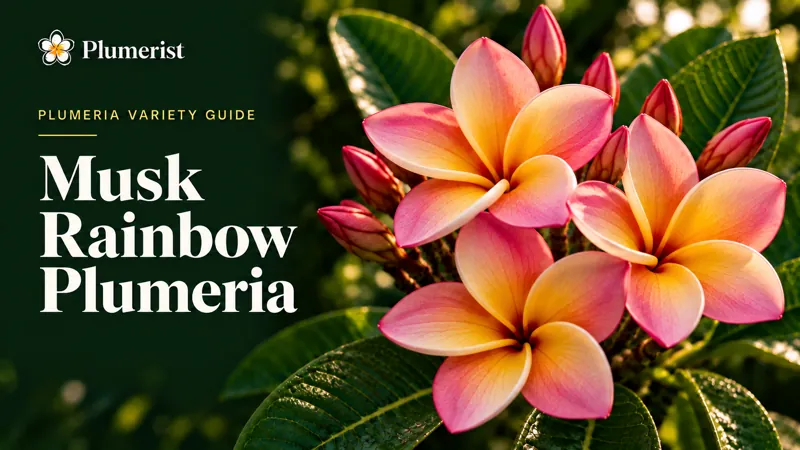
The flowers run about 3 inches across. Descriptions vary a bit from source to source, but they consistently land on a deep crimson to purplish red base.
Orange, pink, and purple tints weave through that base color. Some listings mention a brownish undertone in the petals too, which is unusual among named plumeria.
As the bloom ages, the color shifts again. Growers report the maroon tones fading toward grey purple, while the orange areas drift toward a golden brown over the life of the flower.
Where This Cultivar Comes From
Grower records consistently point to Australia as the origin. It is often described simply as one of the best plumeria to come out of that country.
A specific breeder and an introduction year are not documented in the sources I could find. If you see a firm date or breeder name attached to a listing, treat it as unverified rather than settled fact.
The George Brown name likely traces to a person, but no confirmed biography or breeding record turned up in my research. That gap is worth stating plainly rather than filling in with a guess.
What is well documented is the plant itself. The distinct crimson and purple coloring, the fruity fragrance, and the compact habit all show up consistently across independent grower descriptions, even when the history behind the name does not.
The Fragrance Surprise
This is where musk rainbow plumeria earns its myth busting reputation. Despite the name, growers describe the scent as strongly fruity rather than musky.
Strawberry and raspberry notes show up often in grower descriptions. A coconut, suntan lotion type sweetness rounds out the profile.
It is a genuinely distinctive scent among named plumeria cultivars, just not the one the name suggests. Like most plumeria, expect it to carry further in the evening than during the heat of the day.
Growth Habit and Grower Reports
The plant stays compact to short. It generally reaches around 5 feet tall while spreading wider than it grows upward, which makes it a reasonable fit for smaller yards and large containers.
Grower reports flag it as a sensitive variety compared with easier landscape cultivars. It rewards more attentive care, so it is not the top pick for a first time plumeria owner.
On the upside, it is consistently described as a great bloomer once established. Demand regularly outpaces supply too, since growers report limited numbers of cuttings from year to year.
Buying Tips
Because cuttings are scarce, listings sometimes lean hard on the word musk to sell the plant, even though the actual scent is fruity. Read past the name and look for grower photos and honest scent descriptions instead.
Ask whether a cutting was taken from a mature, well established parent plant. A sensitive cultivar like this one does better starting life from strong, healthy wood rather than a thin, stressed cutting.
If fragrance is your main reason for buying plumeria, my fragrant plumeria guide rounds up other cultivars known for a strong, reliable scent.
Honest Strengths and Weaknesses
- Strength: an unusual crimson, purple, and orange color blend that few other cultivars match.
- Strength: a strong, distinctive fruity fragrance that stands out in a garden full of plumeria.
- Strength: a compact habit that suits containers and smaller landscapes.
- Weakness: reported as more sensitive than average, so it wants more attentive care.
- Weakness: hard to find in quantity, which pushes prices up for well grown cuttings.
- Weakness: the name sets scent expectations that the actual fragrance does not match.
Growing Musk Rainbow Plumeria
Standard Plumeria rubra care applies here, just with a bit more attention. Give it full sun and fast draining soil, following the basics in the main care reference.
Since it stays compact, it does well long term in a large pot. My potted plumeria guide covers sizing and drainage in detail.
Because growers describe it as sensitive, avoid overwatering more strictly than you might with a tougher cultivar. Fragrance also fades if the plant is stressed, so consistent care pays off with better blooms.
Musk Rainbow vs the Other Rainbow Names
Rainbow shows up in a lot of plumeria names, and it causes real confusion. My explainer on what rainbow plumeria really are covers the wider category if you want the full picture first.
Compared with Nebels Rainbow plumeria, the color story is completely different. That cultivar leans yellow, orange, and pink, while this one leans crimson and purple with that fruity, not musky, scent.
My Lei Rainbow profile covers yet another distinct option worth comparing before you choose one for your garden.
The Plumerist toolkit
The gear we would buy if we were starting over.
As an Amazon Associate, Plumerist earns from qualifying purchases.
Frequently Asked Questions
Does musk rainbow plumeria actually smell musky?
Not really. Growers consistently describe the scent as fruity, with strawberry, raspberry, and coconut notes rather than a musk fragrance.
Is musk rainbow plumeria the same as George Brown?
Yes. George Brown and Dwarf George Brown are other names used for the same cultivar in the trade.
Where does musk rainbow plumeria come from?
Grower records point to Australia. A specific breeder and introduction date are not documented in the sources available.
Is musk rainbow plumeria hard to grow?
Growers report it as more sensitive than many easy landscape cultivars, so it rewards attentive care rather than a hands off approach.
How big does musk rainbow plumeria get?
It stays compact to short, typically around 5 feet tall, and spreads wider than it grows upward.
Does musk rainbow plumeria bloom well?
Yes, once it is established. Growers consistently describe it as a great bloomer, even though it needs more attentive care to get there than an easy landscape cultivar.
This cultivar delivers on color and fragrance, just not the fragrance its name implies. Go in expecting fruity notes and a slightly fussier plant.
It rewards you with one of the more distinctive blooms in the genus. For more named options, browse more varieties to explore or read what makes a plumeria rare for other hard to find cultivars.