

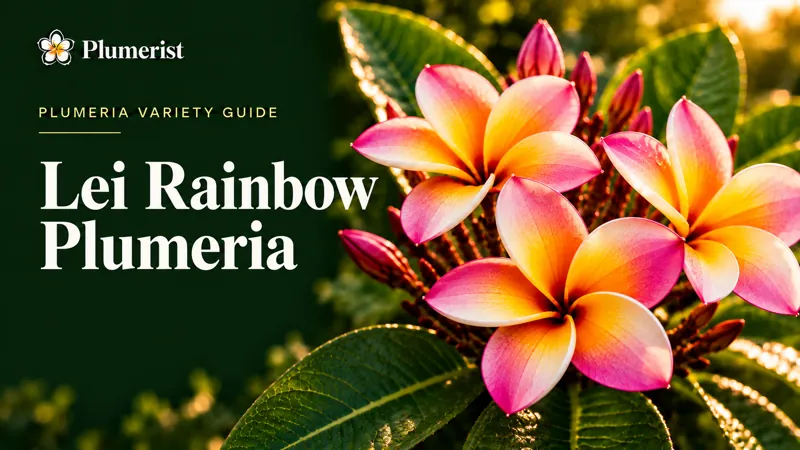
Lei Rainbow plumeria is a real, registered cultivar. It carries Plumeria Society of America registration number 143. Its blooms show a soft yellow base with pink tones and dark red banding on each petal.
That registration matters. It separates a genuine Lei Rainbow plumeria from rainbow named plants sold with no documentation at all. Growers value it for a strong sweet fragrance and flowers that hold their shape well after cutting.
It sits inside the wider rainbow plumeria category. Its yellow and red combination is distinct once you compare a few cultivars side by side.
What Lei Rainbow Plumeria Looks Like
Each bloom runs about 3 inches across. The petals are elliptical and overlap moderately, curling slightly at the tips. The base color is a clear yellow.
Dark red bands run down the center of each petal, on both the front and back. That two sided banding is one of the easiest ways to confirm a genuine Lei Rainbow bloom. A similar looking seedling usually will not match it exactly.
The fragrance is strong and sweet, closer to a classic frangipani scent than anything fruity or spicy. Flowers keep their color well after picking. The tree grows medium to tall, with average rather than dense branching.
Leaves are elliptical with pointed tips and a medium green color, fairly typical for a rubra type cultivar. Bark on older wood develops the corky texture common to most mature plumeria. None of this stands out as unusual, which is normal since the flowers are what carry this cultivar’s reputation.
Where Lei Rainbow Comes From
Records on Lei Rainbow are thinner than its popularity suggests. The PSA registration confirms the name and flower description. The breeder and the exact origin year are not documented in records available today.
Nursery listings often group it with Hawaii sourced cultivars. That placement reflects how it is sold, not a confirmed breeding history. Many named plumeria from the mid twentieth century circulated for years before anyone filed formal paperwork.
In cases like this, the honest answer is simple. The original cross is just not on record.
Strengths and Weaknesses Growers Report
The strengths are straightforward. Growers consistently report reliable blooming and a fragrance strong enough to notice from several feet away. Flowers hold up well once cut for a lei.
The yellow and red combination photographs clearly. Some rainbow types blur together in a casual snapshot, but this one reads well even from a phone camera.
The downsides matter too. A medium to tall grower is not the best fit for a small patio. Branching is only average, so a young plant can look sparse for its first couple of seasons.
Color intensity also shifts with the season. A bloom photographed at the peak of summer heat will look bolder than one grown during a cooler stretch. Buyers expecting the exact same shade year round should plan for some natural variation instead.
Lei Rainbow for Lei Making
The name is not just decoration. This cultivar holds its shape and color well after cutting, which is exactly what lei makers look for in a working flower. Growers report minimal fading over several days once a bloom is strung or floated in water.
Cutting flowers in the cool of early morning helps preserve both scent and color longer. Details on how long a cut plumeria flower stays fresh apply the same way to this cultivar as any other. A strong fragrance also means a single strand carries noticeably more scent than a lei made from a faintly scented type.
Growing Lei Rainbow
Lei Rainbow needs the same basics as any rubra cultivar. Full sun, well draining soil, and a warm growing season push consistent flowers. Skimping on light leads to pale, washed out color instead of a sharp yellow and red.
Because it grows medium to tall, gardeners with limited space should plan ahead. Reviewing how to keep a plumeria compact helps before committing it to a permanent spot. Feeding on a regular schedule also supports the branching this cultivar is only average at.
A steady plumeria feeding routine through the growing season helps close that gap over time.
Lei Rainbow vs Musk Rainbow and Other Rainbow Types
Lei Rainbow is often shopped alongside Musk Rainbow. That is a Thai cultivar noted for a musky edge to its fragrance, unlike the sweet, classic scent Lei Rainbow carries.
The two are easy to tell apart in person. Musk Rainbow leans on its distinct scent as the selling point. Lei Rainbow leans on its yellow base and red petal banding instead.
Both sit inside the broader world of rainbow plumeria. That category is built on genuine multicolor genetics, not dye or digital editing. If a listing shows a color plumeria cannot produce naturally, such as true blue, treat it as edited.
Buying Lei Rainbow
Lei Rainbow is generally sold as a rooted plant, an unrooted cutting, or a grafted plant. Specialty plumeria growers are the usual source. A listing photo that skips the dark red banding on both sides of the petal is worth a second look.
Seed grown plants will not reliably reproduce this exact color pattern. Every seed carries new genetics. A cutting or graft from a confirmed Lei Rainbow plant is the only way to guarantee the registered look and fragrance.
Pricing varies by size and by whether a plant is rooted or freshly cut. A small cutting typically costs less than an established rooted plant that will bloom sooner after planting.
The Plumerist toolkit
The gear we would buy if we were starting over.
As an Amazon Associate, Plumerist earns from qualifying purchases.
Frequently Asked Questions
Is Lei Rainbow plumeria a registered cultivar?
Yes. Lei Rainbow plumeria is registered with the Plumeria Society of America under number 143. That registration documents its flower color, size, and fragrance.
What color is a Lei Rainbow bloom?
The base color is yellow, with pink tones and dark red bands running down each petal on both the front and back.
How tall does Lei Rainbow grow?
It grows in the medium to tall range for a plumeria. Branching stays average rather than dense, especially while young.
Who bred Lei Rainbow?
The breeder is not documented in records available today. Nursery listings associate it with Hawaii, but that reflects how it is sold rather than a confirmed origin.
How is Lei Rainbow different from Musk Rainbow?
Lei Rainbow is known for a yellow base with red banding and a sweet, classic fragrance. Musk Rainbow is a separate Thai cultivar known for a distinct musky note in its scent.