

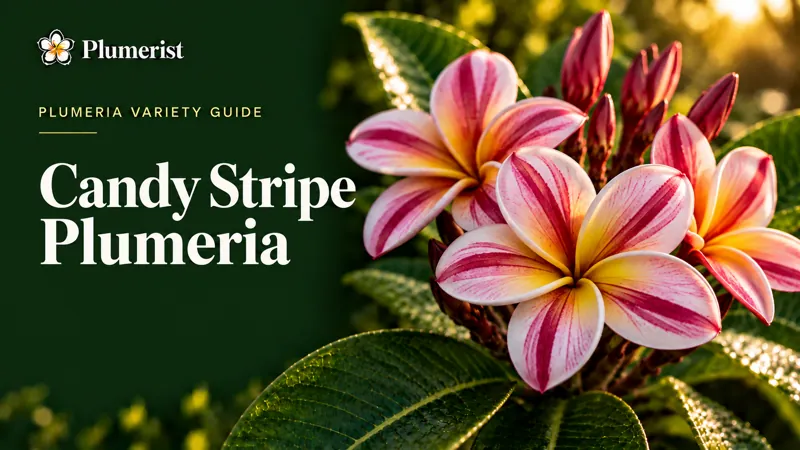
Three colors run through nearly every petal on a candy stripe plumeria bloom. Bands of white, pink, and gold twist together into a pinwheel pattern that gives the cultivar its name.
It is registered with the Plumeria Society of America as PSA number 158. That makes it a Plumeria rubra selection with a documented identity.
That registration matters because the name gets applied loosely in the plumeria trade. Sellers also list this cultivar as Pinwheel, Barber’s Pole, and Pet Sairung. Others market a visually similar plant as Intense Rainbow, and the two names sometimes get swapped by accident.
Registration alone does not settle every question about identity. It simply gives buyers a documented reference point to check a listing against. A PSA number is the closest thing the hobby has to a paper trail.
The breeder and exact origin year for this cultivar are not clearly documented in publicly available records. That gap is common with older trade names that circulated among growers before formal registration caught up.
One of its alternate names, Pet Sairung, is Thai. That hints at a Southeast Asian connection somewhere in its history, though nothing about that link is confirmed.
What This Striped Cultivar Looks Like
Each flower opens close to 3 inches wide. Petals look almost hand painted, with soft stripes of creamy white and blush pink.
Those stripes blend into a golden yellow throat at the center. The overall effect reads as festive rather than subtle.
Fragrance is a strong, sweet perfume typical of showier rubra hybrids. Flowers appear from spring through summer in warm climates.
Bloom clusters tend to be generous once the tree matures. They can cover the canopy in color for weeks at a time.
Foliage is broad and green, typical of the wider rubra group. The tree grows as a large shrub or small tree depending on how it is pruned. Left alone, it can reach a substantial size within a few growing seasons.
The Intense Rainbow Confusion
Candy stripe plumeria and Intense Rainbow plumeria both show a similar mix of red, white, and yellow striping. Some nurseries even sell stock labeled as one combined name, as if the two describe a single plant.
Growers who track named cultivars closely tend to treat them as related but distinct selections rather than identical clones. If exact identity matters to your collection, buy from a seller who can point to the PSA number. A known parent tree or documented source is a stronger guarantee than the label alone.
Strengths Growers Report
- Vigorous, fast growth compared to many named cultivars.
- Easy to root from cuttings, unlike several slower rooting varieties.
- Profuse, reliable blooming once the tree is established.
- Striking multicolor pattern that photographs and sells well.
- Wide availability compared to rarer cultivars in the same color family.
Weaknesses Worth Knowing
The same vigor that makes this plant easy to grow can also become a maintenance chore. Left unpruned, it spreads quickly and can overwhelm a small yard or container. Regular pruning keeps the shape manageable through the growing season.
Like all Plumeria rubra cultivars, it remains susceptible to rust in humid, wet conditions. The naming confusion with Intense Rainbow is a real buying risk as well. Growers are split on whether the two names ever described genuinely different plants to begin with.
Because it propagates so easily, quality can vary between sellers. A cutting grown from an older, less vigorous parent may bloom less generously than the classic form. Buying from an established seller reduces that risk.
How It Compares to Other Striped Cultivars
| Trait | Candy Stripe | General rainbow toned cultivars |
|---|---|---|
| Pattern | Pinwheel stripes, white to gold | Varies widely by cultivar |
| Growth rate | Vigorous | Often moderate |
| Rooting ease | Easy | Varies by cultivar |
If the pinwheel pattern is what drew you in, it helps to see how a closely related striped cultivar compares before choosing between the two. For a broader look at multicolor plumeria in general, browse the wider rainbow toned category. Lei makers specifically may also want to compare it with another multicolor cultivar grown for leis.
Care Notes and Availability
Candy stripe plumeria grows best in USDA zones 10a through 11, with full sun and well draining soil. It shares its baseline needs with every other rubra species selection in the genus.
Because it grows so fast, staying ahead of a canopy that spreads quickly without regular shaping pays off within the first year or two. New growers can also review watering and feeding basics that suit a vigorous grower before planting.
This cultivar is widely available through specialty plumeria nurseries and cutting sellers, more so than many rarer named hybrids. Prices tend to stay moderate given how easily it propagates. Expect the clearest labeling from sellers who reference the PSA number directly.
Container growers should size up pots gradually rather than jumping straight to a large container. A plant given too much soil volume too early tends to put energy into roots and foliage instead of flowers. Repotting every one to two years keeps growth proportional to the container.
Winter care follows the same rules as other rubra cultivars in marginal climates. Reduce watering sharply once leaves begin to drop, and hold off on fertilizer until new growth resumes in spring. Growers in true tropical zones can generally skip this dormancy period altogether.
Buyers who want a fuller picture of named plumeria before committing can browse the full range of cultivars grown across the hobby. That context makes it easier to spot when a listing photo does not quite match the description.
The Plumerist toolkit
The gear we would buy if we were starting over.
As an Amazon Associate, Plumerist earns from qualifying purchases.
Frequently Asked Questions
Is this the same plant as Intense Rainbow?
They look similar and are sometimes sold under combined names. Most careful growers treat them as related but separate cultivars rather than identical plants.
Is candy stripe plumeria a registered cultivar?
Yes. It carries Plumeria Society of America registration number 158, which gives it a documented identity beyond its many trade names.
Does it need frequent pruning?
Its vigorous growth habit means yes, especially in small yards or containers. Regular shaping keeps the canopy from spreading out of proportion. Skipping a season of pruning can leave the tree lopsided the next year.
How fragrant is candy stripe plumeria?
It carries a strong, sweet fragrance typical of showier rubra hybrids. The scent is noticeable from a distance once a tree is in full bloom.
Is it a good choice for beginners?
Yes. Candy stripe plumeria roots easily from cuttings and blooms reliably, which makes it a common starting point for new growers. Its forgiving nature makes early mistakes less costly than with fussier cultivars.