

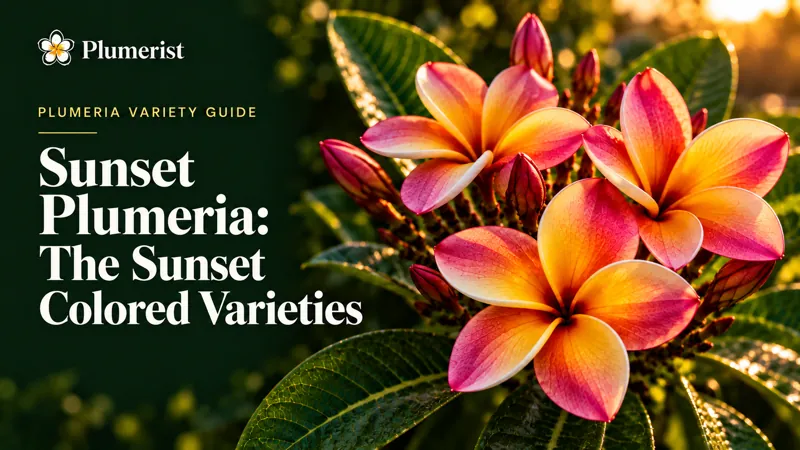
Search plumeria sunset and you might expect one specific plant to show up. That is not quite how it works. The phrase covers a whole color family, and it also covers several distinct named cultivars.
Any bloom that blends orange, pink, and gold in a warm gradient earns the sunset description. Individual growers have also registered specific cultivars using sunset directly in the name. Both meanings sit under the same search term.
The Plumeria Sunset Color Family
In plain color terms, a sunset toned plumeria flower moves through warm hues across a single petal. Orange typically sits at the center. It fades into pink or gold toward the tips, mimicking the sky at dusk.
This is a description, not a single cultivar. Dozens of different plumeria varieties qualify as plumeria sunset types simply because their coloring fits the pattern. Growers use the term loosely in casual conversation and in nursery listings alike.
That looseness is not really a flaw. It just means the phrase alone tells you very little about what plant you would actually receive. Two trees both described as sunset colored can look quite different once mature.
Named Cultivars That Carry Sunset in Their Title
Several specific, documented cultivars use sunset as part of their formal name rather than as a loose description. Each one has its own distinct look. None of them are interchangeable despite the shared word.
- Guillot’s Sunset, a wide petaled cultivar with dark pink bands fading to orange, discovered by hybridizer Bud Guillot.
- California Sunset, known for golden yellow and orange tones with pink or red edging.
- Makaha Sunset, which blends red, yellow, and orange with a pale rim and a strong peach scent.
- Polynesian Sunset, a multicolor rainbow style bloom mixing pink, yellow, orange, and white.
- Redland’s Sunset, an orange leaning cultivar introduced by Florida Colors Nursery.
Guillot’s Sunset is the one most often confused with the general color category. That confusion happens largely because it is one of the more widely available sunset toned cultivars on the market.
California Sunset and Makaha Sunset show up less frequently outside dedicated plumeria collections, but both remain documented, identifiable plants rather than vague color descriptions. Polynesian Sunset and Redland’s Sunset lean further toward the rainbow side of the family, blending in extra colors beyond a simple orange to pink gradient.
None of these named cultivars are officially connected to one another through breeding. They share a naming convention rather than a common parent plant. Treat each one as its own distinct cultivar with its own care history.
For a closer look at that specific plant, see the profile covering its exact traits and history. The other named cultivars above are less commonly stocked but still turn up through specialty sellers.
How to Tell Which One You Actually Want
If you searched plumeria sunset hoping for a single answer, start with one decision. Do you want a documented named cultivar, or are you simply drawn to the color palette in general?
Photos alone rarely settle the question, since lighting shifts warm tones dramatically. A flower photographed at midday can look noticeably different from the same bloom photographed at dusk. That is a bit ironic given the name.
Ask any seller for the specific cultivar name rather than accepting a generic sunset label. A listing that only says sunset colored plumeria is describing a look. It is not naming a documented plant.
Strengths Across the Sunset Family
- Warm color palettes that photograph well and suit tropical landscaping themes.
- Most sunset toned cultivars bloom generously once established.
- A wide range of options at different price points and availability levels.
- Several named cultivars carry documented histories, unlike many generic color descriptions.
Weaknesses Worth Knowing
Because the term describes a color rather than one plant, buyers can easily end up with something unexpected. Two sunset toned trees from different sellers may look nothing alike once mature.
Like most Plumeria rubra cultivars, sunset toned varieties remain susceptible to rust in humid climates. Color intensity can also fade under very strong, direct sun. That fading is worth planning for in hot inland climates especially.
Buyers chasing a specific look from a photo alone are the most likely to end up disappointed. Confirming the exact cultivar name before purchase avoids most of that risk.
Care Notes
Every plumeria sunset variety, named or generic, needs the same basics. Full sun, well draining soil, and a dry winter dormancy period apply across the board. For the complete routine, see the fundamentals that every cultivar in this color family shares.
If your interest leans toward pure orange tones rather than a full pink to gold blend, consider a narrower search instead. Browse the narrower orange leaning side of the family for that specific look. Buyers drawn to multicolor blooms in general may prefer cultivars that combine three or more distinct colors at once.
Scent varies noticeably across this group. Some cultivars carry only a mild fragrance, while others produce a strong peach note. Anyone shopping by fragrance first should compare which warm toned cultivars carry the strongest scent before settling on one tree.
Availability shifts by season and region. Named cultivars generally cost more than an unnamed seedling in similar tones, since documented lineage adds value.
Specialty plumeria nurseries remain the most reliable source for named sunset cultivars specifically. Big box retailers rarely label stock precisely enough to know which cultivar you are actually buying.
The Plumerist toolkit
The gear we would buy if we were starting over.
As an Amazon Associate, Plumerist earns from qualifying purchases.
Frequently Asked Questions
Is plumeria sunset one specific plant?
No. It describes a general warm color family. It also refers to several separate named cultivars that use sunset directly in their titles.
Which sunset named cultivar is most common?
Guillot’s Sunset tends to be the most widely available. It is often the plant people find first when searching the term.
Do all sunset toned plumeria smell the same?
No. Fragrance varies by cultivar. It ranges from a mild scent up to a distinctly strong peach note in varieties like Makaha Sunset.
How do I know which sunset cultivar I am buying?
Ask the seller for the specific named cultivar rather than accepting a generic sunset description. A documented name is the only reliable way to know what you are getting.
Do sunset toned plumeria need special care?
No. They follow the same full sun, well draining soil, and winter dormancy requirements as any other Plumeria rubra cultivar.