

Here’s something most people get wrong about powdery mildew: it’s less a problem with your plumeria and more a problem with where you’re keeping it. That dusty white coating on the leaves is a common fungus, and it takes hold almost entirely because of the growing conditions, not bad luck.
The good news is that it’s one of the more manageable plumeria problems once you understand what feeds it. Here’s how to recognize it, clear it up, and change the conditions so it doesn’t keep coming back.
Plumeria Powdery Mildew at a Glance
| Feature | The short answer |
|---|---|
| What it is | A common fungal disease that coats leaves in white powder |
| Look | White or gray flour like dust, usually on older leaves first |
| What causes it | Humid, crowded, shaded spots with poor air circulation |
| Damage | Saps strength, yellows leaves, and suppresses blooms |
| Kills the plant? | Rarely, but it weakens the plant and costs you flowers |
| Best fix | More sun and airflow, remove bad leaves, and a fungicidal spray |
What Is Powdery Mildew?
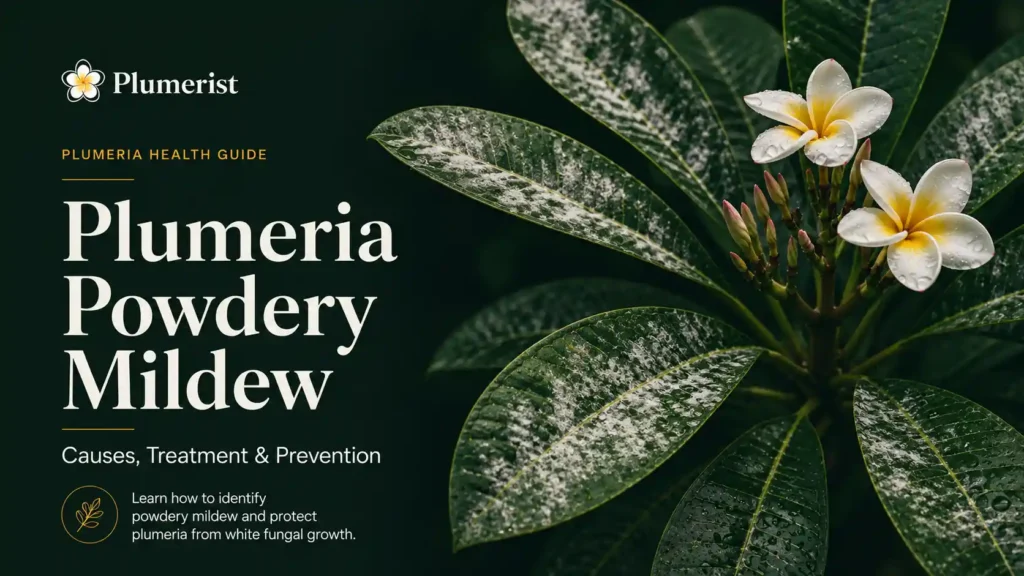
Powdery mildew is a fungal infection that shows up as a white or gray, flour like coating on the surface of the leaves. It usually starts on the older, lower foliage and can spread across the plant if the conditions stay right for it.
Unlike some plumeria diseases that attack the stems or roots, powdery mildew lives on the leaf surface, which is actually good news, because it makes the problem easy to spot early and easier to treat than a hidden rot. It’s a different beast from the orange pustules of plumeria rust or the dark lesions of black tip fungus, though all three are fungal issues that thrive in the wrong conditions.
What Causes Powdery Mildew?
Here’s the key thing to understand: powdery mildew isn’t really about bad luck, it’s about environment. The fungus thrives in humid, crowded, and shaded conditions with poor air circulation, so the way and place you grow your plumeria is what invites it in.
The classic setup is a plant tucked in a shady corner or crowded up against others, where the leaves stay damp and the air sits still. When foliage doesn’t get a chance to dry out, especially overnight, and there’s no breeze moving through, you’ve created the perfect home for mildew. That’s why the same plant moved into sun and open air often clears up on its own.
The Damage It Does
Powdery mildew rarely kills a plumeria outright, but don’t ignore it, because it steadily undermines the plant. The coating blocks light from reaching the leaf, so the plant can’t feed itself properly, and that saps its strength and vigor over time.
As it progresses, you’ll often see yellowing leaves, some distortion, and premature leaf drop, and crucially, the disease suppresses blooming as the weakened plant redirects its limited energy toward survival instead of flowers. So a mildew problem left to run can quietly cost you a whole flowering season. If your leaves are also yellowing and you want to rule out other causes, my guide on plumeria leaves turning yellow helps you narrow it down.
How to Treat Powdery Mildew
Treating mildew is a two part job: kill what’s there, and fix the conditions that caused it. Do both and it won’t come back.
Move it into sun and open it up. The single most effective step is relocating the plant into brighter full sun and clearing away any crowding vegetation so air moves freely around it. Mildew hates sun and airflow, so this alone often turns things around. My plumeria light requirements guide covers how much sun to aim for.
Remove the worst leaves. Pluck off any heavily coated leaves and get them away from the plant, don’t just drop them in the pot, since they carry spores that reinfect. This instantly reduces the fungal load.
Spray to knock it out. A simple homemade option is a baking soda spray: about one tablespoon of baking soda plus half a tablespoon of dish soap in roughly two and a half liters of water, applied to the affected leaves. Potassium bicarbonate works the same way but a bit more effectively, and neem oil, sulfur, or horticultural oil are all proven fungicidal options too. Whatever you choose, coat the leaves thoroughly and repeat as directed, since one pass rarely finishes the job.
How to Prevent Powdery Mildew
Because mildew is all about conditions, prevention is genuinely easy once you know the levers to pull.
Give it full sun and space to breathe. Grow your plumeria in a bright, open spot with good air circulation and enough room between plants, and you’ve removed the two things mildew needs most. Water at the base, early in the day, rather than overhead late in the afternoon, so the leaves dry fully before nightfall instead of staying damp overnight. Keep an eye on watering overall with my plumeria water requirements guide. And avoid piling on nitrogen fertilizer, since the soft, lush growth it pushes out is exactly what mildew loves to colonize. Do these and once the plant is healthy again, my blooming guide will help it get back to flowering.
Frequently Asked Questions
What is the white powdery stuff on my plumeria leaves? It’s powdery mildew, a fungal disease that coats leaf surfaces in a white or gray, flour like dust, usually starting on the older leaves.
What causes powdery mildew on plumeria? Humid, crowded, and shaded conditions with poor air circulation. Leaves that stay damp overnight and still, stagnant air are the main triggers.
How do I get rid of powdery mildew on plumeria? Move the plant into full sun with good airflow, remove badly infected leaves, and spray with a baking soda solution, potassium bicarbonate, or neem oil, repeating as needed.
Will powdery mildew kill my plumeria? It rarely kills a plant outright, but it weakens it, yellows the leaves, and suppresses blooming, so it’s worth treating promptly.
Does powdery mildew stop plumeria from blooming? It can. By blocking light and draining the plant’s energy, a real infestation redirects resources away from flowering, so a bad case can cost you a bloom season.
Bottom line, powdery mildew is a common but very beatable plumeria disease, and the cure is mostly about conditions. Get your plant into sun and moving air, strip off the worst leaves, hit it with a simple fungicidal spray, and water smart, and that dusty white coating will disappear. Fix the environment and it stays gone. For the other fungal issues that trouble these plants, see my guides on plumeria rust and black tip fungus.