
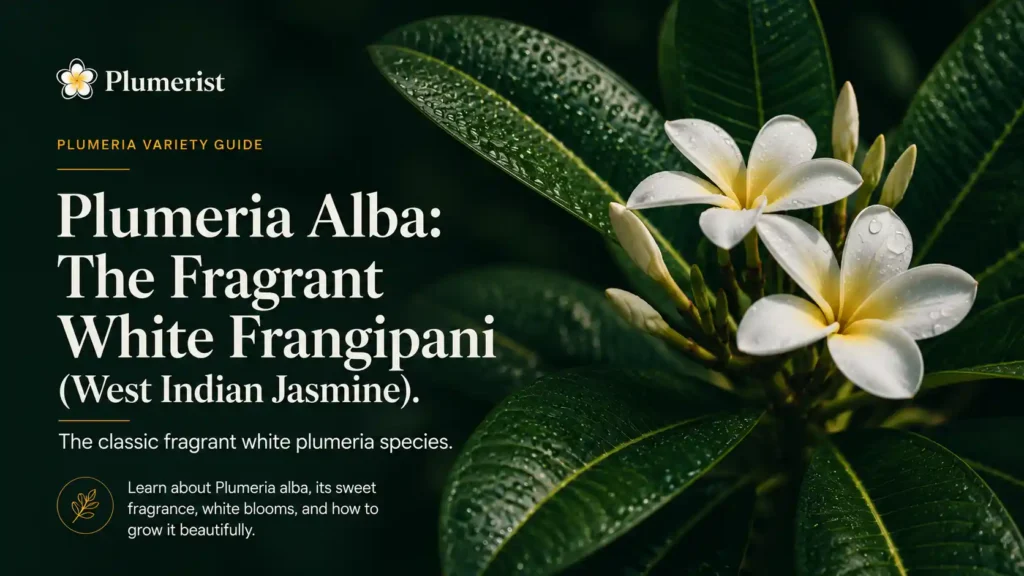
If Plumeria rubra is the colorful crowd pleaser, Plumeria alba is the fragrant purist. This is the true white frangipani, a species famous less for how it looks and more for how it smells.
You’ll often see it sold as West Indian jasmine, which tells you everything about its reputation. The flowers are pure white with a little yellow eye, nothing flashy, but the scent is the stuff perfume is made of. Literally. If you want a plumeria you can smell from clear across the yard, alba is a serious contender.
There’s also a fair bit of confusion between alba and the other white plumeria floating around out there, so I’ll clear that up too. Let me walk you through what alba actually is, how to spot one, how it differs from the other whites, and how to grow it.
Plumeria Alba at a Glance
| Thing | The short answer |
|---|---|
| Species | Plumeria alba, family Apocynaceae (the dogbane family) |
| Also called | West Indian jasmine, white frangipani, nosegay tree |
| Native to | Puerto Rico and the Lesser Antilles (the Caribbean) |
| Leaves | Long, narrow, lance shaped, and deciduous |
| Flowers | Pure white with a yellow center, and very fragrant |
| Bloom season | Late spring through fall |
| Mature size | Upright tree, roughly 15 to 25 ft, smaller in a pot |
| Hardiness | Tender: USDA zones 10 to 12, really hates frost |
What Is Plumeria Alba?
Plumeria alba is one of the true botanical species of plumeria, not a hybrid or just a color form. It belongs to the dogbane family (Apocynaceae) like the rest, and it’s native to the Caribbean, specifically Puerto Rico and the Lesser Antilles. That island heritage matters, because it makes alba both wonderfully fragrant and pretty tender when the cold rolls in.
The name is a dead giveaway. Alba means white in Latin, and white is the only color this one does: clean, pure petals with a small golden center. No pinks, no reds, no rainbow surprises.
Its most famous nickname is West Indian jasmine, earned entirely by its scent. You’ll also hear nosegay tree and, weirdly, caterpillar tree. Different names, same fragrant white species. And if the plumeria versus frangipani naming thing has you scratching your head, I broke it all down in plumeria vs frangipani.
How to Identify Plumeria Alba
Alba has a few features that set it apart, especially once you know what to look for.
The leaves are long and narrow. This is the big tell. Where a typical rubra has broad, wide leaves, alba’s are noticeably longer and skinnier, more of a slim lance shape, and they cluster near the branch tips. If a white flowered plumeria has distinctly narrow, strappy leaves, alba should be your first guess.
The flowers are pure white and seriously fragrant. Alba blooms are clean white with just a small yellow throat, around three inches across, and the scent is intense and sweet. If a white plumeria is knocking your socks off with fragrance, there’s a very good chance it’s alba or has alba somewhere in its family tree.
It drops its leaves in winter. Alba is deciduous, so like a rubra it goes bare and rests through the cool or dry season. That actually helps you separate it from the evergreen white, obtusa, which I’ll get to in a second.
The Three “White” Plumeria, Sorted Out
Here’s where a lot of folks get tangled up, because there are three completely different things all sold as “white plumeria,” and they are not the same plant. Let me untangle it.
| Sold to you as “white” | What it actually is | Leaves | Winter |
|---|---|---|---|
| White rubra | A white color form of Plumeria rubra | Broad, pointed | Deciduous |
| Plumeria alba | Its own species (West Indian jasmine) | Long, narrow, lance shaped | Deciduous |
| Plumeria obtusa | Its own species (Singapore White) | Rounded, glossy | Evergreen |
So if your white plumeria has broad leaves, it’s probably a white form of rubra. If it has long skinny leaves and drops them in winter, it’s alba. And if it has rounded glossy leaves and stays green all year, it’s obtusa, the Singapore White. All three hand you white flowers, but they’re genuinely different plants. I cover the whole white category in my white plumeria guide if you want the wider overview.
Why Alba Is All About the Fragrance
Let’s talk about the real reason to grow this one: the smell.
Alba is one of the most intensely fragrant plumeria you can grow, which is exactly how it picked up the West Indian jasmine name. The scent is rich, sweet, and jasmine like, and it cranks up in the evening. That’s not romance, it’s biology. Plumeria get pollinated by night flying moths, so the flowers pour on the perfume after sunset to reel them in.
This is also why alba has long been a go to for leis and perfumery. The blooms are lovely, sure, but it’s that knockout fragrance that makes them special. And the flowers hold up nicely after cutting, which I dig into in how long plumeria flowers last.
How to Care for Plumeria Alba
Good news, alba follows the standard plumeria playbook, with a couple of island quirks.
Sun. Full sun, six hours minimum and more is better. Alba is a sun worshipper and just won’t bloom well in shade.
Soil. Fast draining, no exceptions. A gritty, sharp draining mix is what you’re after. Bonus: alba is naturally salt and drought tolerant, which makes it a fantastic pick for coastal gardens. My best soil for plumeria guide has the exact mix I use.
Water. Water deep, then let it dry out before the next round. Alba actually prefers things on the drier side and really resents soggy roots, so if anything, lean toward underwatering. Full breakdown in plumeria water requirements.
Feeding. Through the growing season, feed with a high phosphorus bloom fertilizer to fuel all those fragrant flowers. See my feeding plumeria notes for the timing.
Winter. Alba is deciduous, so it’ll naturally drop its leaves and rest once the temperature falls. The catch with that is coming up right now.
The One Big Warning: Alba Hates Cold
Here’s the thing to really respect about alba: it’s very frost tender, more so than a lot of the other plumeria.
Coming from the warm Caribbean, alba genuinely hates the cold and can get damaged by even a light freeze. So if you’re anywhere that sees frost, grow it in a pot so you can move it, and bring it into a warm, bright spot before the first cold snap hits. Ease off the water while it’s dormant and leafless, and don’t rush it back outside until the weather is reliably warm again. My winter care routine covers the details. Just treat alba as one of the tender ones and you’ll be fine.
Growing Plumeria Alba From Cuttings
Like every plumeria, alba clones easily from cuttings, and since seeds don’t grow true to the parent, cuttings are the way to keep that exact fragrant white. Take a cutting a foot or two long, let the cut end dry and callus over for a couple of weeks so it won’t rot, then pot it up in fast draining mix. Simple stuff. Full steps in how to grow plumeria from cuttings.
Is Plumeria Alba Toxic?
Standard plumeria heads up: alba has a milky white sap that can irritate skin and eyes and is mildly toxic if eaten. Wash your hands after pruning and keep pets and little kids from nibbling on it. More on the pet side in whether plumeria is toxic to dogs.
What Does Plumeria Alba Symbolize?
White frangipani carries a lot of meaning across cultures, everything from purity and new beginnings in some places to devotion and the sacred in others, where the tree is planted around temples. Alba’s pure white blooms sit right at the heart of that symbolism. There’s a much bigger story here, and I told all of it in plumeria meaning and symbolism.
Frequently Asked Questions
Is Plumeria alba the same as white frangipani? It’s the original one. Alba is literally the West Indian jasmine, a true white species, though a few different plants get loosely called white frangipani. I sort them out in my white plumeria guide.
What’s the difference between Plumeria alba and obtusa? Both are white, but alba is deciduous with long narrow leaves, while obtusa (the Singapore White) is evergreen with rounded glossy leaves. Alba drops its leaves in winter, obtusa keeps them.
Is Plumeria alba fragrant? Very. It’s one of the most strongly scented plumeria around, with a sweet, jasmine like perfume that’s strongest in the evening. That’s how it earned the West Indian jasmine name.
How cold hardy is Plumeria alba? Not very. It’s tender and hates frost, doing best in USDA zones 10 to 12. In cooler areas, grow it in a pot and overwinter it somewhere warm.
How big does Plumeria alba get? It can reach 15 to 25 feet as an upright, vase shaped tree in the ground, but it stays much smaller in a pot or with regular pruning.
Can you eat Plumeria alba flowers? In some cultures the flowers are eaten, for instance battered and fried as fritters. That said, the sap is an irritant, so this is a traditional culinary use, not a snack I’d casually recommend you try at home.
Bottom line, if fragrance is what you’re chasing, Plumeria alba is one of the best in the entire genus. It trades the flashy colors of a rubra for pure white blooms and a scent that fills the whole evening. Just remember it’s on the tender side, so protect it from frost, give it sun and sharp drainage, and it’ll reward you with that unmistakable West Indian jasmine perfume. Want to see how it fits with the rest of the family? Head back to the full plumeria varieties guide, or dig into the broader white plumeria category it belongs to.