
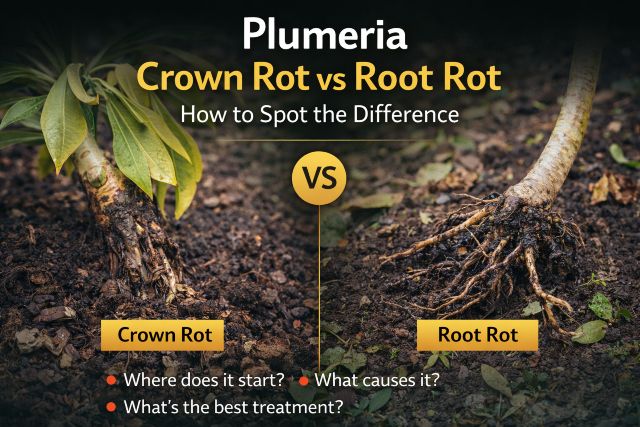
Most Plumeria growers panic the first time they see the stem turning soft or the roots looking dark. I’ve been through this myself, staring at the plant thinking, is this crown rot, root rot, or something else entirely? Both problems look similar in the beginning, but the way you fix them is completely different. If you misdiagnose it, you can easily make the situation worse.
Let’s go through both conditions in detail so you can tell exactly what’s happening and what to do next.
What Is Crown Rot?
Crown rot happens at the upper part of the plant where the stem meets the soil. This is the “crown,” and when it starts to rot, the plant collapses from the top down.
Crown rot usually develops because the crown stayed wet too long. Maybe the plant was planted too deep, soil stayed soggy, or water collected around the base after rain or watering.
You’ll know it’s crown rot if:
-
The top of the plant (just above soil level) is soft or mushy
-
The crown looks darker or feels hollow when pressed
-
The plant collapses sideways from the base
-
Leaves near the crown begin yellowing or wilting
-
The rot spreads upward into the main trunk
If you touch the crown and it feels soft like a sponge, that’s a classic sign.
What Is Root Rot?
Root rot happens beneath the soil when roots stay wet too long and fungi begin to attack them. This is common in Plumerias grown in heavy soil or pots with poor drainage.
You’ll know it’s root rot if:
-
The leaves start drooping or curling even though soil is moist
-
Growth slows down or stops completely
-
The plant becomes unstable in its pot
-
Roots look black, mushy, or stringy when inspected
-
The soil smells sour or rotten
Root rot is often slower and more subtle at first. You may not notice anything until the plant starts refusing to take up water.
The Biggest Difference
Crown rot starts at the top of the soil line and moves upward.
Root rot starts below the soil and moves upward.
One begins above the soil.
The other begins below it.
Where the softness begins is the key to diagnosing the issue correctly.
How to Check Which One You Have
If you’re unsure, do this simple check:
-
Gently press the crown just above the soil line.
-
If it feels soft, hollow, or mushy there, it’s crown rot.
-
If the crown feels firm, check the roots.
-
Carefully remove the plant from its pot and inspect the roots.
-
If you see black, mushy roots that smell bad, it’s root rot.
This quick test will tell you which direction the rot is moving.
What Causes Crown Rot?
There are a few common reasons:
-
Soil piled too high on the stem
-
Frequent overhead watering
-
Water pooling at the base during rain
-
The plant sitting too low in the pot
-
Poor airflow around the crown
-
Soil that stays wet around the surface
If the crown stays wet, rot begins fast.
What Causes Root Rot?
Root rot usually comes from:
-
Heavy, dense soil that traps moisture
-
Pots without enough drainage holes
-
Watering too often
-
Letting the plant sit in a saucer of water
-
Cool weather combined with wet soil
Plumeria roots need oxygen. When there’s none, rot starts quickly.
How to Fix Crown Rot
You have to act fast with crown rot. It spreads quickly and can kill the plant in days.
Here’s what to do:
-
Cut away all soft, infected tissue until only firm wood remains.
-
Let the cut area dry completely in open air.
-
Dust the crown with a fungicidal powder.
-
Repot the plant in a fast draining soil mix.
-
Keep the crown above soil level.
-
Water sparingly until new growth appears.
A sharp, clean pruning tool helps remove infected tissue without spreading the fungus:
You also need well draining soil. A cactus and succulent mix is the easiest option:
How to Fix Root Rot
Root rot is more forgiving if you catch it early.
-
Remove the plant from its pot.
-
Cut off all black, mushy roots with clean shears.
-
Allow the root ball to dry for a day or two.
-
Dip the healthy roots in a rooting hormone to encourage recovery:
-
Repot in fast draining soil.
-
Water sparingly for the first couple of weeks.
A moisture meter helps prevent future overwatering:
It shows you when the soil is actually dry instead of relying on guesswork.
How to Prevent Both Problems
The good news is that you can prevent both crown rot and root rot with the same basic steps.
-
Always use well draining soil.
-
Keep the crown above the soil line.
-
Make sure the pot has multiple drainage holes.
-
Water only when the soil is fully dry.
-
Avoid wetting the stem when watering.
-
Use a pot size that matches the plant.
-
Bring the plant indoors during cold wet weather.
Plumeria is tough, but it hates sitting in wet soil.
Final Thoughts
Telling the difference between crown rot and root rot can be confusing at first, but once you know what to look for, it becomes simple. The location of the softness tells the entire story. Crown rot starts at the base above soil. Root rot starts below soil in the roots.
Diagnose correctly, act quickly, and your plant has a very good chance of recovering.
Frequently Asked Questions
How do I know if my Plumeria has crown rot?
You likely have crown rot if the stem just above the soil line feels soft, mushy, or hollow. The rot usually starts at the crown and spreads upward, causing the plant to lean or collapse.
How do I know if my Plumeria has root rot?
Root rot shows up as black, mushy, or foul smelling roots below the soil. The plant may droop, stop growing, or become unstable in the pot even though the soil is moist.
What causes crown rot in Plumeria?
Crown rot happens when the base of the plant stays wet for too long. This often occurs when soil is piled too high against the stem, water collects at the crown, or the plant is watered overhead too often.
What causes root rot in Plumeria?
Root rot is caused by consistently wet or waterlogged soil. Dense soil, oversized pots, poor drainage, and frequent watering all contribute to root rot.
Can crown rot and root rot happen at the same time?
Yes. If rot begins in the roots and moves upward, it can reach the crown and become crown rot. Likewise, crown rot can spread down into the roots if not treated early.
How do I fix crown rot in Plumeria?
Remove all soft or infected tissue, allow the crown to dry, apply a fungicidal powder, and repot the plant in fast draining soil. Keep the crown above soil level and water sparingly until it recovers.
How do I fix root rot in Plumeria?
Remove the plant from its pot, cut away rotten roots, let the root ball dry, dip healthy roots in rooting hormone, and repot in fast draining soil. Water only when the soil is fully dry.
Can a Plumeria recover from crown rot?
It depends on how early you catch it. If the rot has spread too far into the main stem, recovery becomes difficult. Early detection gives the highest chance of saving the plant.
Can a Plumeria recover from root rot?
Yes, especially when caught early. Removing the damaged roots and improving drainage usually allows the plant to grow new healthy roots.
How can I prevent crown rot and root rot from happening again?
Use fast draining soil, avoid burying the stem too deep, ensure the pot has good drainage, water only when the soil is dry, and avoid getting water directly on the crown.