
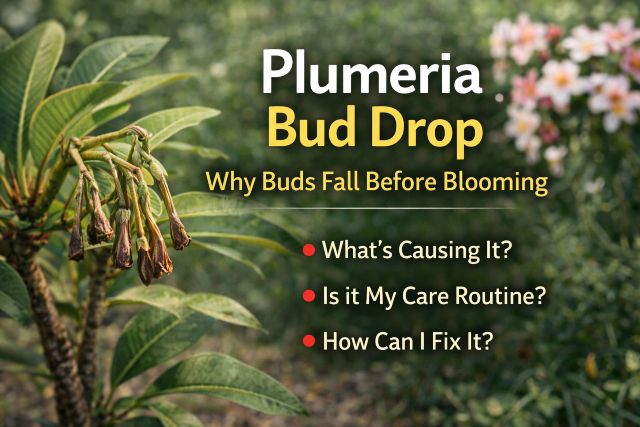
There’s nothing more discouraging than watching your Plumeria finally push out a beautiful cluster of buds… only for them to dry up and fall off before they even think about opening. I’ve been there. You wait all season, you think this is finally the moment, and then suddenly the buds start shrinking, turning brown, and dropping off one by one. It almost feels personal.
The good news is that bud drop almost always has a clear cause. And once you know what’s triggering it, you can fix it pretty fast. Let’s go through the most common reasons buds form but don’t open, and what you can actually do about it.
Reason 1: Sudden Temperature Changes
Plumeria buds are extremely sensitive to sudden weather swings. A hot day followed by a cool night can shock the plant. When that happens, the plant basically aborts the buds to conserve energy.
If your nights suddenly became colder, or if there were unexpected storms or wind, that’s probably the culprit.
What you can do:
Try to keep the plant in a location with more stable temperatures. If you grow in a pot, move it against a wall or inside a warm patio during unstable weather. If you’re in a cooler climate, a heat mat under the pot early in the season can help keep the root zone warm:
Warm roots help stabilize the entire plant and reduce bud drop.
Reason 2: Inconsistent Watering
This one surprises a lot of people. Overwatering and underwatering can both cause bud drop. Plumeria needs deep watering but only when the soil is dry. If the soil stays soggy or dries out completely at random, the plant reacts by dropping its buds.
What you can do:
Use a moisture meter so you’re not guessing:
I used to think I knew when the soil was dry until I actually checked. Turns out I was watering based on assumption instead of reality.
Reason 3: Not Enough Sunlight
If your Plumeria produced buds but never opened them, there’s a very good chance it isn’t getting enough direct sunlight. Plumeria buds need strong, consistent light to mature and open. Weak light causes the buds to stall and eventually fall off.
What you can do:
Move the plant into a sunnier location. At least six hours of direct sunlight is the minimum. If your balcony or indoor spot doesn’t get that much sun, a grow light helps a lot:
It gives the plant the boost it needs to complete the blooming cycle.
Reason 4: Nutrient Imbalance
This happens when the plant gets too much nitrogen and not enough phosphorus. Nitrogen pushes leaf growth but blocks flowers. Phosphorus encourages blooming and bud development.
If your fertilizer is focused on green growth or says something like “all purpose” or “lawn food,” it might be the reason your buds won’t open.
What you can do:
Switch to a bloom booster or a Plumeria specific fertilizer.
Feed lightly but consistently during the warm season. Don’t overdo it. Too much fertilizer can also stress the plant.
Reason 5: Root Stress or Root Rot
A stressed root system almost always leads to bud drop. If the roots are sitting in wet soil, not draining well, or suffering early rot, the plant cuts off all non essential energy use. Buds are the first thing to go.
What you can do:
Check your soil. It should be loose, airy, and fast draining. If it’s dense or stays wet, repot using a cactus mix like this one.
It drains much faster and gives the roots room to breathe.
Reason 6: The Plant Was Recently Moved or Repotted
Plumeria hates sudden changes. If you moved it to a new location, rotated the pot, or repotted it during active bud development, the plant may drop the buds because it needs time to adjust.
What you can do:
Do not disturb the plant once buds start forming. Choose a location and leave it there. Stability is key.
Reason 7: Insects Feeding on Buds
In some cases, pests like thrips, spider mites, and mealybugs attack the buds. Thrips in particular are known for damaging developing blooms. They suck out the moisture, causing the buds to dry out and fall off.
What you can do:
Inspect the buds closely. If you see tiny black marks or distorted petals, pests might be the problem. In that case, you’ll need to treat the plant with neem oil or an insecticidal soap.
Reason 8: The Buds Are Immature
Sometimes the plant pushes buds too early, especially after a period of stress or rapid growth. These buds simply don’t have the energy reserves to develop fully and open.
What you can do:
Support your plant with steady sunlight, the correct water schedule, and a bloom focused fertilizer. Once the plant gains strength, you’ll get stronger bud clusters next time.
Final Thoughts
Plumeria bud drop feels like a disaster when it happens, especially if you’ve been waiting all season to see flowers. But once you understand how sensitive these buds are, things start to make sense. Plumeria is a plant that thrives on stable conditions. Give it sunlight, warmth, the right fertilizer, and consistent watering, and it usually rewards you.
Frequently Asked Questions
Why do Plumeria buds form but then fall off?
Plumeria buds usually drop because of stress from temperature changes, inconsistent watering, poor soil drainage, nutrient imbalance, or lack of sunlight. Buds are sensitive and fall off when the plant cannot support them.
Does Plumeria bud drop mean the plant is unhealthy?
Not always. Bud drop is often a temporary reaction to stress. Once you fix the underlying issue, the plant usually returns to normal growth and blooming.
How do temperature changes cause Plumeria buds to drop?
Sudden swings between hot days and cool nights shock the plant. When conditions become unstable, Plumeria redirects energy away from blooming, causing buds to fall off.
Can overwatering cause Plumeria bud drop?
Yes. Overwatering suffocates the roots and prevents the plant from supporting buds. When roots stay wet for too long, bud development stalls and the buds fall.
Why do Plumeria buds dry up before opening?
This happens when the plant is not getting enough direct sunlight or when it lacks phosphorus. Without strong sunlight and the right nutrients, buds stall in development and eventually dry out.
Can moving a Plumeria cause bud drop?
Yes. Plumeria dislikes being moved once buds have formed. Changing its position, repotting, or rotating the pot can cause stress that leads to bud drop.
What pests cause Plumeria buds to fall off?
Thrips, spider mites, and mealybugs can attack developing buds. They feed on the moisture inside the buds, causing distortion and premature drop.
How much sunlight does Plumeria need to keep buds from dropping?
Plumeria needs at least six hours of direct sunlight per day. Anything less can interfere with bloom development and lead to bud drop.
Will Plumeria buds grow back after dropping?
Not the same buds, but the plant will eventually produce new flower clusters once it has recovered from the stress that caused the bud drop.