
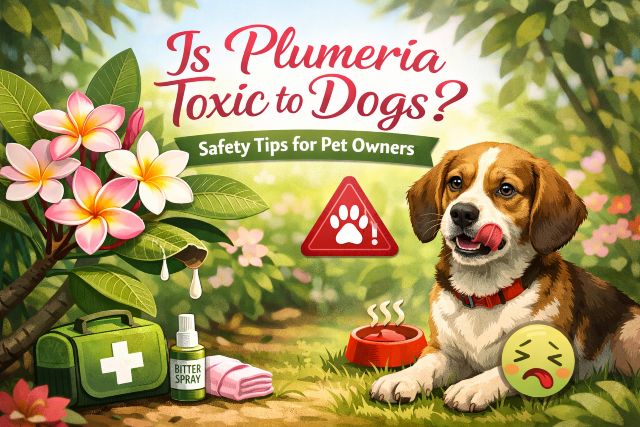
If you share your home or garden with both plumeria plants and a curious dog, this question probably pops into your head sooner or later. Maybe your dog sniffed a fallen leaf. Maybe you caught them chewing something they definitely should not. Or maybe you are planning to add plumeria to your garden and want to be safe before you do.
Short answer first, then we will break it down properly.
Yes, plumeria is mildly toxic to dogs, but serious poisoning is uncommon.
That said, there are a few important things every dog owner should know before relaxing completely.
Why Plumeria Can Be Harmful to Dogs
Plumeria belongs to a group of plants that produce a milky white sap, sometimes called latex sap. This sap contains compounds that can irritate soft tissues.
The toxic part is mainly:
-
The sap
-
The stem
-
Broken leaves or branches where sap leaks out
The flowers themselves are usually less problematic, but they are not completely risk free either.
The plant is not considered highly poisonous, but it is not dog safe in the way basil or rosemary would be.
What Happens If a Dog Eats Plumeria?
Most dogs who nibble on plumeria experience mild symptoms, not emergencies. However, reactions can vary depending on:
-
The size of the dog
-
How much was eaten
-
Whether sap was involved
-
The dog’s individual sensitivity
Common Symptoms to Watch For
If a dog chews or ingests plumeria, you may notice:
-
Drooling more than usual
-
Mild vomiting
-
Diarrhea
-
Pawing at the mouth
-
Lip smacking
-
Redness or irritation around the mouth
These symptoms usually appear within a few hours.
Rare But More Serious Reactions
In uncommon cases, especially if sap gets into the eyes or mouth:
-
Swelling of lips or tongue
-
Eye irritation
-
Lethargy
-
Loss of appetite
If you see swelling, ongoing vomiting, or behavior that feels off, it is time to call a vet.
Is Plumeria Sap Dangerous?
This is the part dog owners should be most careful about.
The sap is the most irritating component of the plant. When stems or leaves break, the sap oozes out and can:
-
Irritate the mouth
-
Cause stomach upset if swallowed
-
Irritate skin or paws
-
Cause eye discomfort if rubbed in
Dogs that love to chew sticks or dig around plant bases are more likely to encounter sap.
What Should You Do If Your Dog Eats Plumeria?
First, stay calm. Most cases are not emergencies.
Step by Step Response
-
Remove any plant material from your dog’s mouth
-
Rinse the mouth gently with clean water if possible
-
Wash paws if sap may be present
-
Observe closely for the next 24 hours
Keeping a basic pet first aid kit at home can help manage minor incidents like plant irritation while you decide if a vet visit is needed.
When to Call the Vet
Call your veterinarian if:
-
Vomiting or diarrhea continues
-
There is visible swelling
-
Your dog seems weak or unusually quiet
-
Sap entered the eyes
-
Your dog is very small or has existing health issues
If you are ever unsure, it is always okay to call and ask. A quick phone consult often brings peace of mind.
Are All Parts of Plumeria Toxic?
Not equally.
Here is a simple breakdown:
-
Sap: Most irritating
-
Stems: Moderate risk due to sap
-
Leaves: Mild risk
-
Flowers: Lower risk but still not edible
-
Seeds: Rarely encountered, mild risk
Even though some parts are less toxic, no part of plumeria should be considered safe for dogs to eat.
Why Do Dogs Chew Plants Anyway?
This question comes up a lot.
Dogs may chew plants because:
-
They are bored
-
They are teething
-
They like the texture
-
They are exploring new smells
-
They have mild digestive discomfort
Plumeria has a strong scent, especially when flowering, which can attract curious noses.
How to Keep Dogs Safe Around Plumeria
You do not need to remove your plumeria plant if you have a dog. You just need to manage access.
Practical Safety Tips
-
Place potted plumeria out of reach
-
Avoid planting plumeria where dogs dig
-
Clean up fallen leaves and flowers
-
Wear gloves when pruning to avoid spreading sap
-
Wash hands after handling broken branches
-
Train dogs with a clear “leave it” command
If your dog is a known plant chewer, supervision matters more than placement.
Using raised planters or plant stands keeps plumeria out of reach for dogs that love to dig or chew at ground level.
If your dog is a persistent plant chewer, a pet safe bitter spray can help discourage chewing without harming your plant or your dog.
Is Plumeria Toxic to Puppies?
Yes, and puppies are more vulnerable.
Puppies:
-
Chew more
-
Have smaller bodies
-
React more strongly to toxins
Even mild irritation can feel intense for a puppy. If you have a young dog, it is best to keep plumeria completely out of reach until they grow out of the chewing phase.
Is Plumeria Toxic to Other Pets?
For quick context:
-
Cats: Yes, also mildly toxic
-
Birds: Not recommended around
-
Rabbits: Should not ingest
-
Livestock: Avoid exposure
Plumeria is generally treated as a caution plant, not a deadly one.
Should You Avoid Plumeria If You Have a Dog?
Not necessarily.
Plumeria is widely grown in homes with pets without issues. Problems usually happen when:
-
Dogs chew stems
-
Sap is exposed
-
Puppies explore aggressively
With basic awareness, plumeria and dogs can coexist peacefully.
Final Thoughts
Plumeria is mildly toxic to dogs, mainly due to its sap. Most exposures cause only minor digestive or mouth irritation, and serious cases are rare. Still, no amount is truly safe, and prevention is always better than treatment.
If you love plumeria and love your dog, you do not have to choose between them. A little planning, cleanup, and observation go a long way.
Your garden can stay beautiful, and your dog can stay safe.
Frequently Asked Questions
Is plumeria poisonous to dogs or just mildly toxic?
Plumeria is considered mildly toxic to dogs, not highly poisonous. Most reactions are limited to digestive upset or mouth irritation, especially if the plant sap is involved.
What part of the plumeria plant is toxic to dogs?
The milky sap found in plumeria stems and broken leaves is the most irritating part. Leaves and flowers can also cause mild symptoms if ingested, but the sap poses the highest risk.
What should I do if my dog chews on plumeria?
Remove any plant material from your dog’s mouth, rinse the mouth gently with water if possible, and monitor for symptoms like vomiting or drooling. Contact a veterinarian if symptoms persist or worsen.
Can plumeria cause serious poisoning in dogs?
Serious poisoning is rare. Most dogs experience only mild symptoms. However, puppies, small dogs, or dogs that ingest larger amounts may be more affected.
Is plumeria toxic to puppies?
Yes. Puppies are more sensitive because they chew more and have smaller bodies. Even mild toxins can cause stronger reactions in young dogs.
Can plumeria sap irritate a dog’s skin or eyes?
Yes. Plumeria sap can irritate the skin, paws, mouth, and eyes. If sap exposure is suspected, rinse the area with clean water and monitor for redness or swelling.
Should I remove plumeria plants if I have a dog?
Not necessarily. Many dog owners safely grow plumeria by keeping plants out of reach, cleaning up fallen leaves, and supervising dogs that like to chew plants.