

Growing plumeria from seed is one of the most fun little experiments you can do as a plant person. Watching a seed sprout into a baby version of a tropical tree is genuinely exciting. But before you start, there’s one honest truth you need to hear, because it changes everything about what to expect.
I’ll get to that truth in a second. Then I’ll walk you through the whole thing, from testing whether your seeds are even any good, to germinating them fast, to raising the seedlings and, eventually, getting flowers. Let’s plant some seeds.
Growing Plumeria From Seed at a Glance
| Step | The short version |
|---|---|
| Reality check | Seeds do not grow true to the parent. Your flower will be a surprise |
| Test viability | Firm, plump seeds. Sink test in warm water before planting |
| Germinate | Paper towel or straight in soil, wing side up. Sprouts in a few days to two weeks |
| Seedling care | Warmth, bright light, gentle moisture, and early feeding |
| Time to bloom | Usually 2 to 3 years, sometimes longer |
The One Big Thing: Seeds Do Not Grow True
Here’s that truth I promised, and it’s the single most important thing to understand about seed growing.
Plumeria seeds almost never grow into a copy of the parent plant. It’s extremely rare. Plumeria cross pollinate, so a seed carries a genetic mix from two parents, which means the flower you eventually get is basically a surprise. It might be a gorgeous new color, or it might be a fairly plain one. You just don’t know until it blooms.
So if you want a specific flower, say the exact red or pink you fell in love with, seeds are the wrong tool. For that, you take a cutting instead, because a cutting is a clone and blooms identical to the parent. Seeds are for the adventure and the surprise, or for breeders hunting for the next great variety. Go in expecting a mystery flower and you’ll have a great time.
Where to Get Plumeria Seeds
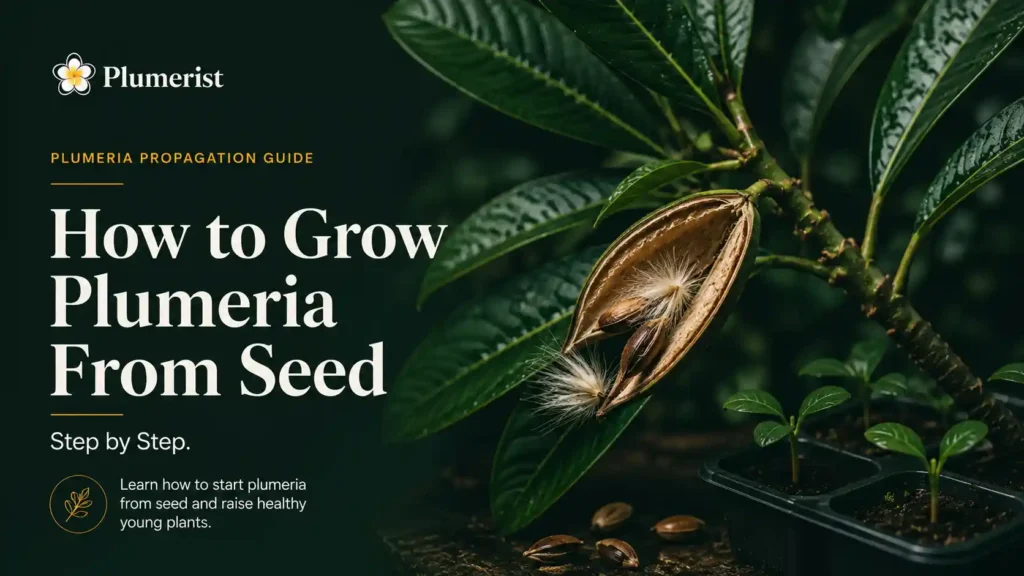
Plumeria seeds come from the long, bean like seed pods the plant produces after a flower is pollinated. Each pod can hold dozens of flat, winged seeds that look a bit like little paper canoes.
You can collect them from your own plant if a pod forms and splits open, or buy them from a reputable seller. One big warning though: skip any listing promising a specific wild color like blue or rainbow from cheap seeds. Those are almost always scams, and remember, no seed grows true to a pictured flower anyway. Buy from someone honest who simply sells fresh, viable seed.
How to Tell if Your Seeds Are Viable
Fresh, healthy seeds sprout well. Old or dud seeds waste your time. Two quick checks:
- The feel test. A good seed is firm and plump, thicker in the middle where the actual seed sits. Thin, flat, papery ones are usually duds.
- The water test. Drop the seeds in a bowl of lukewarm water and leave them for a few hours. The viable ones absorb water and sink, while empty duds tend to float. It’s not perfect, but it’s a handy filter.
One more thing: freshness matters. Plumeria seeds are best planted within a few months of harvest, and some types lose their viability quickly once they dry out. Fresher is always better.
How to Germinate Plumeria Seeds
There are two easy methods, and both work great. Pick whichever you like.
Method 1: The paper towel method. This one lets you watch the magic happen. Lay your seeds between two damp paper towels, pop them in a sealed bag or container, and keep them somewhere warm. Check daily, and you’ll often see little roots pushing out within a few days. As soon as a seed has rooted, gently move it into soil.
Method 2: Straight into soil. Just as reliable, and less fussy. Here’s the simple version:
- Fill small pots or a tray with a light, fast draining mix.
- Push each seed in so the flat wing sticks up out of the soil and only the plump seed end is buried, about a quarter inch deep.
- Water well and keep the soil warm and lightly moist, never soggy.
- Wait. Most seeds sprout within about 5 to 10 days, though some take a little longer.
Whichever method you use, warmth is the secret ingredient. Plumeria seeds germinate fastest when they’re kept nice and cozy.
Caring for Plumeria Seedlings
Once your seeds sprout, the goal is steady, healthy growth. Baby plumeria are a little more delicate than established plants, so ease them into the normal routine.
Give them bright light but protect the tiniest seedlings from harsh, scorching midday sun at first. Keep the soil lightly moist while they’re young, then gradually shift toward the usual plumeria rule of letting it dry between waterings as they get bigger. The full seasonal watering guide is in plumeria water requirements, and the best soil for plumeria works great once they’re established.
Here’s a pro tip that really pays off: start feeding early. Seedlings that get a gentle, balanced fertilizer within the first couple of months grow noticeably faster and build stronger roots. Don’t blast them, just a light, regular feed. My feeding plumeria guide covers what to use.
As a seedling grows into a young plant, it graduates to normal plumeria care: lots of sun, fast draining soil, and eventually a bigger home. When that day comes, here’s how to pick the best pot for it.
How Long Until a Seed Grown Plumeria Blooms?
Patience, my friend. This is the trade you make with seeds. A plumeria grown from seed usually takes about 2 to 3 years to flower, and sometimes longer depending on the plant and your conditions. It feels like forever when you’re waiting, but that first bloom, in a color nobody has ever seen before, is a genuinely special payoff. If you want to nudge things along once it’s mature, my guide on how to get plumeria to bloom helps.
Seeds vs Cuttings: Which Should You Choose?
Quick gut check, because they suit totally different goals.
| From seed | From a cutting | |
|---|---|---|
| Flower result | A genetic surprise, never matches the parent | An exact clone of the parent |
| Time to bloom | 2 to 3 years or more | Often within the first year |
| Best for | Adventure, breeding, cheap fun | Getting a specific known flower fast |
So if you want a known flower fast, go with a cutting. If you love a surprise and don’t mind waiting, seeds are a blast. Honestly, plenty of us do both. And if the whole plumeria versus frangipani naming thing ever confused you, I cleared it up in plumeria vs frangipani.
Common Mistakes to Avoid
A few easy slip ups trip people up with seeds. Dodge these and your success rate jumps.
- Planting old, dried out seeds. Viability drops fast as seeds age and dry. Use fresh seed and do the water test first.
- Burying the seed too deep, or the wrong way up. The flat wing should stick up out of the soil, with only the plump end buried a quarter inch or so. Deep burial rots seeds before they sprout.
- Letting them get cold. Warmth is everything for germination. A chilly windowsill stalls seeds, so keep them cozy, ideally with some bottom heat.
- Overwatering seedlings. Baby plumeria still hate soggy roots. Keep the mix lightly moist, not wet, and make sure the container drains.
- Expecting a copy of the parent. Worth repeating: your flower will be a surprise. If that disappoints you, grow from a cutting instead.
Frequently Asked Questions
Do plumeria seeds grow true to the parent plant? Almost never. Seeds are a genetic mix from two parents, so the flower is a surprise. For an exact match, grow from a cutting instead.
How long do plumeria seeds take to germinate? Usually just a few days to about two weeks in warm conditions. The paper towel method often shows roots within a few days.
Which way up do you plant a plumeria seed? Plant it with the plump seed end down in the soil and the flat papery wing sticking up out of the surface.
Do you have to soak plumeria seeds before planting? You don’t have to, but a short soak in warm water helps you test viability (good seeds sink) and can give germination a small head start.
How long until a plumeria grown from seed flowers? Typically 2 to 3 years, and sometimes longer. Seeds are a patience game compared to cuttings.
Bottom line, growing plumeria from seed is a rewarding little adventure as long as you go in with the right expectations. You won’t get a copy of the parent, and you’ll wait a few years for blooms, but you might just grow something one of a kind. Test your seeds, keep them warm, feed the seedlings early, and enjoy the ride. Want the faster route to a known flower? Here’s how to grow from cuttings instead, or browse the full plumeria varieties guide to see what’s out there.