
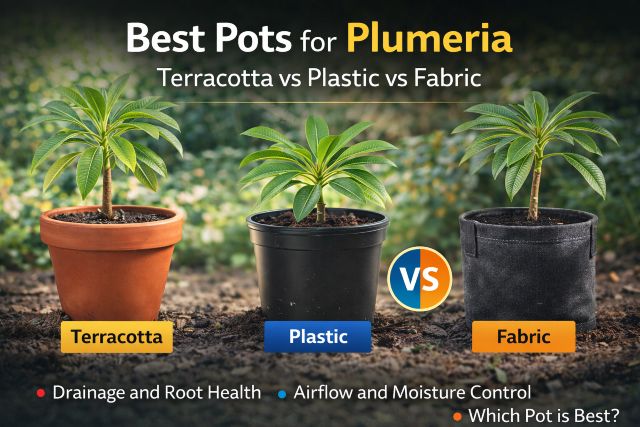
If you’ve ever struggled to decide which pot is best for Plumeria, trust me, you’re not alone. I’ve grown Plumerias in just about everything over the years. Terracotta, plastic, fabric grow bags, ceramic, even repurposed containers when I ran out of pots. Some worked amazingly well, and some nearly killed the plant.
What I learned is that Plumeria doesn’t care about fancy pots. It cares about drainage. That’s it. The type of pot makes a big difference in how the soil dries, how the roots breathe, and how often you need to water.
Let’s go through each type based on real experience so you understand what works best for your climate and your watering habits.
Terracotta Pots
Terracotta is the classic choice for Plumeria, and honestly, it’s still one of my favorites. The clay breathes. Water evaporates faster. Soil dries evenly. This is perfect if you tend to overwater or live somewhere humid.
Pros of Terracotta
-
Dries out fast, which Plumeria loves
-
Reduces chance of root rot
-
Keeps the crown dry and safe
-
Heavy enough that the plant won’t tip over
-
Breathable walls improve root health
Cons of Terracotta
-
You’ll water more often in hot climates
-
Pots can crack in winter if left outside
-
Heavier to carry around
-
More expensive than plastic
Who terracotta is best for
Terracotta is ideal if you tend to overwater or if you live in a humid climate where soil takes longer to dry. It’s also great if your plant is top heavy and needs stability.
If you want a simple terracotta option, here’s a reliable one.
It’s sturdy, drains fast, and doesn’t crumble like the cheap ones.
Plastic Pots
Plastic pots are the go to choice for people who want something lightweight and easier to move around. I use plastic pots when I’m constantly repositioning my Plumeria to chase sunlight or to protect it from unexpected weather changes.
Pros of Plastic Pots
-
Lightweight and easy to move
-
Doesn’t crack in winter
-
Holds moisture longer
-
Cheaper than terracotta
-
Easy to drill extra drainage holes
Cons of Plastic Pots
-
Retains moisture longer (dangerous if you overwater)
-
Can heat up in strong sunlight
-
May cause root rot if soil stays wet
-
Can get brittle over time
Who plastic pots are best for
Plastic pots are ideal if you live in a very hot and dry climate where soil dries too fast. They’re also good if you need to move your plant around often, like from sun to shade or indoors during storms.
If you choose plastic, make sure you pick a pot with several drainage holes at the bottom. If you can’t find one, you can drill extra holes yourself.
Fabric Pots
Fabric pots feel like a new trend, but they work surprisingly well for Plumeria. They allow air to reach the root zone from all directions, which prevents circling roots and improves drainage. I personally use fabric pots when I’m rooting cuttings or trying to develop strong new root systems.
Pros of Fabric Pots
-
Maximum airflow around the roots
-
Prevents root circling
-
Drains extremely fast
-
Lightweight and easy to store
-
Helps develop a stronger root system
Cons of Fabric Pots
-
Dries out very fast
-
Not ideal for windy areas
-
Loses shape as soil dries
-
Needs a tray underneath
Who fabric pots are best for
Fabric pots are perfect for rooting new Plumeria cuttings or for growers who want fast draining conditions. If you’re the kind of person who overwaters, fabric pots can actually save your plant.
Fabric pots also make it easy to shake out the soil during repotting without damaging the roots.
A good fabric pot option is something like this.
It drains well and doesn’t collapse on itself like the cheap ones.
Which Pot Is the Best Overall?
If you want a simple answer:
Terracotta wins for most people.
Why? Because it balances everything Plumeria needs:
-
Fast drying soil
-
Stable base
-
Good airflow
-
Natural root health
But plastic can be better if you live in an extremely dry climate. And fabric pots are unbeatable for cuttings or people who consistently overwater.
The right choice depends entirely on your watering habits and climate.
What Size Pot Should You Use?
Plumeria actually likes being a little root bound. Putting it in a huge pot slows growth and increases the risk of rot.
Here’s a simple rule:
-
Small cutting: 1 to 3 gallon pot
-
Medium plant: 3 to 5 gallon pot
-
Large plant: 7 to 15 gallon pot
Do not jump from a small pot to a huge one. Bigger pot equals more soil, and more soil equals more moisture that stays trapped around the roots.
Soil Matters More Than the Pot
No matter what pot you choose, the soil is what will determine the health of your plant. Plumeria needs fast draining soil that dries out quickly.
If you don’t want to mix your own soil, this ready made cactus mix works perfectly.
I’ve been using it for years when I’m too busy to mix perlite and sand myself.
Final Thoughts
Choosing the right pot for Plumeria isn’t about aesthetics. It’s about drainage, airflow, and how quickly the soil dries. Terracotta is reliable. Plastic is convenient. Fabric is forgiving. If you match the pot to your watering habits and climate, you’ll avoid most problems before they start.
Frequently Asked Questions
Which type of pot is best for Plumeria?
Terracotta is usually the best overall because it dries quickly, offers good airflow, and reduces the risk of root rot. Plastic and fabric also work, but they depend more on your climate and watering habits.
Do Plumerias grow better in terracotta pots?
Yes. Terracotta pots help Plumeria roots breathe and prevent moisture from staying trapped too long. This makes them ideal for humid climates or anyone who tends to overwater.
Are plastic pots bad for Plumeria?
Not necessarily. Plastic pots work well in very hot and dry climates where soil dries fast. The key is making sure the pot has plenty of drainage holes so water doesn’t sit around the roots.
Are fabric pots good for Plumeria?
Fabric pots are great for cuttings and young plants because they provide maximum airflow and prevent root circling. They drain extremely fast, so they work best for growers who tend to water too often.
What size pot should I use for Plumeria?
A small cutting should be in a 1 to 3 gallon pot. Medium plants do well in 3 to 5 gallons. Larger plants may need 7 to 15 gallons. Avoid oversized pots because they hold too much moisture and slow growth.
Do Plumerias like being root bound?
Yes, slightly. Plumeria often blooms better when the roots are snug but not cramped. Putting the plant in a pot that is too large can delay growth and cause moisture issues.
Can I grow Plumeria in ceramic pots?
You can, but ceramic pots often retain moisture longer and may not dry as evenly as terracotta. If you use ceramic, make sure it has large drainage holes and fast draining soil.
Can I use fabric grow bags for mature Plumerias?
You can, but fabric pots dry extremely fast and may require more frequent watering. They work best for root development and young plants, not always for large mature trees unless you monitor watering carefully.
Do I need drainage holes for Plumeria pots?
Yes. Plumeria cannot tolerate standing water. Any pot you use must have multiple drainage holes so excess water can escape quickly.
Is soil more important than the pot itself?
Yes. Even the best pot won’t help if the soil is heavy and holds moisture. Plumeria needs fast draining soil, preferably a cactus or succulent mix, to prevent root rot.