

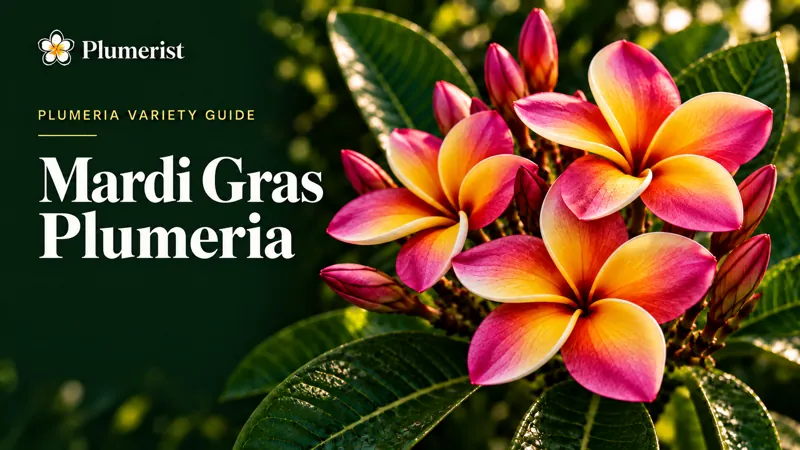
Plumeria Society of America registration number 226 belongs to a plumeria called Mardi Gras. Elizabeth Thornton bred it.
It remains one of the best known cultivars from her Thornton collection. Mardi Gras is also a name used for other ornamental plants, including lantana and hibiscus, so it pays to be specific about which plant you actually mean.
This guide covers only the Plumeria rubra cultivar with that registration number. It has nothing to do with any other plant sharing the same festive name.
What Mardi Gras Plumeria Looks Like
The flowers run about 3 inches across. Wide, rounded petals come to a gentle point at the tip, and they overlap heavily for a lush, full look.
The color is a rainbow blend of orange and pink. A red band runs along the edge on both the front and back of each petal. The overall effect is bright and festive, matching the name well.
The fragrance leans sweet and peachy. It is a softer, fruitier scent than the classic frangipani smell you get from many other cultivars.
Growth Habit and Bloom Performance
Mardi Gras plumeria has a compact growth habit compared with many named cultivars. That makes it a good fit for smaller yards, and for growers who want a plant that stays manageable in a pot.
It is also a consistent, heavy bloomer once established. Growers describe it flowering steadily through the warm season rather than in a few short bursts.
Color and performance both improve in hot weather. Growers consistently report that the oranges and pinks intensify as temperatures climb through summer.
Where Mardi Gras Plumeria Comes From
The Thornton collection includes several other well known cultivars alongside Mardi Gras. Elizabeth Thornton built a reputation within the plumeria community for bright, reliable multicolor blooms. Mardi Gras is often held up as one of her signature results.
What is not always clear is the exact introduction year. Records consistently name the breeder and the registration number, but a firm release date is harder to pin down across the sources available.
That gap does not undercut the cultivar itself. The breeder credit and registration number are the details that matter most for confirming you have the real plant. A specific year is a nice detail, but most casual buyers never actually need it.
Landscape and Container Uses
Because it stays compact, Mardi Gras plumeria works well near patios and entryways. A full sized plumeria tree would eventually crowd those same tight spots.
It also holds up well as a specimen plant in a large decorative pot. The bright rainbow color makes it a strong focal point even when it is not in full bloom, thanks to the glossy foliage.
Pair it with plants that share its love of heat and sun. A shaded spot slows both growth and flowering. A bright spot near a warm wall works especially well.
Honest Strengths and Weaknesses
- Strength: a well documented cultivar, with a real breeder and a Plumeria Society of America registration number.
- Strength: reliable, heavy blooming once the plant is established.
- Strength: a compact habit that suits containers and smaller gardens.
- Weakness: that same compact habit means it will never become a large, dramatic specimen tree.
- Weakness: colors look noticeably less vivid in cooler climates or during cooler parts of the season.
- Weakness: its popularity means similar looking rainbow blends sometimes get sold under the same name.
Buying Tips
Mardi Gras plumeria is popular and widely propagated, so plenty of nurseries carry it. That popularity also means loosely similar multicolor seedlings occasionally get labeled with the name to boost sales.
Ask for a clear bloom photo before ordering a cutting. Compare it against the color description here. A confirmed match saves you a full growing season of uncertainty and disappointment.
My rare variety rundown covers this kind of naming and labeling confusion in more depth. It comes up across many popular rainbow cultivars, not just this one.
Growing Mardi Gras Plumeria
Give it full sun and fast draining soil, the same basics that apply to any Plumeria rubra cultivar. My care handbook covers watering and feeding in full detail.
Because it stays compact, it grows well long term in a large container. My growing well in pots covers pot sizing and drainage in more detail.
My guide to keeping plumeria small has extra pruning tips if you want to control its size even further. Expect it to drop its leaves and rest through winter like other Plumeria rubra hybrids. Feeding it through the growing season keeps that heavy bloom output going strong.
Mardi Gras vs Other Rainbow Cultivars
Rainbow is a common theme in plumeria naming, and Mardi Gras is one of many multicolor options. My rainbow bloom explainer rounds up the broader category if you are comparing several before you buy.
My profile of Lei Rainbow covers a different multicolor cultivar with its own color balance and history.
If fragrance matters more to you than the exact color mix, my roundup of scent focused varieties highlights cultivars bred more for scent than for a rainbow bloom.
The Plumerist toolkit
The gear we would buy if we were starting over.
As an Amazon Associate, Plumerist earns from qualifying purchases.
Frequently Asked Questions
Who bred Mardi Gras plumeria?
Elizabeth Thornton bred it. It carries Plumeria Society of America registration number 226 as part of her Thornton collection.
Is Mardi Gras plumeria the same as the Mardi Gras hibiscus or lantana?
No. Mardi Gras is used as a name across several unrelated ornamental plants, so always confirm you are looking at the plumeria cultivar specifically.
What color is Mardi Gras plumeria?
A rainbow blend of orange and pink, with a red band on the petal edges front and back, and a sweet, peachy fragrance.
Does Mardi Gras plumeria grow well in containers?
Yes. Its compact growth habit makes it one of the better choices for long term container growing.
Does Mardi Gras plumeria bloom well?
Very well. Growers describe it as a consistent, heavy bloomer once established, with the best color showing up during hot weather.
How big does Mardi Gras plumeria get?
It stays compact compared with many named cultivars. That makes it a good fit for small yards, patios, and long term container growing.
Mardi Gras plumeria backs up its festive name with genuinely reliable blooming and a documented history. Its compact size and heat dependent color are worth knowing before you plant one, though, especially if you were picturing a large specimen tree.
For the full range of named cultivars, our variety library is the best next stop, especially if you are still deciding between a few different rainbow options.