

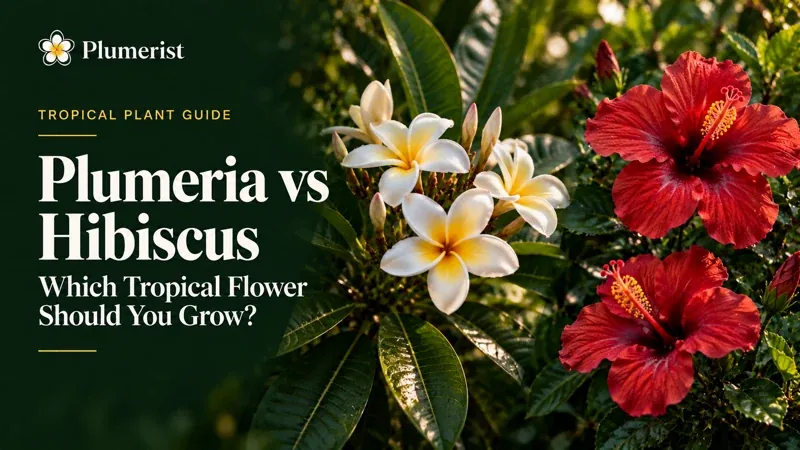
Plumeria vs hibiscus starts with two different plant families, not two names for the same flower. Plumeria belongs to the dogbane family. Hibiscus belongs to the mallow family.
For a useful plumeria vs hibiscus comparison, identify the hibiscus first. Here, tropical hibiscus means the familiar Hibiscus rosa-sinensis garden group. Hardy herbaceous hibiscus and native Hawaiian species are not interchangeable with that plant.
Plumeria vs hibiscus at a glance
| Feature | Plumeria | Typical tropical hibiscus |
|---|---|---|
| Flower structure | A narrow tube opens into overlapping petal lobes. | A broad flower commonly has a projecting reproductive column. |
| Branches | Thick, succulent and brittle. | Woody shrub growth, with leaves along stems. |
| Fragrance | Varies markedly by species or cultivar. | Often selected for visual display; do not generalize to every hibiscus species. |
| Individual flower life | Varies with cultivar and conditions. | Commonly about one day, despite a longer succession of flowers. |
| Winter planning | Cold protection may require seasonal movement. | Tropical types also need protection; hardy types require separate identification. |
| Watering | Depends on roots, growth stage and drying. | Needs suitable root moisture; no universal shared pot schedule. |
Identify an actual flower, not its color scheme
Many familiar plumerias have five overlapping lobes and a waxy appearance. Their flowers arise in clusters toward branch tips. Leaves also gather near the ends of the thick branches.
A typical single tropical hibiscus flower has broad petals and a conspicuous column projecting from the center. The Mississippi State description explains its arrangement of pistils and stamens. That structure is more useful than whether the flower is pink, red or yellow.
Double flowers and unusual cultivars can obscure a simple identification cue. Check the leaves, stems and plant label as well. Do not break a branch to use sap as a test.
The plumeria introduction explains the whole plant. Neither a white flower nor a yellow center identifies a particular plumeria species. Cultivar identity needs better provenance than a quick photo match.
One flower is different from a season of flowers
Minnesota Extension’s tropical hibiscus guide describes individual flowers as short lived, commonly lasting about a day. A plant can keep producing new flowers over a much longer period. Daily turnover is not the same thing as a failing shrub.
Plumeria clusters also contain flowers at different stages. Avoid comparing a whole plumeria cluster with one hibiscus bloom. That makes a misleading contrast even before growing conditions enter the picture.
A fixed seven to ten days for every individual plumeria flower is not justified here. Use the plumeria flower life guide for the relevant distinctions. Picking and storage add another set of conditions.
Scent is a selection question
In plumeria vs hibiscus comparisons, fragrance often decides the choice. Some plants are more noticeable to a particular nose than others. Color alone cannot choose the one you will enjoy.
It is also wrong to say that every hibiscus has no fragrance. Some native Hawaiian hibiscuses are scented, as the National Tropical Botanical Garden’s native hibiscus account explains. That exception is not a promise about an unnamed tropical hibiscus at a garden center.
If scent is the deciding factor, smell the actual flowering plant when possible. The fragrant plumeria shortlist uses documented descriptions rather than a universal strongest ranking. An attractive photo cannot replace that comparison.
Choose the plant that fits the space
A plumeria can become a broad small tree or have a more compact cultivated habit. Tropical hibiscus cultivars also differ in size and form. Neither plant is automatically a suitable hedge or a permanent small patio specimen.
Read the label for expected dimensions and ask about mature examples. Allow access for care and inspection. A plant beside a path needs room for the canopy as well as the pot.
The mature plumeria size guide shows how to separate a landscape range from a container prediction. A small nursery pot is not evidence of dwarf genetics. It tells you the plant is currently in a small pot.
Containers and winter protection
Both plumeria and tropical hibiscus can be grown in containers when the setup meets their needs. In cold regions, the protected destination becomes part of the choice. Check space, light and temperature before buying.
Do not apply a hardy hibiscus label to tropical hibiscus. Likewise, do not assume all plumerias tolerate an outdoor freeze. Identify the actual plant and use a realistic local protection plan.
A movable pot is useful only while it can still be moved safely. Check total weight and canopy clearance through the route. The container setup guide connects those constraints with root space and drainage.
Some plumerias rest with few or no leaves under cool conditions. A leafy tropical hibiscus should not automatically copy that plant’s storage routine. The plumeria winter reference explains why activity changes the care decision.
Do they need different watering?
A plumeria vs hibiscus watering comparison needs more than the plant names. Plant size, medium, roots, weather and growth all matter. Two pots side by side may dry at different rates.
An actively growing plumeria should not be kept thirsty merely because its branches store water. A resting one should not automatically receive a leafy hibiscus routine. Check the occupied root zone before watering either plant.
The plumeria watering guide is the reference for that plant. If growing both, separate containers or adjustable irrigation can make independent care easier. Keeping both saturated is not a compromise.
Pruning and feeding are not instant bloom switches
Pruning changes shape and removes growing or flowering material. Repeatedly shearing a hibiscus for a neat outline can remove developing buds. Heavy plumeria pruning also removes tips that could otherwise contribute flowers.
Choose a suitable plant habit before relying on constant reduction. Make necessary cuts for a clear reason. Do not expect every cut to create a fixed number of branches or more flowers immediately.
For feeding, account for nutrients already in the medium and follow the product label. Do not share a high phosphorus recipe simply because both plants are called tropical bloomers. Extra fertilizer cannot correct inadequate light or damaged roots.
Questions before choosing
Is one always easier to grow?
No. A plant suited to your conditions and protection setup is easier to manage than one that does not fit. Decide from the actual cultivar and space, rather than a general winner.
Can a flower photo settle the identification?
A clear flower and whole plant photo can often help distinguish the groups. It may not establish the species or cultivar. Keep the nursery label and source information.
Does the plant identity change the winter decision?
Yes, but only after you identify the hibiscus type. Tropical hibiscus and hardy hibiscus have very different winter behavior. Neither should be assigned plumeria care by appearance alone.
The Plumerist toolkit
The gear we would buy if we were starting over.
As an Amazon Associate, Plumerist earns from qualifying purchases.