

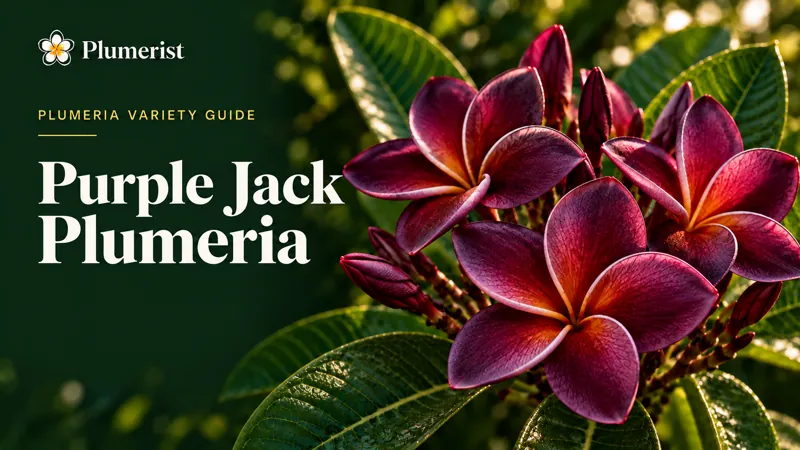
A plumeria that matches a deep violet pansy does not exist. Purple Jack plumeria is not an exception to that rule. What it does deliver is a genuine lavender to violet toned bloom with darker veining.
It is widely credited as the first purple leaning plumeria to reach the United States market. The color is real. It is just softer and more heat dependent than the name suggests.
Purple Jack plumeria is a Jungle Jack collection cultivar from Thailand. It carries a small handful of alternate names in circulation among growers. Knowing what it actually looks like matters more than the dramatic name on the tag.
What Purple Jack Plumeria Actually Looks Like
The flower runs about 3 inches across. It has a lavender to purple base, darker purple veins running through the petals, and an orange toned center. The scent is described as sweet and soft, not the strong classic frangipani perfume of many other cultivars.
The tree grows upright with a medium to tall habit. The purple tone is real, but it is not fixed. Growers report that it needs strong heat and bright light to reach its deepest shade.
Without enough warmth, blooms can open pale. The result is closer to a washed out mauve than true purple.
Fragrance and Bloom Habit
The soft, sweet scent of Purple Jack is fainter than the bold perfume of classic frangipani types. It is still noticeable up close. It just does not carry across a yard the way a strongly scented cultivar does.
Bloom clusters tend to be moderate in size, not the huge ball shaped heads seen on some heavier blooming cultivars. Once a young plant reaches blooming maturity, flowering tends to continue steadily through the warm months.
Purple Jack Origins and Names
Purple Jack is also sold as Muang Jack, Jack’s Purple, Violet Purple, and Violet Princess. Nursery records describe it as a seedling of Penang Peach. It belongs to the Jungle Jack group of Thai bred cultivars.
That group is known for producing several distinct color breaks in plumeria. Beyond this lineage note, detailed breeding records such as the exact cross year are not widely documented. The multiple trade names are worth knowing before buying.
A listing under any of these names may well be the same plant rather than a different cultivar.
Strengths and Weaknesses Growers Report
The strength is obvious. It is a genuinely unusual color in a genus dominated by pink, yellow, white, and red. Once established and given enough heat, growers describe it as an eager and reliable bloomer through the warm season.
The weaknesses are just as clear. It is not cold tolerant, so growers outside consistently warm climates will need container culture and winter protection. Its cold hardiness ranks below many common cultivars.
Color also disappoints in cooler or cloudy conditions. A plant that never gets enough summer heat may never show the lavender to violet tone buyers expect from photos.
Growing Purple Jack
Because color depends so heavily on heat, Purple Jack does best with maximum sun and reflected warmth. A spot against a south facing wall works well in warm climates. Cooler region growers usually keep it in a container instead.
That container can then move to the warmest, brightest spot available during the growing season. Winter care matters more for this cultivar than for cold hardy types, since it has little tolerance for chill. Reviewing general plumeria winter protection steps ahead of the first cold snap is worth the effort.
A single hard freeze can undo an entire season of growth on an unprotected plant. Growers in marginal climates often start protection earlier than they think they need to.
Purple Jack vs Other Purple Plumeria
Purple Jack is often compared against the broader group covered on the purple plumeria page. That comparison is worth doing honestly. Most plumeria marketed as purple are closer to lavender, mauve, or orchid than a saturated violet.
Purple Jack fits that same pattern rather than standing apart from it. What sets it apart within the group is its documented status as an early, specifically bred purple leaning cultivar. It is not simply a seedling that happened to lean cool toned.
Buyers expecting a deep, uniform purple regardless of cultivar will be disappointed by nearly all of them, Purple Jack included.
Purple Jack Alongside Other Jungle Jack Cultivars
The Jungle Jack collection includes several other named color breaks beyond Purple Jack, each bred from similar Thai stock. Growers who collect one Jungle Jack cultivar often add others from the same line. The group shares a general growth habit even as flower color varies widely.
Comparing a few side by side in person is the best way to judge each color. Photos alone tend to flatten real differences between cultivars.
Buying Purple Jack
Purple Jack plumeria is generally sold as a rooted plant, an unrooted cutting, or a grafted plant. Specialty plumeria growers are the usual source. Because it circulates under several other names, confirming which trade name a seller is using helps avoid confusion.
Seed grown plumeria will not reliably reproduce this specific color and vein pattern. Each seedling carries a new genetic mix. A cutting or graft from a confirmed Purple Jack plant is the only reliable way to get the true color this cultivar is known for.
The Plumerist toolkit
The gear we would buy if we were starting over.
As an Amazon Associate, Plumerist earns from qualifying purchases.
Frequently Asked Questions
Is Purple Jack plumeria really purple?
It leans lavender to violet rather than a deep, saturated purple. It needs strong heat and light to reach its deepest color. In cooler or shadier conditions, it can look closer to pale mauve.
What other names is Purple Jack sold under?
It also circulates as Muang Jack, Jack’s Purple, Violet Purple, and Violet Princess. These names generally refer to the same Jungle Jack collection cultivar from Thailand.
Is Purple Jack cold hardy?
No. Growers report it is not cold tolerant. Plants in cooler climates typically need container culture and winter protection rather than an in ground planting.
Why is my Purple Jack not very purple?
Color intensity depends heavily on heat and light. A plant that has not had enough sustained summer warmth will often bloom paler than the deep lavender to violet shown in photos.
How does Purple Jack compare to other purple plumeria?
Like most plumeria sold as purple, Purple Jack is closer to lavender or violet than true purple. It stands out mainly for being one of the earliest documented purple leaning cultivars available in the United States.