

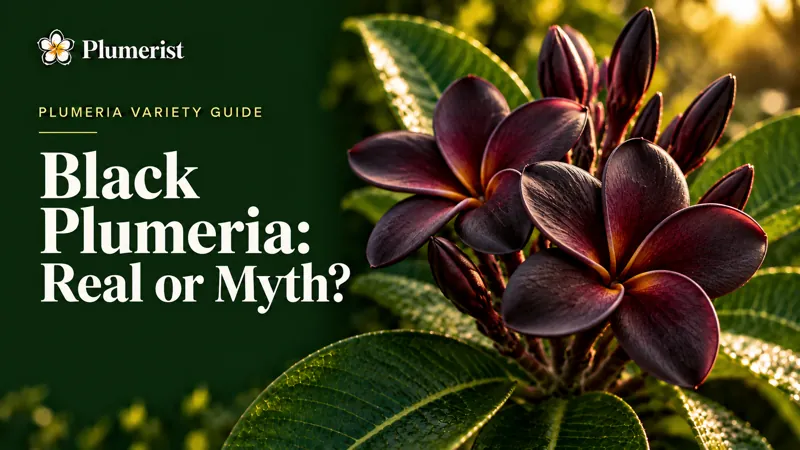
Scroll far enough through cutting swap listings and you will eventually hit a photo of an inky, velvet black plumeria bloom. The color looks almost unreal. Usually, it is.
Is There Really Such a Thing as Black Plumeria?
No plumeria produces a true black flower. The darkest cultivars land somewhere in deep red, maroon, or near black burgundy. None reach a flat, true black.
The same thing happens with other plants sold as black, like roses and tulips. The pigment simply cannot go that dark. Plumeria is no exception to that rule.
Plumeria petals rely on anthocyanin pigments for red and purple tones. Even at peak concentration, some red or purple still shows through in strong light. A flower can look black from across a yard and still reveal deep red the moment you hold it up to the sun.
The Darkest Plumeria That Actually Exists
Scott Pratt is the cultivar most often cited as the closest thing to black plumeria available to growers. Its blooms open a deep, velvety red that darkens further with maturity and heat. Under low light, some blooms genuinely read as near black to the eye.
My full guide to Scott Pratt plumeria covers its color, scent, and growing habits in detail. It remains the honest benchmark for how dark plumeria can actually get, without any digital help.
How Heat and Season Change the Color
Dark red and maroon plumeria cultivars shift noticeably with temperature. Intense heat tends to deepen the color. A bloom that looks merely dark red in spring can turn closer to true black by midsummer.
Cooler weather has the opposite effect. It often lightens the same flower toward a brighter red. Growers report real variation on the same plant across a single season for exactly this reason.
A photo taken in July heat can look dramatically darker than one taken from the same tree in April. That natural swing is honest and expected. It looks nothing like the flat, uniform color shift seen in edited photos.
Spotting Dyed or Edited Photos
Cut white or pale blooms absorb dark dye through the stem easily. Some listings for black plumeria simply use dyed flowers for the photo. Others run a normal deep red image through heavy editing to crush the color toward black.
Both tricks are common enough that buyer caution matters here. A few warning signs help separate real listings from staged ones. Flatly black petals with no visible red or purple undertone anywhere, even in the brightest highlights, are a strong red flag.
A yellow throat that looks unnaturally saturated against a flat black background is another warning sign. Sellers who cannot name the actual cultivar deserve extra scrutiny too. A generic name like simply black plumeria, with no cultivar attached, is rarely a good sign.
Legitimate near black plumeria almost always ships under a real cultivar name. Scott Pratt is the most common one. A small handful of other deep red varieties round out the honest options.
The Same Scam Pattern Shows Up With Blue
Black is not the only impossible color chased by scam listings. My article on blue plumeria flowers covers the nearly identical pattern with dyed and digitally altered blue blooms. Neither true blue nor true black exists in the plumeria genus for the same underlying pigment reasons.
Recognizing one pattern makes the other much easier to spot. Both rely on buyers wanting something rare enough that a photo alone feels convincing.
Why the Black Plumeria Chase Never Really Stops
Rare, hard to find colors carry real appeal for collectors, and black sits at the extreme end of that instinct. A color that supposedly does not exist anywhere else feels more valuable than one more shade of red. That appeal exists regardless of whether the color is actually achievable.
The same pull drives interest in blue roses, black tulips, and other flowers chasing a pigment their biology simply cannot produce. Demand for the impossible color creates an opening for exactly the kind of misleading listings covered above. Understanding the pigment limits removes most of that appeal, since a shopper who knows the ceiling is deep red stops expecting more.
How to Verify a Cutting Before You Buy
Ask for the specific cultivar name before buying anything advertised as black. A seller who answers with a real, checkable name like Scott Pratt is working from an honest baseline. One who only offers a vague description deserves more questions, not less.
Request a photo taken in ordinary daylight rather than a studio shot or a close crop. Natural light photos are much harder to fake convincingly than a single dramatic close up. Comparing several photos of the same plant across different angles and times of day is one of the simplest checks available.
Closest Real Options to Grow
Scott Pratt remains the standard choice for anyone chasing the darkest real color available. A handful of other deep red and maroon cultivars come close without quite matching its depth. Standard red plumeria cultivars sit a step lighter, but they share the same rich, saturated family of tones.
My full guide to all the types in one place covers where those darker reds fit among the wider range of colors. Growing conditions matter as much as the cultivar choice. Full sun and consistent heat bring out the deepest color any dark cultivar can show.
A shaded plant of the same variety will simply never get as dark. That holds true no matter how the tag or listing describes it.
The Plumerist toolkit
The gear we would buy if we were starting over.
As an Amazon Associate, Plumerist earns from qualifying purchases.
Frequently Asked Questions
Is black plumeria a real cultivar name?
No single cultivar is officially named black plumeria. The phrase gets used loosely by sellers to describe very dark red or maroon flowers, most commonly Scott Pratt, rather than referring to one specific registered variety.
What is the darkest plumeria color available?
Deep maroon and near black burgundy are as dark as the flowers reliably get. Scott Pratt is the cultivar most commonly pointed to as the darkest widely available option. It reaches its deepest color in full heat during peak summer.
Why do some online photos show a flower that looks fully black?
Lighting, camera settings, and photo editing can all push a deep red bloom toward looking black on screen. Some listings go further and dye or digitally alter the image outright. A photo alone is never reliable proof of true color.
Does dark frangipani mean the same thing as black plumeria?
Yes. Frangipani and plumeria are the same plant. A dark frangipani listing describes the identical deep red or maroon color range, and neither term points to an actual black bloom.
Will a dark plumeria cutting always grow the same dark color?
A cutting from a genuinely dark cultivar like Scott Pratt should reproduce that same color, since cuttings are clones of the parent plant. Final depth of color still depends on heat and sun exposure. A cutting grown in low light will stay lighter than one grown in full sun.