

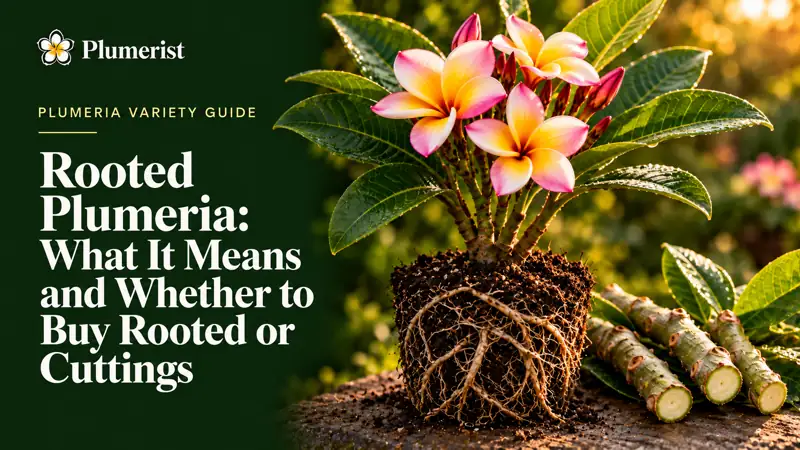
Rooted plumeria is a plumeria cutting that has already grown its own root system before you buy it. It arrives ready to establish in a pot, instead of waiting weeks for roots to form. That head start is the whole reason rooted plumeria costs more than an unrooted cutting.
Buying plumeria online means choosing between rooted plants, unrooted cuttings, and occasionally grafted plants. Each option trades price against time and risk. This guide covers what rooted actually means, how it compares to a cutting, and what to check on arrival.
What Counts as Rooted Plumeria
A cutting is called rooted once it grows visible roots from the cut end. These roots are usually a few inches long. Sellers reach this point by potting a cured cutting and waiting six to twelve weeks in warm conditions.
Some sellers hold cuttings longer to build a fuller root ball before shipping. Rooted does not mean fully established, though. A newly rooted plumeria may have only a handful of thin roots, not the dense mass an older plant carries.
That distinction matters. A lightly rooted plant still needs careful handling on arrival. It will not need the water restraint a bare cutting does, but it is still fragile.
Rooted vs Unrooted: The Real Tradeoffs
Price is the most obvious difference. An unrooted cutting is cheaper because the seller invested less time and space in it. Rooted plumeria costs more because someone else absorbed the weeks of rooting risk first.
Shipping shock is the second tradeoff. An unrooted cutting has no roots to damage in transit, so it tolerates a slow shipment well. A rooted plant can lose fine root hairs in a cold or rough shipment and needs gentler handling once it arrives.
Success rate leans toward rooted plants for beginners. Rooting a cutting yourself takes patience, and some cuttings fail along the way. Buying already rooted plumeria skips that failure window, at the cost of paying for it upfront.
Bloom timeline is the last major factor. A rooted plumeria with an established root system generally reaches blooming size faster than a cutting started from scratch. Growers report bloom timing varies widely by cultivar and climate, so treat any promise of first year flowers with some skepticism.
| Factor | Rooted plumeria | Unrooted cutting |
|---|---|---|
| Typical price | Higher | Lower |
| Shipping risk | Root damage possible | Low, no roots to harm |
| Beginner success rate | Higher | Depends on curing and rooting skill |
| Time to first bloom | Usually shorter | Usually longer |
| Watering on arrival | Light, right away | None until roots form |
This table simplifies a decision that also depends on the cultivar and the season you are shipping in. Cold weather shipping raises the risk for rooted plants more than it does for a dormant, unrooted cutting. A grower buying in late fall often leans toward cuttings for that reason alone.
Verifying Roots When a Plant Arrives
Do not assume a plant is well rooted just because the listing said so. Gently tip the plant out of its pot to check. A well rooted plumeria holds the soil together in a loose mass, rather than the soil falling away from a bare stick.
Check the stem just above the soil line for firmness. A soft, mushy area near the base is a warning sign no matter how many roots are visible. If a plant sold as rooted feels hollow or shows a wrinkled stem, root rot may already be underway.
Roots should look tan to white and feel firm, not black, slimy, or mushy. A few broken root tips from shipping are normal. Widespread dark, soft roots throughout the ball point to a plant that will struggle to recover.
Caring for Rooted Plumeria After Shipping
Give a newly arrived rooted plumeria a few days to settle before watering heavily. Shipping stress alone can wilt leaves temporarily. The plant needs time to adjust to new light and humidity first.
A bright spot without direct scorching midday sun is a safer first stop than full exposure right away. Water lightly once the top inch of soil dries out, rather than on a fixed schedule. Overwatering a stressed rooted plant causes more harm than underwatering it slightly.
Repotting into a larger container can wait until the plant shows active new growth. This usually takes a few weeks after arrival. Resist the urge to fertilize immediately, since a stressed root system absorbs it poorly and can be burned.
Choosing Rooted, Unrooted, or Grafted
An unrooted cutting suits a grower who wants a specific cultivar at the lowest price. It also suits someone who does not mind the rooting process itself. Rooted plumeria suits a grower who wants to skip that uncertainty.
Rare or expensive plumeria cultivars are often worth buying already rooted, simply to protect the investment from a failed rooting attempt. A grafted plant is a third path entirely, bred onto established rootstock for faster blooming. Most collectors end up buying all three types over time, depending on the cultivar and the price.
Best Time to Buy Rooted Plumeria
Late spring through midsummer is the safest window to buy and ship rooted plumeria in most regions. The plant is actively growing, warm transit temperatures are easier to guarantee, and a stressed root system recovers faster in warm weather. Buying in this window also means the plant has the whole growing season ahead of it before winter dormancy.
Buying rooted plumeria in late fall or winter carries more risk, even from a careful seller. Cold shipping can shock or even kill roots that would tolerate the same trip in July. If you must buy in a cold month, ask the seller about heat packs and expect to keep the plant indoors under grow lights until spring.
The Plumerist toolkit
The gear we would buy if we were starting over.
As an Amazon Associate, Plumerist earns from qualifying purchases.
Frequently Asked Questions
Is rooted plumeria worth the extra cost?
For beginners or rare cultivars, yes, since it removes the rooting failure risk entirely. For common cultivars where you already know how to root cuttings, an unrooted cutting is the better value.
How can I tell if a plumeria is actually rooted before buying?
Reputable sellers photograph the root ball or describe root age and length in the listing. If a listing only shows top growth with no mention of roots, ask before assuming it is rooted.
How long does it take for a rooted plumeria to bloom?
This varies by cultivar and climate, but many rooted plants reach blooming size within one to three growing seasons. Grafted plants tend to bloom faster than rooted cuttings or seedlings.
What if my rooted plumeria arrives with wilted leaves?
Some leaf wilting from shipping stress is normal and often resolves within a week or two of settling in. Trim leaves that turn fully brown, but leave green or partially wilted ones alone.
Can a rooted plumeria still fail after arrival?
Yes, especially if the roots were already compromised by rot before shipping. Checking root color and stem firmness on arrival catches most of these problems early.