

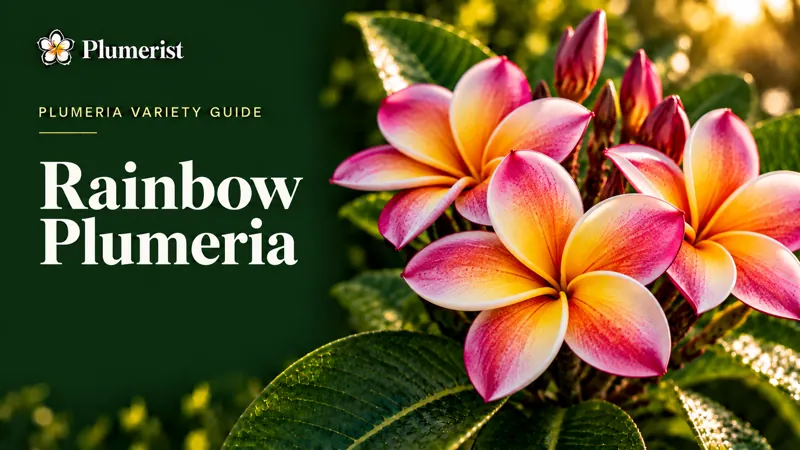
A rainbow plumeria flower is real, not a photo trick and not dyed. Certain cultivars naturally blend pink, yellow, orange, and white in one bloom. Sometimes the colors shift across a single petal in a smooth gradient.
Plumeria breeders have spent decades crossing color lines. A multi tone bloom is one of the results, and it comes from ordinary genetics. A rainbow plumeria flower is simply a bloom where pigment does not settle into one clean band.
What Makes a Rainbow Plumeria Flower Change Color
Plumeria pigment responds to temperature, light, and the age of the bloom. A flower can open pale yellow with a pink blush. As it matures in full sun, it can deepen toward orange.
Cooler nights tend to intensify pink and red tones. Hot stretches wash color out toward pastel. This is why the same more plumeria types can look different from one season to the next.
Growers who track one tree through a full bloom cycle often see this shift firsthand. None of it is a defect. It is part of what makes rainbow types worth collecting.
Named Rainbow Type Cultivars
Several cultivars are bred and named specifically for their multi color effect. Siam Rainbow is a compact Thai variety that blends white, pink, and yellow. It also carries a light citrus scent.
Madame Rainbow layers white, red, orange, and yellow across one flower. It is one of the more dramatic named types in circulation. Kepola Rainbow and Rainbow Star are two more widely traded names.
These names are not marketing labels on ordinary seedlings. Growers graft and propagate them because the color pattern is stable. It reproduces reliably from cutting to cutting.
Pink Rainbow Plumeria and Other Common Tones
A pink rainbow plumeria flower usually leans rose or magenta at the petal edge. It fades toward yellow or cream near the center. This edge to center gradient is the most common rainbow pattern in cultivation.
It photographs well, which is part of why rainbow plumeria flower listings draw so much attention online. Orange leaning rainbow types pair sunset tones with a yellow throat. White based types use pink or red only as accent streaks.
None of these patterns need special care beyond what any plumeria needs. Full sun and steady warmth bring out the truest colors on any of them.
Rainbow Plumeria Flower vs Photoshopped Listings
The genuine rainbow plumeria flower trend has also attracted a scam pattern online. Sellers post digitally altered photos showing impossible color combinations. Deep blue or neon purple blooms are the most common example, and neither occurs naturally in plumeria.
Buyers order a cutting expecting those colors. What arrives instead is an ordinary white or yellow flowered plant. The clearest defense is comparing a listing photo against known, photographed rainbow cultivars.
True blue plumeria flowers do not exist, and that pattern is worth knowing before buying an unusual cutting. Real rainbow blooms mix colors plumeria actually produces: pink, yellow, orange, red, and white. If a listing shows a color plumeria cannot make, treat it as edited.
Growing a Rainbow Plumeria Flower Successfully
Rainbow cultivars grow the same way as any other plumeria. They want full sun, well draining soil, and a warm season to push blooms. Color intensity tracks light exposure closely.
A rainbow plant kept in partial shade will bloom in muted, less distinct tones. New growers sometimes worry that a different looking bloom signals a problem. In most cases it is just pigment responding to a new season.
A tree that is otherwise growing well and setting buds on schedule is fine. Watch a rainbow cultivar through one full bloom cycle before assuming anything is wrong. Weak growth or dropped buds points to light or nutrition, not the cultivar.
Buying Rainbow Plumeria as a Cutting or Graft
Named rainbow cultivars are usually sold as a rooted plant, an unrooted cutting, or a graft onto older rootstock. Grafting is common because it can push a rainbow cultivar to bloom sooner than growing it out on its own roots. The tradeoffs of grafting a plumeria are worth understanding before choosing that route over a straight cutting.
Whichever method you choose, the color pattern itself will not change with age. A young Siam Rainbow and a mature one show the same basic blend, just on a bigger plant. Growers report that first year blooms on a new rainbow cutting can run slightly paler than later years, which is normal as the plant settles in.
Displaying and Sharing Rainbow Blooms
Because the color pattern is the whole appeal, rainbow blooms are popular for cut arrangements and leis. Cut a fresh flower in the morning for the best color and scent. Details on how long a cut flower stays fresh apply the same way to rainbow types.
Floating a few rainbow blooms in a shallow bowl shows off the gradient better than a tight bunch. Each flower sits face up and stays visible. For a fuller arrangement, mix rainbow blooms with single tone plumeria in a plumeria bouquet.
The Plumerist toolkit
The gear we would buy if we were starting over.
As an Amazon Associate, Plumerist earns from qualifying purchases.
Frequently Asked Questions
Is rainbow plumeria a real cultivar or a marketing name?
Rainbow plumeria is a real, bred category with named cultivars like Siam Rainbow and Madame Rainbow. The multi color effect is genetic and reproduces reliably from grafted or rooted cuttings of the same plant.
Why did my rainbow plumeria flower bloom in fewer colors this year?
Temperature and light exposure both shift pigment intensity from season to season. A cooler or shadier bloom cycle often produces a more muted version of the same flower.
Can I grow a rainbow plumeria flower from seed?
Seed grown plumeria do not reliably reproduce the parent’s color pattern, since each seed carries a new genetic mix. A cutting or graft from the exact named cultivar is the only way to guarantee the same rainbow pattern.
Is a pink rainbow plumeria flower rarer than other colors?
Pink leaning rainbow types are common and widely available, not rare. Cost usually reflects the cultivar’s popularity and how easy it is to propagate, not true scarcity.
How do I know if a rainbow plumeria listing is edited?
Compare the photo against documented cultivars and watch for colors plumeria cannot produce, especially blue or neon purple. A listing using only a single stock photo with no grower details is another warning sign.