

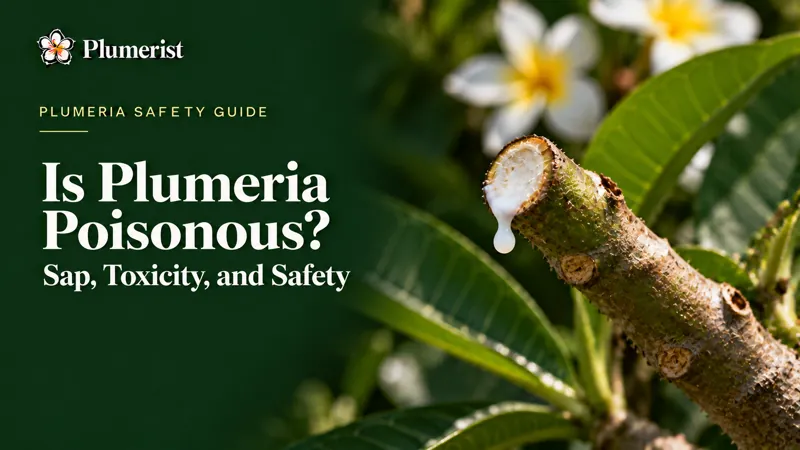
Is plumeria poisonous? It is potentially toxic, and its milky sap can irritate skin and eyes. Do not eat the plant or assume an exposure is harmless because it involved a flower.
The useful distinction is how contact happened: on intact skin, in an eye, or by swallowing plant material. Those situations need different responses. A general label such as “mildly toxic” cannot predict an individual person’s reaction.
Is plumeria poisonous to touch or eat?
Plumeria releases white latex when a stem, leaf or flower stalk breaks. Queensland Poisons Information Centre lists frangipani as potentially toxic. It identifies skin and eye irritation, with vomiting and diarrhea possible after swallowing sap or bark.
That does not establish a safe dose for other parts of the plant. It also does not support claims that flowers are safe to eat. Use the separate guide to plumeria and food use for decoration and edible flower questions.
A previous version of this article dismissed flowers as effectively harmless and suggested waiting for severe symptoms. That advice has been removed. Suspected ingestion deserves case specific advice, even before symptoms appear.
Match the response to the exposure
| What happened | What to do next |
|---|---|
| Sap touched skin | Remove contaminated clothing and rinse the area with running water. Mild soap can help remove sticky material. |
| Sap entered an eye | Begin rinsing immediately with room temperature water for 15 to 20 minutes. Remove contact lenses and get poison center advice. |
| Someone swallowed plant material | Do not induce vomiting. Contact poison control promptly and identify the plant as accurately as possible. |
| A pet chewed the plant | Remove access to the plant and contact a veterinarian. Human poison advice is not a substitute for veterinary assessment. |
These first aid steps follow Poison Control guidance. For skin exposure, rinse for at least 15 minutes. Severe eye symptoms need urgent medical assessment after rinsing.
Do not wait for symptoms after suspected ingestion
In the United States, call Poison Help at 1-800-222-1222. Outside the United States, contact your local poison information service or medical service. Tell them what happened rather than trying to estimate a safe amount yourself.
The US Poison Help checklist specifically advises against waiting for signs of poisoning. Have the person’s age, the plant name, the time and the possible amount ready. A clear plant photo can help if identification is uncertain.
Call emergency services immediately if the person collapses, has a seizure, struggles to breathe, or cannot be awakened. Do not force drinks or home remedies on someone who cannot swallow safely. Follow the professional’s instructions for the actual exposure.
Children, pets and fallen flowers
A young child may put a fallen flower in their mouth without breaking a large branch. Keep flowers, leaves and pruning debris away from unsupervised play areas. Do not rely on bitterness to prevent swallowing.
For a pet exposure, save a photograph and note which part may have been chewed. Ask your veterinarian what to do next. Do not induce vomiting or give a human remedy unless that veterinarian directs it.
Our plumeria and dogs article covers the dog specific question. This page does not establish safe amounts for dogs, cats, horses or other animals. Different species should not be grouped into one assumed reaction pattern.
Reduce sap contact during pruning
Set out your tools before making a cut. Wear gloves and avoid touching your face with contaminated hands. Eye protection is useful when working near a branch that may release sap.
Keep children and pets away while you work. Collect cut pieces immediately rather than leaving them on the ground. Wash exposed skin and clean tools according to their care instructions.
See how to prune plumeria for cutting technique. If you are making new plants, the cutting propagation guide explains the growing process. Neither task requires handling sap with bare hands.
Wearing flowers is different from eating them
Plumeria flowers are widely used in leis and arrangements. That decorative use does not prove that petals, tea or extracts are safe to swallow. Handling a flower also does not guarantee that a broken stalk contains no sap.
Avoid damaged stalks against sensitive skin and wash off sap promptly. Remove a flower or lei if it causes irritation. Do not put cut flowers where a child or animal can chew them.
Can this guide tell you how serious an exposure is?
No. The plant part, amount, route of exposure and the individual all matter. A photo or a general toxicity category cannot replace assessment.
So, is plumeria poisonous enough to require removing every tree? This guide does not make that decision for your household. Start with access, supervision and the ability to prevent chewing or sap contact.
If someone asks “is plumeria poisonous?” after an exposure, move straight to the appropriate help above. Do not spend time comparing it with other poisonous garden plants. Confirm the identity and get advice for the situation in front of you.
The Plumerist toolkit
The gear we would buy if we were starting over.
As an Amazon Associate, Plumerist earns from qualifying purchases.