

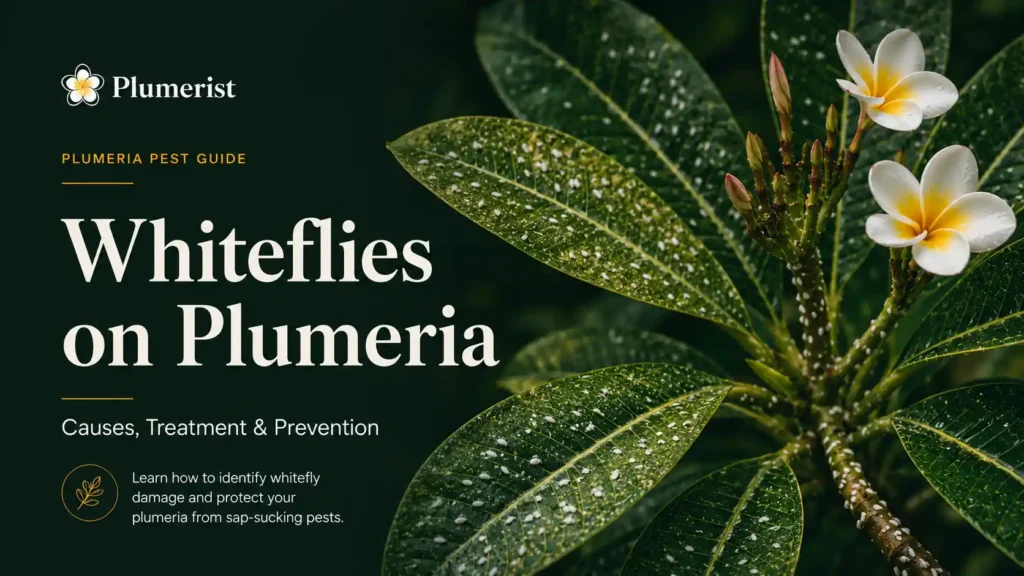
Whiteflies are easy to underestimate. Each one is barely the size of a pinhead, so a few of them look like nothing worth worrying about. That’s exactly the trap. They breed at a blistering pace, and a colony you ignore will quietly drain your plumeria and leave its leaves coated in sticky, sooty grime.
They’re not the most common plumeria pest, but they show up often enough, especially on stressed or indoor plants, that it pays to know how to spot them and shut them down early. Here’s the full playbook.
Whiteflies on Plumeria at a Glance
| Feature | The short answer |
|---|---|
| What they are | Tiny white, moth like sap sucking insects, about 1 to 3 mm |
| Where they hide | Undersides of leaves, where they also lay eggs |
| Telltale sign | A cloud of white flecks that flies up when you disturb the plant |
| Damage | Yellowing, stippled, wilting leaves, plus sticky honeydew and black sooty mold |
| Why they spread fast | They breed quickly and love warm weather |
| Best fix | Blast with water, then insecticidal soap or neem oil, repeated |
What Are Whiteflies?
Whiteflies are tiny sap sucking insects, only about 1 to 3 mm long, with soft white bodies and powdery white wings that make them look like miniature moths. Despite the name, they aren’t true flies, and they’re actually more closely related to aphids and scale, the other sap suckers that bother plumeria.
The giveaway is their behavior. They cluster on the undersides of the leaves, out of sight, and when you brush the plant or give it a shake, they scatter up in a little white cloud before drifting back down. If you flip a leaf and see clusters of tiny white insects along with even smaller pale yellow or green eggs, you’ve found them.
The Damage They Do
Whiteflies feed by piercing the leaf and drinking the sap, and a heavy colony draining a plant takes a real toll. The first signs are yellowing, stippled, or wilting leaves, and over time a bad infestation causes stunted growth, reduced vigor, and fewer flowers as the plant is slowly weakened.
Then there’s the mess. Like aphids, whiteflies excrete a sticky, sugary waste called honeydew that coats the leaves. That honeydew grows a black, powdery sooty mold, which is ugly and also blocks light from the leaf, making it harder for your plant to feed itself. If you’re seeing yellow leaves and aren’t sure of the cause, my guide on plumeria leaves turning yellow helps you tell whitefly damage apart from the other culprits.
Where They Come From
Whiteflies are opportunists. They breed quickly and thrive in warm weather, so populations can explode fast once they get a foothold, which is why catching them early matters so much.
They usually arrive by hitchhiking on a new plant you bring home, which is why a fresh purchase is the classic way an infestation starts. They also tend to favor stressed plants and are more of a problem on plumeria kept indoors or in a greenhouse, where there’s no wind or rain and few natural predators to keep them in check.
How to Get Rid of Whiteflies
The good news is that whiteflies are soft bodied and vulnerable, so a steady, repeated approach clears them out. Here’s what works, from gentlest to strongest.
Blast them off with water. A firm spray from the hose, aimed at the undersides of the leaves, knocks off adults and loosens eggs. It won’t solve a heavy infestation alone, but it’s a great first move and knocks the numbers down fast.
Use insecticidal soap or neem oil. These are your main weapons. Insecticidal soap kills the whiteflies it contacts, while neem oil both smothers them and disrupts their breeding. Spray thoroughly, especially the leaf undersides where they live, and repeat every few days, because their fast life cycle means new ones keep hatching. Persistence is what wins here.
Hang yellow sticky traps. Whiteflies are drawn to the color yellow, so sticky traps placed near the plant catch flying adults and help you monitor whether you’re winning. They’re a useful support, not a standalone cure.
Wipe or remove the worst leaves. For a badly infested leaf coated in eggs and sooty mold, sometimes the fastest fix is to wipe it clean or simply prune it off. Encourage natural predators too, like ladybugs, lacewings, and the tiny parasitic wasp Encarsia formosa, which feast on whiteflies. If you’re also fighting other sap suckers, my guides on aphids, mealybugs, and scale cover those.
How to Prevent Them Coming Back
Keeping whiteflies away comes down to two habits: watch what you bring in, and keep your plant strong.
Inspect and quarantine new plants before setting them next to your others, since a hitchhiker on a new plumeria is the most common way an infestation starts. Check the undersides of leaves regularly so you catch any newcomers while they’re still few. Keep your plant healthy and unstressed with the right watering, feeding, and light, because a vigorous plant resists pests far better than a struggling one, and good airflow makes the environment less welcoming to them. My watering and feeding guides will help you keep it in top shape, and once the pests are gone, my blooming guide gets it flowering strong again.
Frequently Asked Questions
What are the tiny white bugs flying off my plumeria? Those are whiteflies, tiny sap sucking insects that gather on the undersides of leaves and fly up in a white cloud when disturbed.
Are whiteflies harmful to plumeria? Yes, in numbers. They drain sap and cause yellowing, weak growth, and fewer flowers, and their sticky honeydew grows black sooty mold on the leaves.
How do I get rid of whiteflies on plumeria? Blast them off with water, then treat with insecticidal soap or neem oil, focusing on the leaf undersides and repeating every few days until they’re gone.
Where do whiteflies come from? They usually arrive on a newly bought plant, then multiply fast in warm weather, especially on stressed or indoor plants with no natural predators.
Will whiteflies kill my plumeria? A small colony won’t, but a heavy, untreated infestation seriously weakens a plant over time, so it’s best to deal with them early.
Bottom line, whiteflies are small but sneaky: they hide under the leaves, breed fast, and leave a sticky, sooty calling card. Catch them early, hit them with water and then insecticidal soap or neem oil, and stay persistent through their quick life cycle, and your plumeria will shake them off. Keep it healthy and inspect new plants, and they’re unlikely to return. For the other bugs that target these plants, see my full plumeria pest guides.