

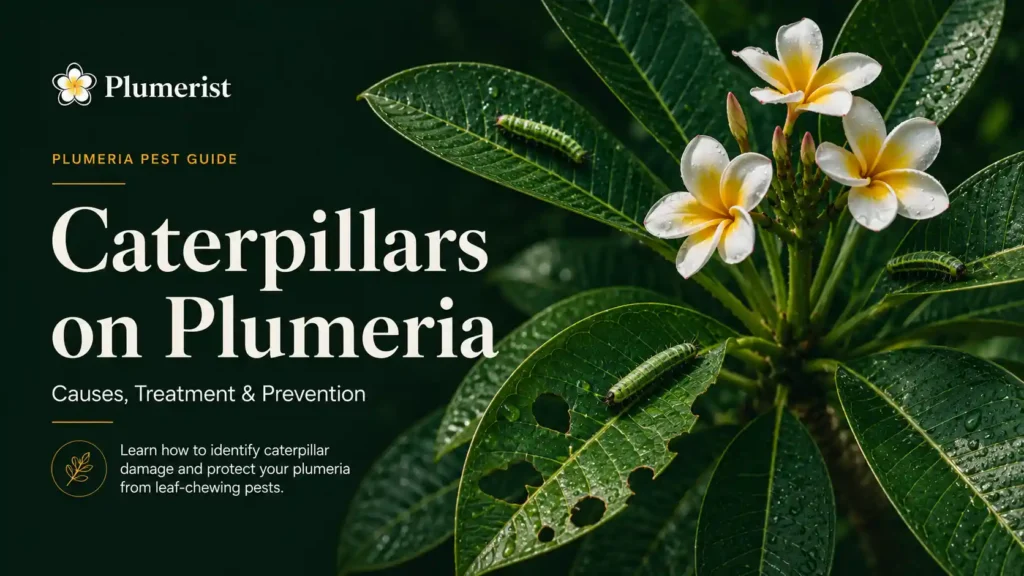
At up to six inches long, the frangipani caterpillar is one of the largest caterpillars you will ever see in a garden, and it eats like it. A single one can put away three big leaves a day, so a small group can chew a young plumeria down to bare sticks in less than a week. It’s the most dramatic pest your plant will ever meet.
The good news is that it looks far scarier than it actually is, and getting rid of it is genuinely straightforward once you know what you’re dealing with. Here’s how to identify it, stop it, and keep it from coming back.
Frangipani Caterpillar at a Glance
| Feature | The short answer |
|---|---|
| What it is | The larva of the tetrio sphinx moth (Pseudosphinx tetrio) |
| Size | Enormous, up to about 6 inches long |
| Look | Velvety black body, bright yellow bands, red orange head, black tail horn |
| Damage | Strips leaves fast, up to 3 large leaves per caterpillar per day |
| Kills the plant? | No, plumeria recovers and re grows its leaves |
| Dangerous? | Not venomous, but it can bite if handled, so wear gloves |
| Best fix | Hand pick them off, or spray Bt for larger numbers |
What Is the Frangipani Caterpillar?
The frangipani caterpillar is the larva of the tetrio sphinx moth, a large grey hawk moth found across the warm Americas, the Caribbean, Florida, and other tropical and subtropical spots. Plumeria is its favorite food, which is exactly why it turns up on your plant.
You truly cannot mistake it for anything else. It’s one of the largest caterpillars you’ll ever see, reaching around 6 inches long, with a velvety black body wrapped in bright yellow bands, a glossy red orange head, orange legs, and a short black horn at the tail end. That bold black and yellow coloring is a warning sign, since the caterpillar eats the toxic plumeria sap and stores it, making itself taste awful to birds and other predators.
The Damage They Do
Here’s why they get noticed so fast: frangipani caterpillars are eating machines. A single one can munch through about three large leaves a day, and they usually arrive in groups, so a cluster of them can strip a small plumeria bare in just a few days. Once the leaves are gone, they’ll even start chewing on the soft green branch tips.
Now for the reassuring part. As alarming as a defoliated plant looks, these caterpillars do not kill plumeria. Your plant will push out fresh leaves once the caterpillars are gone. The real cost is the setback: a stripped plant is stressed, and it often skips or delays flowering while it rebuilds, so a bad infestation can cost you a bloom cycle. If yours has been chewed down hard, my guide on why plumeria leaves fall off and my guide to saving a stressed plumeria will help it bounce back.
Where They Come From
Frangipani caterpillars seem to appear out of nowhere, and there’s a reason for that. The adult tetrio sphinx moth lays her eggs in clusters of 50 to 100 on the undersides of plumeria leaves. When they all hatch at once, you suddenly have a small army of hungry caterpillars, which is why the damage seems so sudden and severe.
They’re most active in the warm growing season, the same stretch when your plumeria is leafy and lush, since that’s when there’s plenty for the moth’s offspring to eat. So if you live in a warm climate or you’re deep into summer, that’s prime caterpillar season and the time to stay watchful.
Are Frangipani Caterpillars Dangerous?
They look menacing, but they’re not venomous and they don’t sting. That said, a big one can give a defensive nip if you grab it, and it may thrash its head around when disturbed, so it’s smart to wear gloves when you pick them off rather than handling them bare handed.
The one real caution is around pets and curious kids. Because these caterpillars store the toxic compounds from plumeria sap, they’re best not eaten, so don’t let a dog or cat snack on one. Handle them with gloves, move them along, and everyone stays fine.
How to Get Rid of Frangipani Caterpillars
Because they’re so big and easy to see, you have good options. Here’s what actually works, from simplest to strongest.
Hand pick them off. For a plant or two, this is the fastest, most reliable fix. Put on gloves, pluck each caterpillar off, and drop it into a bucket of soapy water. Since they’re huge and not hidden, you can usually clear a plant in one pass. Check the undersides of leaves for the whole crew.
Spray Bt (Bacillus thuringiensis). If you’ve got a big infestation or a large tree that’s hard to pick over, Bt is your best friend. It’s a natural soil bacterium that only affects caterpillars, so it’s safe for bees, pets, and people. The caterpillars eat the sprayed leaves, stop feeding almost immediately, and die within a couple of days. Spinosad is another effective organic option that works the same way.
Try neem oil on young ones. Neem works best on small, freshly hatched caterpillars and as a general deterrent. It’s less effective on the giant late stage caterpillars, so for those, hand picking or Bt is the better call.
Skip the harsh chemicals. You really don’t need a broad spectrum insecticide here, and reaching for one just kills the beneficial insects that keep other pests in check. Hand picking plus Bt handles this pest completely. If you’re battling other bugs too, my guides on aphids, mealybugs, and thrips cover those.
How to Prevent Them Coming Back
A little vigilance goes a long way, because catching them early is far easier than dealing with a full outbreak.
Inspect the undersides of leaves regularly through the warm season, and squish any egg clusters you find before they hatch. That one habit stops an infestation before it starts. Watch for the early warning signs too: dark droppings on lower leaves or the ground, and the first chewed, ragged leaves. Encourage natural predators like birds and paper wasps, which happily hunt caterpillars, by not blanket spraying insecticides. And keep your plant healthy and well fed so it shrugs off the occasional nibble and recovers quickly, using my blooming guide to get it flowering again after any setback.
Frequently Asked Questions
What is the big black and yellow caterpillar on my plumeria? It’s the frangipani caterpillar, the larva of the tetrio sphinx moth. It’s black with yellow bands and a red orange head, and plumeria is its favorite food.
Will frangipani caterpillars kill my plumeria? No. They can strip a plant of leaves, but plumeria is tough and re grows its foliage. The main cost is stress and a possibly missed bloom cycle, not death.
Are frangipani caterpillars poisonous or dangerous to touch? They’re not venomous and don’t sting, but they can bite if handled, so wear gloves. Don’t let pets eat them, since they store toxins from plumeria sap.
What is the best way to get rid of them? Hand pick them into soapy water for a few plants, or spray Bt (Bacillus thuringiensis) for a large infestation. Both work well without harsh chemicals.
Why did so many appear at once? The moth lays eggs in clusters of 50 to 100, so they hatch together. That’s why the damage looks so sudden.
Bottom line, the frangipani caterpillar is the most theatrical pest your plumeria will meet, but it’s one of the easiest to beat. It won’t kill your plant, it’s simple to spot, and a quick round of hand picking or a Bt spray shuts it down. Stay watchful in the warm months, check those leaf undersides, and your plumeria will keep its leaves and its blooms. For the rest of the bugs that bother these plants, see my full plumeria pest guides.