

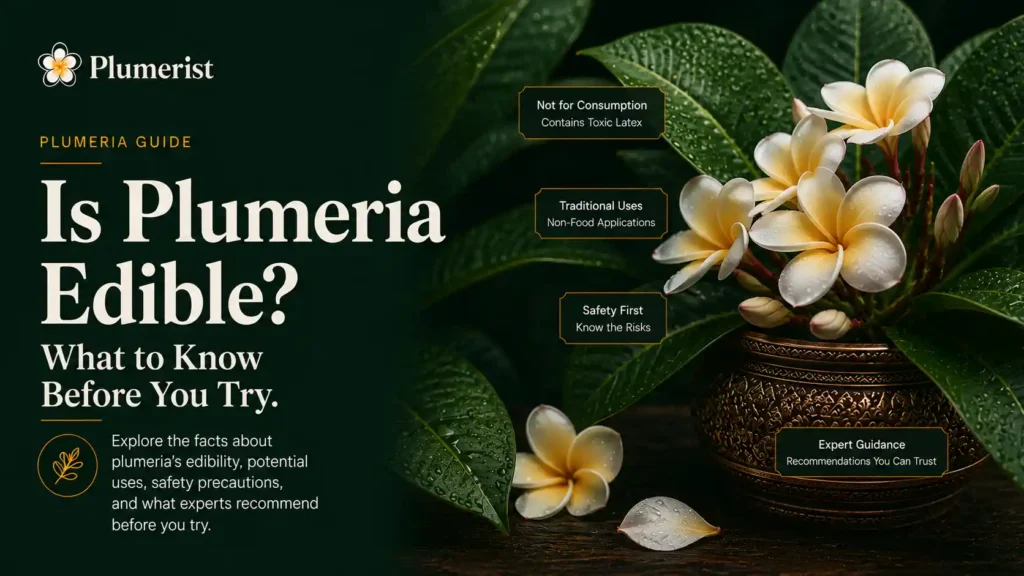
Is plumeria edible? Do not treat plumeria flowers, leaves, bark or sap as food. Their use in leis and bouquets is not evidence that they are safe to eat.
If you are choosing flowers for a cake or drink, use a clearly identified edible flower grown for food. If someone has already swallowed plumeria, contact poison control for individual advice. Do not wait for a large amount or obvious symptoms.
Is plumeria edible if only the petals are used?
We could not establish a reliable food safety basis for recommending plumeria petals. The Queensland poison center entry identifies frangipani as potentially toxic and its sap as an irritant. It documents digestive symptoms after ingestion of sap or bark.
That entry does not certify petals as edible. It also supplies no safe serving size or cooking method. The absence of a specific warning about a petal is not proof of safety.
Claims that one bite cannot cause serious harm are not useful guidance. The amount and plant identity may be uncertain, particularly with a child. A poison specialist can assess the exposure without guessing.
A food decision checklist
| Planned use | Better decision |
|---|---|
| Petals in a salad | Choose a verified edible flower sold for culinary use. |
| A flower floating in a drink | Use an edible garnish or keep the decoration outside the glass. |
| A fresh bloom on cake icing | Use an edible alternative or a decoration fully separated from food. |
| Homemade tea, syrup or extract | Do not use plumeria. A traditional use claim does not establish a safe recipe. |
| A flower worn in a lei | Treat it as decoration, prevent chewing and avoid contact with sap. |
Plumeria on cakes and beside food
A flower can be decorative without being an ingredient. But placing a cut stalk directly into icing makes that boundary unclear. Guests may also assume every flower on a dessert is edible.
The simplest solution is to use a verified edible alternative. If plumeria is part of the display, keep it physically separate from food. Agree on that arrangement with the baker or food professional before serving.
Do not assume washing solves every issue. It does not establish that a plant is edible or that nursery pesticide use was suitable for food. Removing a stalk also does not certify the remaining flower.
A photograph of a plumeria cake shows a design idea, not a safety assessment. The same distinction applies to cocktails and restaurant decorations. Ask what the garnish is and whether it is intended to be eaten.
Why sap changes the handling question
A broken stem or leaf releases white latex. Keep that material away from skin, eyes and food preparation surfaces. Wash your hands after handling cut plant parts.
The plumeria poisoning and sap guide separates skin, eye and ingestion exposures. It explains first aid and when to seek help. Do not use a flower arranging article to assess a poisoning concern.
Gloves help reduce contact while cutting stems. They are not permission to handle food with contaminated gloves. Finish the plant work and clean up before preparing food.
Traditional use is not a recipe recommendation
Online discussions sometimes describe plumeria teas or cooked flowers. We have not verified a safe preparation, dose or species identity for those claims. This guide therefore gives no recipe and recommends no medicinal use.
Different plants can also share a common name. Our explanation of plumeria and frangipani names helps with ordinary garden terminology. It cannot replace identification when a plant is being considered for consumption.
For the same reason, do not assume a product called “plumeria flavor” contains edible garden plumeria. Read the actual ingredient label. A fragrance product belongs outside food preparation altogether.
What to do after accidental swallowing
Stop further access to the plant and keep a photo or label for identification. Do not induce vomiting. Contact poison control promptly, even if the person currently seems well.
In the United States, call 1-800-222-1222. The Poison Help instructions say not to wait for symptoms. Elsewhere, use your local poison information service.
For collapse, seizures, trouble breathing or inability to awaken, call emergency services immediately. For an animal, contact a veterinarian. Do not apply advice for a human exposure to a pet.
Enjoying the flowers without eating them
A plumeria bouquet can provide fragrance and color without becoming a garnish. Keep it out of reach of children or animals that chew plants. Dispose of fallen blooms and cut pieces where they cannot be eaten.
For leis and other decorative traditions, see plumeria in Hawaiian culture. Their meaning and beauty stand on their own. Neither depends on a claim that the flowers are edible.
Is plumeria edible after cooking or drying? We have not verified a method that makes it safe. Choose an established edible flower instead of experimenting.
Is plumeria edible simply because a seller calls it natural? No food safety conclusion follows from that label. Look for a known edible species and a supplier selling it specifically for food.
The Plumerist toolkit
The gear we would buy if we were starting over.
As an Amazon Associate, Plumerist earns from qualifying purchases.