

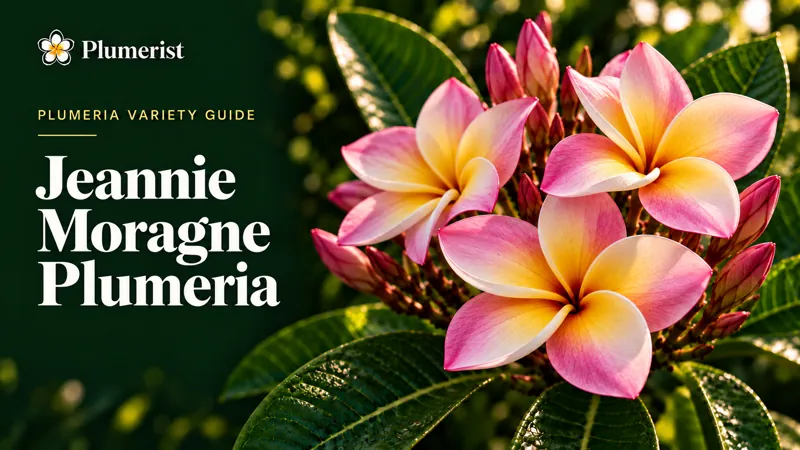
In 1953, a Grove Farm manager in Lihue, Kauai, made the first recorded controlled cross pollinations between plumerias. His name was William Moragne Sr. One of his hybrids became jeannie moragne plumeria, a cultivar still grown decades later for its size and fragrance.
Before Moragne began his work, no published guide explained how to hand pollinate a plumeria flower. He worked out the process himself by studying where the pistil sat deep inside the trumpet of petals. That discovery opened the door to deliberate plumeria breeding in Hawaii.
The scale of what Moragne started is easy to underestimate today. Nearly every deliberately bred plumeria hybrid traces its method back to techniques he had to invent from scratch.
Grove Farm itself still exists as a working plantation and heritage site on Kauai. It maintains its own collection of the original Moragne hybrids, keeping the physical connection to the breeding program alive. That continuity is unusual in a hobby where source trees often get lost over time.
The Breeding Story Behind Jeannie Moragne Plumeria
Moragne named several of his hybrids after the women in his life. Jeannie Moragne honors the wife of one of his sons. That family connection is why the plant is also sold under the name Jean Moragne Jr.
Of the roughly eleven named hybrids Moragne produced, only three were formally registered with the Plumeria Society of America. Jeannie Moragne carries registration number 161. The other two registered siblings, Edi Cooke and Julie Cooke, were named for two of his granddaughters.
Jean Moragne Sr, the cultivar named for his own wife, is also grown today. It was not among the three officially registered hybrids, but growers still recognize it as part of the same family line.
Growers who collect the Moragne line often seek out these related names as a set. The documented history behind each one adds a layer of interest that many cultivars simply do not have.
What Jeannie Moragne Plumeria Looks Like
Flowers measure an impressive 5 to 5 and a half inches across, among the largest in the genus. Color opens vivid red and softens to reddish pink toward the petal edges. Wide golden bands and thin pinkish orange lines radiate outward from the center.
Petals are narrow, slightly overlapped, and pointed at the tip. Texture is noticeably heavy compared to thinner petaled cultivars. That heft helps the flowers hold their shape well after cutting.
The fragrance is a strong, sweet blend often compared to fruit and rose together. Few plumeria cultivars combine flower size and scent intensity this consistently. Bloom season runs through the warm months, typically late spring into fall.
Strengths Growers Report
- Exceptionally large flowers that stand out in any collection.
- Strong, memorable fruity rose fragrance.
- A documented breeding history that gives the cultivar real provenance.
- Heavy petal texture that holds up well in leis and arrangements.
- Consistent bloom quality once the tree is a few years established.
Weaknesses Worth Knowing
Growers consistently describe jeannie moragne plumeria as a rapid, almost uncontrollable grower. Left unpruned for even one season, it can outgrow a small yard or container. Regular, committed pruning is not optional here.
Like other Plumeria rubra hybrids, it remains susceptible to rust in humid conditions. Its rapid growth also means cutting wood can be soft rather than fully mature. Growers report that softer wood makes rooting a little less predictable than average.
The large flower size can be a downside too in tight spaces. A tree bred for size needs real room to show off its best blooms.
How It Compares to Other Moragne Hybrids
| Cultivar | Known for | PSA registered |
|---|---|---|
| Jeannie Moragne | Large flowers, fruity rose scent | Yes, number 161 |
| Edi Cooke | Distinct color pattern from the same program | Yes |
| Julie Cooke | Distinct color pattern from the same program | Yes |
| Jean Moragne Sr | Named for Moragne’s wife | Not registered |
Jeannie Moragne stands out among these siblings mainly for its size and fragrance strength. The Cooke sisters carry their own distinct color patterns from the same breeding program rather than competing on scent.
Growers building a themed collection around Hawaiian breeding history often plant several Moragne named cultivars together. That approach also makes the vigorous growth habit easier to manage across a larger dedicated space.
Care Notes and Availability
This cultivar shares its Hawaiian origin with many of the plumeria varieties tied to the islands’ long tradition of named flowering trees. Basic care follows the same pattern as other rubra hybrids. It wants full sun, well draining soil, and steady feeding through summer.
Because it grows so fast, staying on top of a pruning routine built for a vigorous tree matters more here than with slower cultivars. Scent focused buyers may also want to compare it against other cultivars bred as much for perfume as for looks.
This cultivar is sold mainly through specialty plumeria nurseries and cutting sellers rather than mass market retailers. For background on sourcing named cultivars this way, see how growers typically source named plumeria as cuttings.
Buyers wanting the wider context of named hybrids can also browse the broader catalog of documented plumeria cultivars. Expect prices to run higher than common, unnamed rubra seedlings given the documented lineage.
Cutting size matters more than usual with this cultivar given its softer wood. A shorter, well hardened section from older growth tends to root more reliably than a long tip cutting taken during a fast growth spurt. Patience at the cutting stage pays off later.
Winter dormancy follows the standard rubra pattern outside of true tropical climates. Watering should drop off sharply once leaves begin to yellow and fall. Resume normal feeding only after new growth appears in spring.
The Plumerist toolkit
The gear we would buy if we were starting over.
As an Amazon Associate, Plumerist earns from qualifying purchases.
Frequently Asked Questions
Who bred jeannie moragne plumeria?
William Moragne Sr bred it at Grove Farm in Lihue, Kauai. The work took place during the 1950s as part of the first documented controlled plumeria breeding program.
Why is it also called Jean Moragne Jr?
Moragne named the hybrid after the wife of one of his sons. Both names refer to the same registered cultivar.
Is jeannie moragne plumeria hard to grow?
Not difficult, but demanding of attention. Its fast, vigorous growth means it needs regular pruning to stay a manageable size.
How fragrant is this cultivar?
Very. Growers describe the scent as a strong, sweet combination of fruit and rose that carries well outdoors.
Are other Moragne hybrids available too?
Yes. Edi Cooke and Julie Cooke are the other two officially registered Moragne hybrids, alongside the unregistered Jean Moragne Sr. Specialty sellers occasionally offer all four together as a themed collection.