

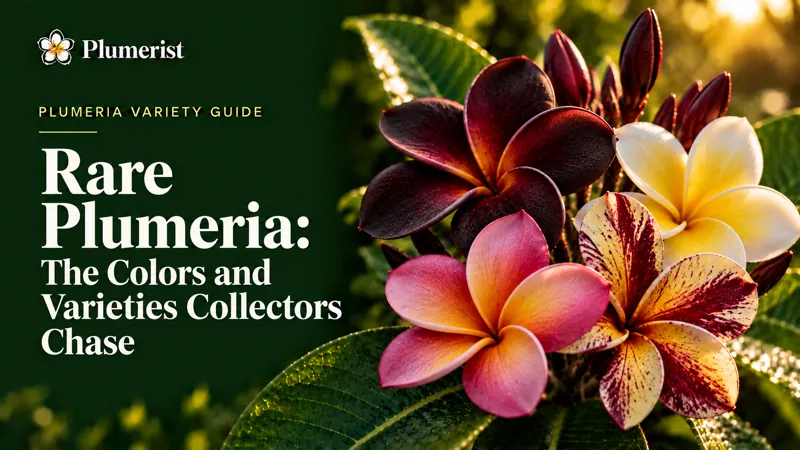
A ten inch cutting with barely a handful of leaves can sell for hundreds of dollars. A full grown plant of a common cultivar often goes for a fraction of that. This happens constantly in the plumeria world.
It is the clearest sign that rare plumeria is judged by very different rules than an ordinary nursery plant. Size and health matter far less than how unusual, documented, and hard to reproduce the specific cultivar is.
Understanding what actually creates that scarcity helps with the next purchase. It separates genuine collector cultivars from listings that are simply priced high with no real rarity behind them.
What Actually Makes a Plumeria Rare
True rarity in plumeria usually comes from one of a few sources. A cultivar might sit at a genuine edge of the color range. It might also produce very few viable cuttings each season.
Other cultivars are rare because they carry a patented or tightly controlled name. Some show a stable variegated leaf pattern that is hard to reproduce at all.
Popularity and rarity are not the same thing. A cultivar can be widely desired and still not particularly rare, especially if it propagates easily and multiple nurseries carry it. Genuine rare plumeria combines high demand with a real supply bottleneck, not just a flattering name on the tag.
Rare Colors, Honestly Explained
Some of the most searched rare plumeria colors do not exist in nature at all. No plumeria produces a true blue bloom. The closest real options only hint at blue undertones, a pattern covered in more detail on the page about plumeria blue flowers.
True black plumeria is a similar story. The darkest real cultivars land in deep red or maroon territory instead, as explained on the black plumeria page.
Genuine rare colors do exist within realistic limits. They are just less dramatic than the blue or black listings that circulate online.
Deep purple leaning cultivars, unusually saturated oranges, and stable multicolor patterns are all real forms of rarity. They simply do not photograph as dramatically as an impossible blue bloom.
Sought After Rare Cultivars
Vera Cruz Rose is frequently mentioned by collectors. Its large blooms blend yellow, peach, and pale pink in one flower. Calcutta Star has a similar reputation, with growers describing cuttings as genuinely hard to find.
Inca Gold shows up often on collector lists for its strong color and reliable classic fragrance. Variegated leaf cultivars form their own rare category. Variegation is often unstable and can revert to plain green growth over time.
A plumeria like Maya is prized for variegated foliage that holds its pattern reliably. Most variegated attempts revert far sooner. That stability is part of why it commands collector interest beyond its flowers alone.
Regional rarity is another factor collectors weigh. A cultivar that is common in Thailand or Hawaii can still be genuinely hard to find in other growing regions until enough cuttings make their way through import channels. That kind of geographic scarcity fades over time as trade networks expand.
Why Rare Cuttings Cost So Much
Plumeria propagates almost entirely through cuttings and grafts, not tissue culture at scale. A rare cultivar can only multiply as fast as its parent plant produces usable wood. A slow growing or shy branching rare cultivar might yield only a handful of cuttings in an entire season.
Historical pricing shows how far this can go. In the early 2000s, cuttings from seedlings including Ammaron’s Curly White and Sariah’s Curly Pink reportedly sold for 500 to 600 dollars each. Scarcity drove that price, not size or bloom count.
That kind of premium fades once a cultivar becomes easier to propagate. More nurseries carrying it drives the price back down over time.
Patented and Trademarked Rare Cultivars
A smaller group of rare plumeria carries formal legal protection rather than just a scarce supply. A patented cultivar cannot be legally propagated and sold by anyone other than the license holder. This kind of rarity is enforced rather than purely natural.
Once a patent expires, a formerly restricted cultivar can spread through the wider trade much faster. Prices typically drop as more growers gain legal access to propagate and sell it.
Buyers curious about a specific rare cultivar can sometimes check whether it carries active patent protection. That check helps set realistic expectations about whether supply will stay tight or loosen up soon.
Buyer Caution on Rare Plumeria Listings
The word rare gets applied loosely in plumeria listings. It is often used for plants that are simply new to a particular market rather than genuinely scarce. A high price alone does not confirm rarity, and neither does a dramatic sounding name.
Photo editing is a real risk with rare and unusual color listings specifically. A digitally altered photo showing an impossible color is a strong warning sign. Blue or neon shades are the most common examples of colors plumeria simply cannot produce.
Comparing a listing photo against documented, known cultivars is the most reliable check before paying a premium price.
Where Rarity Fits in a Collection
Most rare cultivars grow the same way as common ones once established. Rarity is a buying consideration more than a care one. Reviewing the complete type guide first helps put any rare cultivar in context.
A plant that looks unusual in isolation is often easier to place once compared against a wider range of colors and forms. Building a collection around a few well documented rare cultivars tends to produce better results. Chasing every dramatic sounding listing rarely pays off the same way.
The Plumerist toolkit
The gear we would buy if we were starting over.
As an Amazon Associate, Plumerist earns from qualifying purchases.
Frequently Asked Questions
What is the rarest plumeria color?
True blue and true black do not exist in plumeria. Among real colors, deep saturated purples and stable multicolor patterns tend to be the rarest and most sought after by collectors.
Why are some plumeria cuttings so expensive?
Plumeria multiplies mainly through cuttings and grafts. A slow growing or shy branching rare cultivar can only produce a limited number of cuttings each season, which drives up price.
Is a variegated plumeria automatically rare?
Variegation adds rarity because the pattern is often unstable and can revert to plain green growth. Not every variegated plumeria is equally hard to find or equally stable, though.
How can I tell if a rare plumeria listing is faked?
Compare the photo against documented cultivars and be skeptical of colors plumeria cannot naturally produce, especially true blue. A listing with only one edited looking photo and no grower detail is a warning sign.
Does rare mean better quality?
No. Rarity reflects scarcity and demand, not necessarily bloom quality, fragrance, or how easy a plumeria is to grow. Some common cultivars outperform rare ones in overall garden performance.