

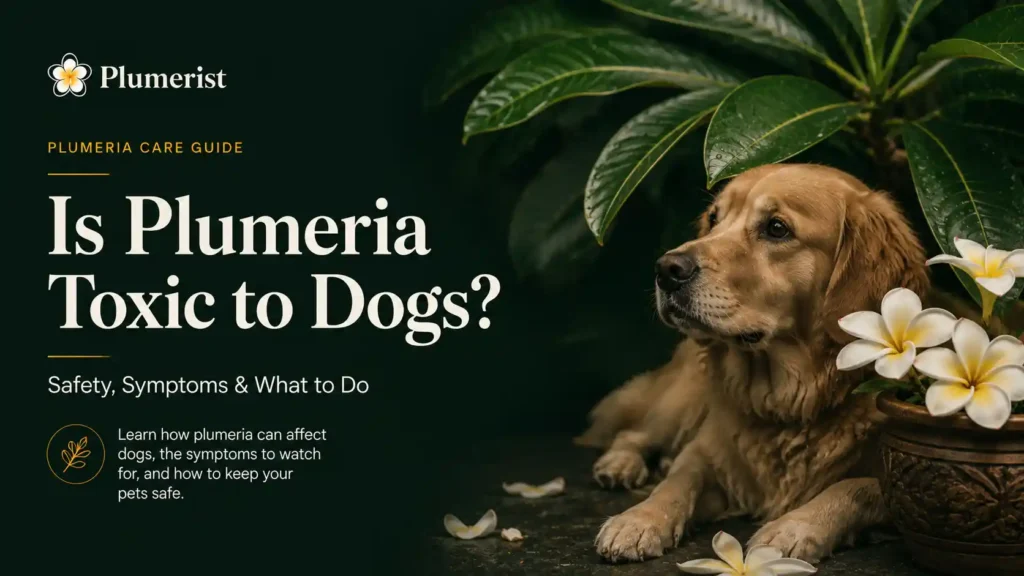
Is plumeria toxic to dogs? Treat chewing or swallowing it as a potential poisoning exposure and contact a veterinarian promptly. Do not assume that a flower or a small amount is harmless.
Plumeria releases irritating milky sap when plant tissue breaks. However, this guide cannot predict a dog’s reaction or supply a safe dose. The useful next step is professional assessment of the actual exposure.
If your dog has already chewed plumeria
Move the dog away from the plant and prevent further chewing. Keep a photo of the plant and any product labels that may matter. Contact your veterinarian or an animal poison service rather than waiting through a fixed observation period.
The ASPCA exposure guidance advises seeking help even before symptoms worsen. If the dog has trouble breathing, seizures or becomes unresponsive, go to an emergency veterinary hospital. Take information about the suspected plant with you.
Do not force water into the dog’s mouth or attempt a home remedy. Ask the veterinary professional what first aid is appropriate. The advice depends on the route of exposure and the dog’s condition.
Is plumeria toxic to dogs if only a flower was eaten?
We have not established a safe quantity of petals, leaves, seeds or bark for dogs. A flower’s decorative use does not answer that question. Neither does the dog’s size alone.
A veterinarian needs the best available information, even when the amount is uncertain. Say what you actually saw. Do not turn a missing flower into a confident estimate of ingestion.
| Information to collect | Why it helps |
|---|---|
| Plant photo and name | Common names and plant identities can be confused. |
| Time and possible plant part | The exposure may involve a flower, leaf, stem or sap. |
| Dog’s weight, age and health history | These help the professional assess the individual animal. |
| Current signs and any action already taken | The veterinarian can choose next steps without assuming what happened. |
| Recent garden products used nearby | Fertilizer or pesticide exposure may need separate assessment. |
Where to get veterinary help
Your veterinarian or a local emergency veterinary hospital should be the first contact. In the United States, ASPCA Poison Control is available at 888-426-4435. A consultation fee may apply.
Outside the United States, use a local veterinarian or animal poison service. The human Poison Help line is not a replacement for veterinary advice. Follow the professional’s instructions about monitoring and travel.
Sap exposure is a separate question
Broken stems and leaves can leave sap on paws, fur or the face. Prevent more contact and ask the veterinarian how to clean the affected area. Eye exposure deserves prompt advice rather than a wait to see if it settles.
For human handling, see plumeria sap and human exposure. Do not apply that page’s human first aid instructions automatically to an animal. Avoid putting household cleaners or plant treatments on the dog.
Prevent access to the plant and debris
Check where flowers, leaves and cut branches land, not just where the pot sits. Collect pruning debris as you work. Keep waste containers inaccessible to a dog that scavenges.
A raised pot can still drop flowers within reach. A large dog may reach a stand that works for a smaller one. Barriers and supervision need to match the actual animal.
When pruning plumeria, keep the dog outside the work area. The same applies while preparing new cuttings. Do not leave freshly cut pieces on a patio table where they may be taken.
Equipment does not replace assessment
The existing pet first aid kit listing may help organize ordinary supplies. It does not treat plant poisoning or tell you whether home observation is suitable. Call first rather than delaying to find equipment.
The existing plant stand listing is an access planning option. Confirm stability, height and falling debris before relying on one. For container grown plants, plan placement around the dog’s reach.
The existing bitter spray listing is not a guarantee against chewing. Check the current label and ask your veterinarian about suitability. Do not substitute a deterrent for a physical barrier.
These are affiliate shopping references, not treatments. We have not tested them as protection against plumeria exposure. No product makes a plant safe for a dog to eat.
What this guide can and cannot establish
Is plumeria toxic to dogs in a predictable way for every exposure? We do not have evidence for a universal dose or symptom timeline. Earlier reassurance that most cases are not emergencies has been removed.
Is plumeria toxic to dogs enough to require removing the tree? Assess that with your veterinarian and your ability to prevent access. If chewing cannot be prevented, changing the planting arrangement is more dependable than hoping the dog loses interest.
The Plumerist toolkit
The gear we would buy if we were starting over.
As an Amazon Associate, Plumerist earns from qualifying purchases.